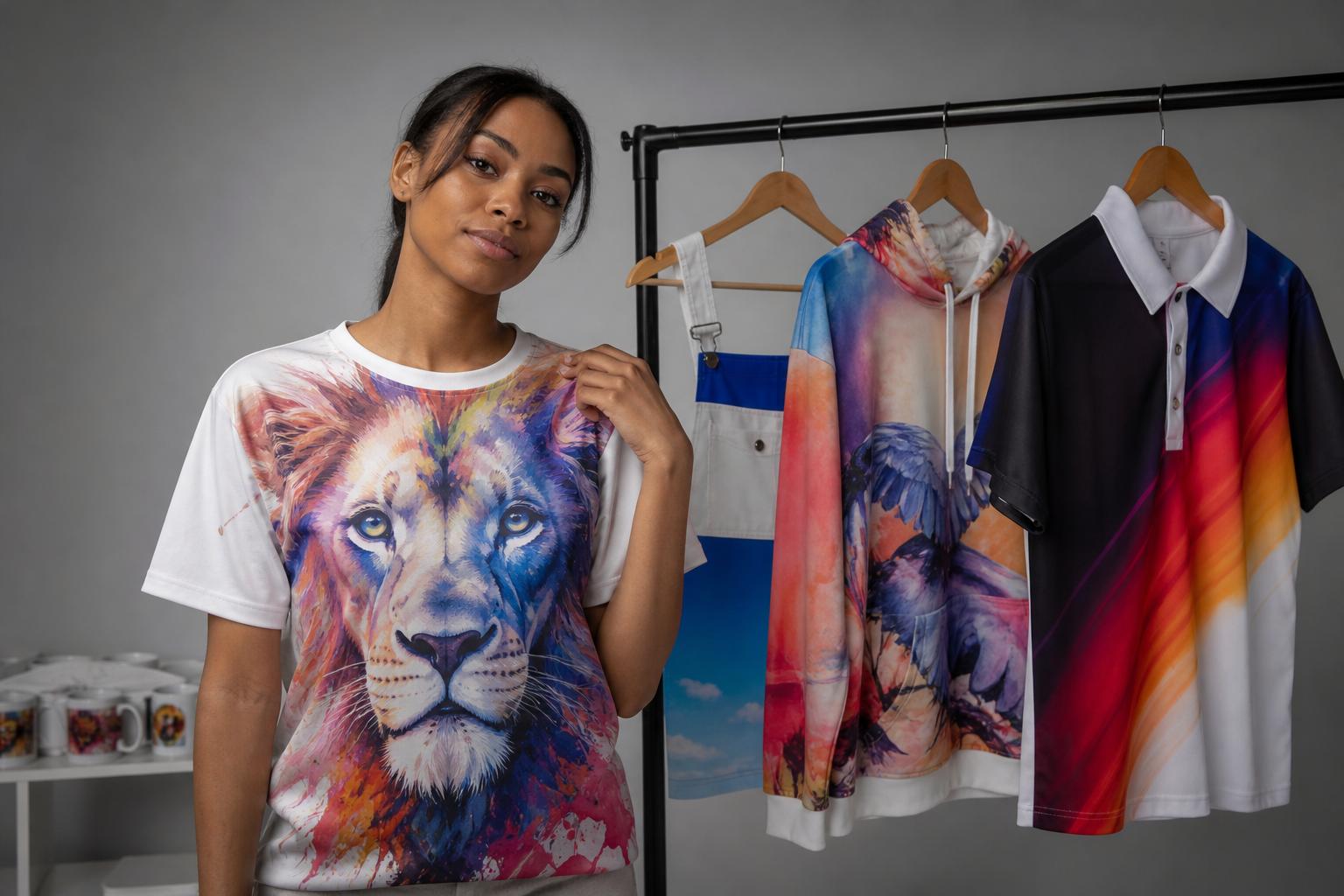
In Johannesburg, almost any apparel item constructed from 100 percent polyester or high-content polyester blends can be sublimated, including performance jackets, athletic tracksuits, corporate golf shirts, motorsport racing shirts, and specialised flight suits. The sublimation process uses heat and pressure to infuse dye directly into the synthetic fibres at a molecular level, creating permanent, full-colour patterns that will not peel, crack, or fade under the harsh Highveld sun. Because the print becomes part of the yarn itself rather than sitting on top of the fabric, sublimated garments maintain their breathability, soft texture, and structural strength through rigorous daily wear.
Core Garments Engineered for Sublimation Printing
Sublimation allows complete design coverage across every square centimetre of a garment. Rather than stamping a small logo onto a pre-stitched blank, manufacturers print flat fabric panels before assembling them. This cut-make-and-trim process ensures continuous artwork across seams, zips, and collars.
Pink Crystal Clothing manufactures five staple garment categories engineered specifically for full-coverage dye sublimation:
- Jackets: Softshell jackets, lightweight windbreakers, bomber jackets, and matric outerwear receive rich edge-to-edge printing that withstands dry winter winds and repeated machine washing.
- Tracksuits: Full warm-up sets, including matching tops and bottoms built from moisture-wicking micro-active or poly-fleece materials, serve sports clubs, private schools, and corporate fitness teams across Gauteng.
- Golf Shirts: Performance golfers crafted from lightweight pique knit polyester provide breathable comfort for corporate golf days, sales staff, and trade events without heavy rubberised ink patches.
- Racing Shirts: High-contrast pit shirts, motocross jerseys, and rally crew tops support complex sponsor branding, high-resolution photography, and crisp gradient fades suitable for events at Kyalami or regional dirt tracks.
- Flight Suits: Heavy-duty single-piece and two-piece aviation jumpsuits built for flight schools, charter operators, and technical crews stationed at Lanseria or Rand Airport maintain crisp insignia and hi-vis panelling.
Why Polyester Is Essential for the Process
Dye sublimation relies on a specific thermal reaction that only occurs with synthetic polymer chains. When heat reaches approximately two hundred degrees Celsius, the solid dye turns into gas without becoming liquid. Synthetic fibres relax and open their pores, absorbing the gas before cooling and locking the pigment permanently into the yarn. Natural fibres like pure cotton cannot absorb disperse dyes; the ink simply washes away on the first laundry cycle.
Technical Advantages of Sublimation for Johannesburg Teams and Businesses
Johannesburg sits at high altitude, which means local sports teams and outdoor work crews face elevated levels of ultraviolet radiation. Standard heat vinyl and plastisol screen prints often stiffen, blister, and crack after prolonged exposure to the intense Gauteng climate.
Opting for sublimated apparel delivers distinct practical advantages over traditional screen printing or heat transfers:
- Permanent colour fastness: The dye embeds within the synthetic yarn, preventing fading, cracking, or peeling caused by intense UV exposure and repeated wash cycles.
- Zero weight or breathability loss: Because no heavy ink layers sit on top of the fabric, performance materials retain their full breathability and moisture-management properties.
- Unlimited design freedom: Gradient fills, photographic images, and multiple sponsor logos cost the same as a single-colour print since the entire pattern is printed in one run.
- Seam-to-seam visual continuity: Sublimating fabric panels before CMT assembly ensures graphics run smoothly across zips, collars, and shoulder seams.
Cut-Make-and-Trim Manufacturing Versus Off-the-Shelf Printing
Printing directly onto already-made shirts often creates irregular white creases under the armpits, along seams, and around the collar. Professional manufacturing solves this by printing wide-format transfer sheets, heat-pressing the rolls of raw white polyester fabric, and then cutting and stitching each individual panel. This technique allows exact alignment of sponsor badges, chest stripes, and side-panel accents across tracksuits and flight suits.
Selecting the Right Fabric for Your Garment Application
The texture and density of your polyester base determine how the finished garment feels, drapes, and performs. Different weights and weaves suit different operational requirements, from fast-paced sports to cold-weather work environments.
Selecting the correct poly-based textile ensures your apparel performs reliably for its intended environment:
- Moisture-wicking bird-eye mesh: Ideal for golf shirts, running gear, and hot-weather motorsport racing shirts that require maximum airflow and rapid drying.
- Micro-active and peach-skin polyester: Best suited for lightweight tracksuits, athletic shorts, and weather-resistant outer jacket shells.
- Bonded softshell and brushed fleece: Formulated for warm corporate jackets, matric outerwear, and heavy-duty winter flight suits.
Sublimation Printing With Pink Crystal Clothing
Pink Crystal Clothing operates a full-scale manufacturing facility in Eastleigh, Edenvale, delivering custom sublimation apparel for companies, schools, and racing teams across Johannesburg. With in-house CMT production and wide-format sublimation presses, the team produces custom jackets, tracksuits, golf shirts, racing shirts, and flight suits built to exact technical specifications. Production runs accommodate wholesale volumes from 50 units up to 10,000 units, backed by generator systems to prevent municipal power interruptions from delaying client delivery schedules. Click the button below to get your sublimation printing done with Pink Crystal Clothing.
FAQs
Can 100% cotton garments be sublimated?
No, sublimation requires synthetic polymers such as polyester to bond with the dye particles. When heat is applied, polyester fibres expand to absorb the gaseous dye, locking the pigment permanently into the yarn. Natural fibres like cotton do not open up to receive the dye, causing the ink to wash out immediately. For cotton garments, screen printing or direct-to-film transfers serve as better alternatives.
How long does custom sublimation manufacturing take in Johannesburg?
Standard turnaround times for cut-make-and-trim sublimated apparel in Johannesburg range between two to three weeks from final artwork approval. Production schedules depend on order volume and factory capacity. Established local manufacturers with in-house printing, heat-pressing, and stitching facilities maintain tight delivery timelines while managing potential power disruptions with automated backup power systems.
Will sublimated graphics peel or crack over time?
Sublimated designs cannot peel or crack because the ink never forms a separate layer on the surface of the fabric. Instead, the dye chemically infuses into the polyester fibres at a molecular level. The garment maintains its original soft feel and flexibility throughout its entire working life, even after extensive sun exposure and industrial laundering.
What is the minimum order quantity for sublimated clothing?
Because full-panel sublimation requires setup for large-format digital printing, paper transfer, and panel cutting, commercial manufacturers typically maintain minimum order quantities. At Pink Crystal Clothing, production runs begin at 50 units per design, accommodating bulk needs for sports teams, aviation schools, and corporate fleets up to 10,000 units or more.
Leave a Reply