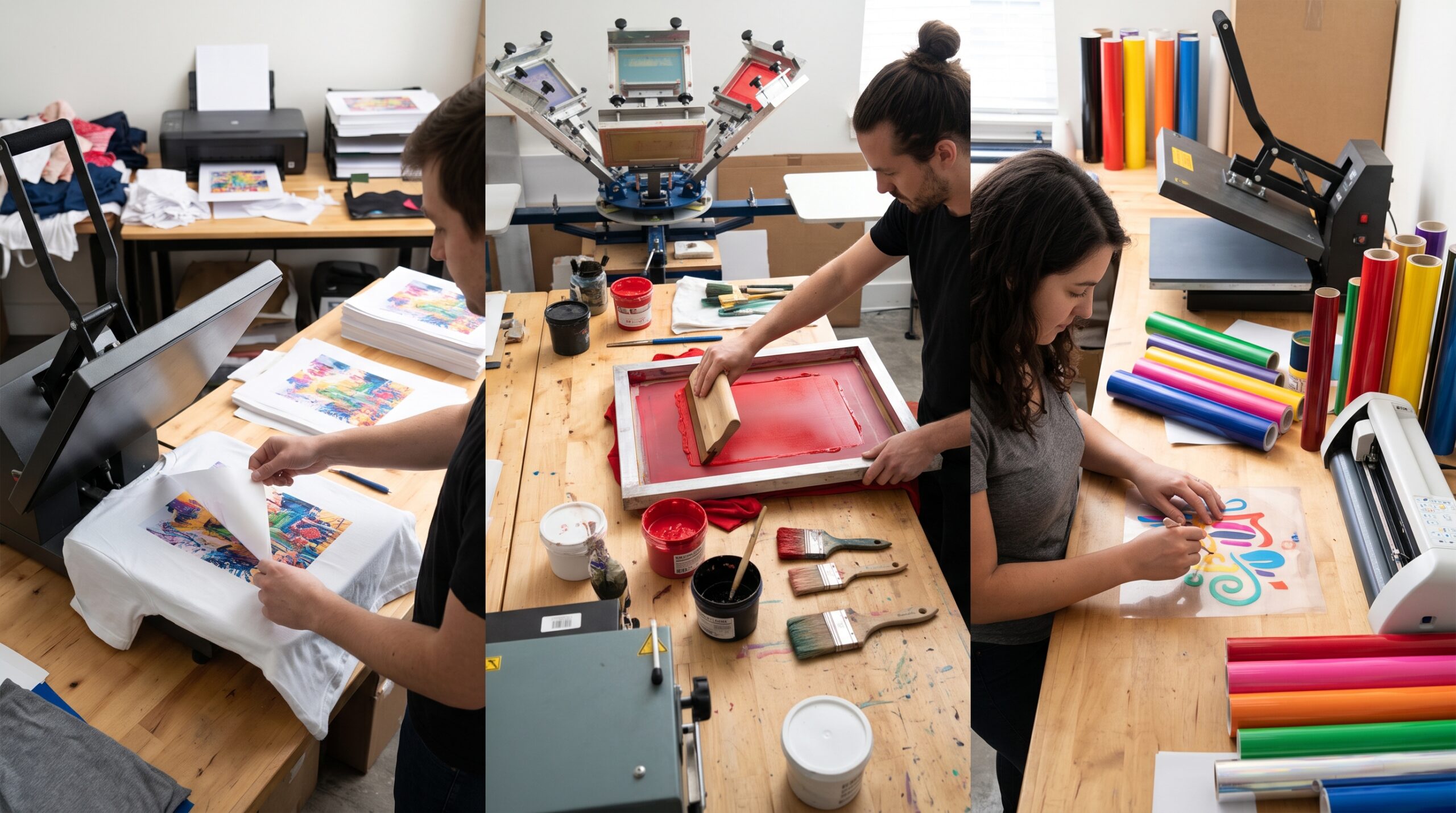
The primary difference between sublimation printing, screen printing and heat transfer vinyl lies in how the design bonds to the garment, the compatible fabric types, and the overall production cost per unit. Sublimation uses heat to convert solid dye into gas, permanently infusing polyester fibres with zero ink texture. Screen printing forces liquid ink through individual stencils onto cotton or blended fabrics, providing the most cost-effective solution for bulk quantities. Heat transfer vinyl uses a computer plotter to cut coloured polyurethane sheets that are heat-pressed onto garments, making it ideal for low-volume runs, individual team names, and player numbers.
Comparing the Mechanics: How Each Printing Method Operates
Each printing method manipulates ink, vinyl, and textiles differently to produce finished workwear, sportswear, or promotional clothing. Knowing the fundamental mechanics behind each option makes it straightforward to match your design to the right garment.
Sublimation Printing
Sublimation relies on a thermal chemical process. Specialised water-based dye inks are printed onto transfer paper and placed onto a synthetic textile under a heavy heat press. When heated past 190 degrees Celsius, the dye turns straight from a solid into a gas, penetrating the polyester fibres before reverting to a solid. Because the colour infuses the polymer chains directly, the surface remains entirely smooth. This method works exclusively on synthetic materials such as 100 percent polyester or high-poly blends, and produces clear, photorealistic results on white or light backgrounds.
Screen Printing
Screen printing, also known as silkscreening, uses woven mesh screens prepared with photosensitive emulsion to create custom stencils for each colour in a graphic. Thick plastisol or water-based ink is placed onto the screen and pulled across with a rubber squeegee, pushing the ink through the open mesh onto the garment. The garment then travels down an infrared conveyor oven to cure. Screen printing bonds cleanly to natural cotton, poly-cotton blends, fleece, and dark fabrics. Because setting up individual screens takes preparation time, screen printing is geared toward larger orders.
Heat Transfer Vinyl
Heat transfer vinyl involves plotting cut lines on solid or patterned sheets of polyurethane backed with heat-activated adhesive. An automated cutter outlines the graphics, after which a technician weeds away the excess vinyl material by hand. The design is then placed directly on the garment and bonded using a commercial heat press. The result is a distinct, durable layer that rests on top of the fabric weave. Vinyl adheres reliably to virtually any fabric, including pure cotton, nylon, polyester, and heavy canvas.
Key Differences in Durability, Feel and Fabric Compatibility
How an embellished shirt holds up against frequent washing and daily wear in the Gauteng climate depends on selecting the proper pairing of print technique and textile base. The practical differences come down to texture, substrate restrictions, and maintenance:
- Garment feel: Sublimation leaves zero physical texture on the shirt, ensuring lightweight athletic tops stay completely breathable and soft. Screen printing deposits a light to medium layer depending on whether discharge, water-based, or plastisol inks are used. Heat transfer vinyl leaves a noticeable, rubbery layer resting over the weave.
- Fabric suitability: Sublimation only works on polyester fabrics or polymer-coated merchandise. Screen printing performs exceptionally well across cotton, poly-cotton blends, and darker garments. Vinyl attaches firmly to cotton, polyester blends, and treated synthetic materials.
- Longevity and wash care: Sublimation prints do not crack, peel, or fade over time because the dye is trapped inside the yarn. Screen printing offers years of resilience under regular wash cycles when properly cured. Vinyl provides strong durability but can wrinkle, lift, or peel along thin borders if exposed to harsh detergents or high heat inside tumble dryers.
Cost and Order Quantity Considerations for Local Production
Balancing production volume against budget limits is a daily reality when supplying school athletics or outfitting corporate teams. Sourcing custom apparel in Johannesburg requires choosing the production method that minimises initial tooling fees while offering an attractive unit price:
- Small quantities and one-off items: Heat transfer vinyl requires no screen setups or colour separation films, making it the most cost-effective option for batches under twenty shirts, prototype samples, or individual jersey numbers.
- High-volume bulk apparel: Screen printing requires upfront screen preparation costs per colour, but the unit price drops steeply once an order reaches fifty or more shirts.
- All-over, full-colour graphic apparel: Sublimation prints photographic artwork, complex gradients, and unlimited colour palettes in one press, keeping unit costs consistent on fully branded sports kits and technical jackets.
Choosing the Right Print Method for Your Project
Selecting the ideal process comes down to aligning your design complexity, order quantity, and garment composition. Match your apparel requirements to these real-world scenarios:
- Select sublimation for technical sportswear, school running vests, soccer jerseys, and all-over printed apparel where breathability and unrestricted colour matter most.
- Select screen printing for high-volume corporate giveaways, conference t-shirts, school uniforms, and retail streetwear crafted from cotton or poly-cotton fabrics.
- Select heat transfer vinyl for personalised rugby numbers, individual employee names on work shirts, small-batch club kits, and durable single-colour chest logos.
Sublimation Printing With Pink Crystal Clothing
Pink Crystal Clothing manufactures corporate uniforms, custom jackets, tracksuits, and school sportswear from our production base in Edenvale, Johannesburg. We oversee printing and branding operations under one roof, keeping production on schedule and garments resilient under demanding daily conditions. Our specialists guide you to the exact method that fits your budget, timeline, and fabric choice. Click the button below to get your sublimation printing done with Pink Crystal Clothing.
FAQs
Can you screen print on 100 percent polyester activewear?
Screen printing works on pure polyester, but it requires specialised low-cure inks and bleed-blocking barrier bases to stop the fabric dye from migrating into the design during oven drying. Sublimation remains the standard choice for technical polyester because it leaves no thick ink deposit and preserves the fabric breathability.
Why does heat transfer vinyl sometimes lift or peel?
Vinyl peeling generally happens when the heat press did not apply sufficient temperature, pressure, or dwell time during production. Laundering garments with scalding water, using concentrated fabric softeners, or ironing directly over the graphic also weakens the thermal adhesive over time.
Can you sublimate onto black cotton t-shirts?
Sublimation cannot print onto black or pure cotton garments. The process requires synthetic polyester fibres to open up and receive the dye gas. Because sublimation inks are translucent and contain no white pigment, they cannot cover dark surfaces or bond with natural cellulose fibres.
Which print technique is best for corporate workwear in South Africa?
Screen printing is the preferred choice for standard corporate orders exceeding thirty cotton or poly-blend garments due to its durability and low cost per piece. For smaller offices, or uniforms requiring individual employee names, a combination of screen printing for the main chest emblem and heat transfer vinyl for individual names works best.
Leave a Reply