Category: Pink Crystal Clothing

  • What Is the Difference Between Sublimation Printing, Screen Printing and Heat Transfer Vinyl

    What Is the Difference Between Sublimation Printing, Screen Printing and Heat Transfer Vinyl

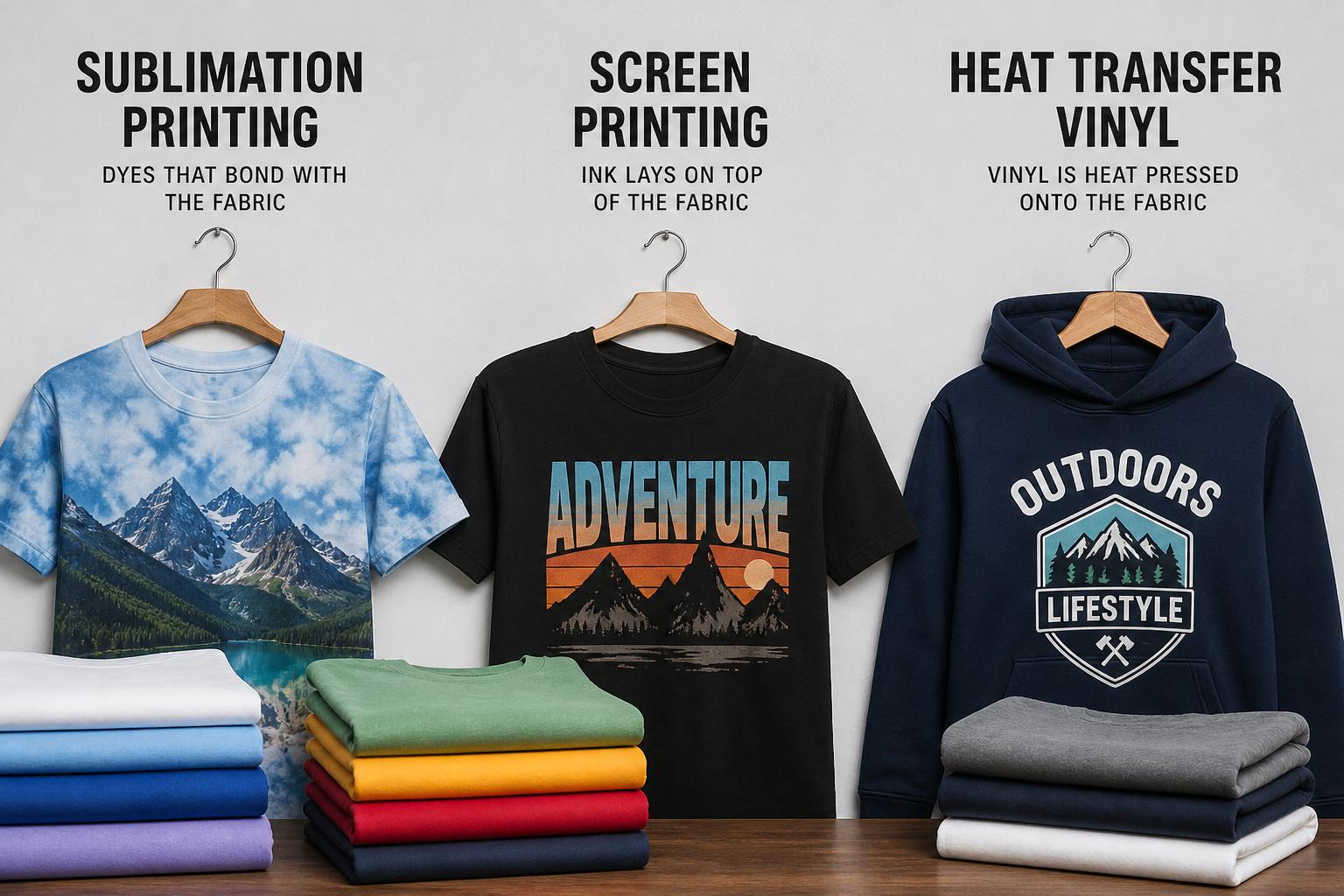
    The primary difference between sublimation printing, screen printing, and heat transfer vinyl lies in how the design bonds with the fabric, which directly dictates durability, garment compatibility, and production cost. Sublimation turns solid dye into a gas that permanently infuses polyester fibres at a molecular level, leaving zero ink texture. Screen printing pushes liquid ink through mesh stencils directly onto cotton or blended fabrics, creating vibrant, long-lasting layers ideal for high-volume orders. Heat transfer vinyl uses a computer-guided blade to cut solid sheets of polyurethane material, which are then fused to the garment surface with a commercial heat press. Selecting the correct method depends on your order volume, design complexity, and garment material.

    How Each Apparel Printing Method Works

    Understanding the mechanical process behind each print technique helps determine which application will deliver the best finish for your corporate team, sports club, or promotional campaign. Each method interacts with textiles in a distinct way.

    Dye Sublimation Printing

    Sublimation relies on high heat and pressure to trigger a chemical phase change. Specialized disperse inks are printed onto transfer paper and pressed onto synthetic textiles at temperatures exceeding 190 degrees Celsius. The heat opens the synthetic polymer chains while simultaneously vaporising the ink into gas. Once cooled, the pores close, trapping the pigment inside the threads. Because the colour becomes part of the yarn itself rather than sitting on top, the print will never crack, peel, or fade under Johannesburg sun exposure.

    Traditional Screen Printing

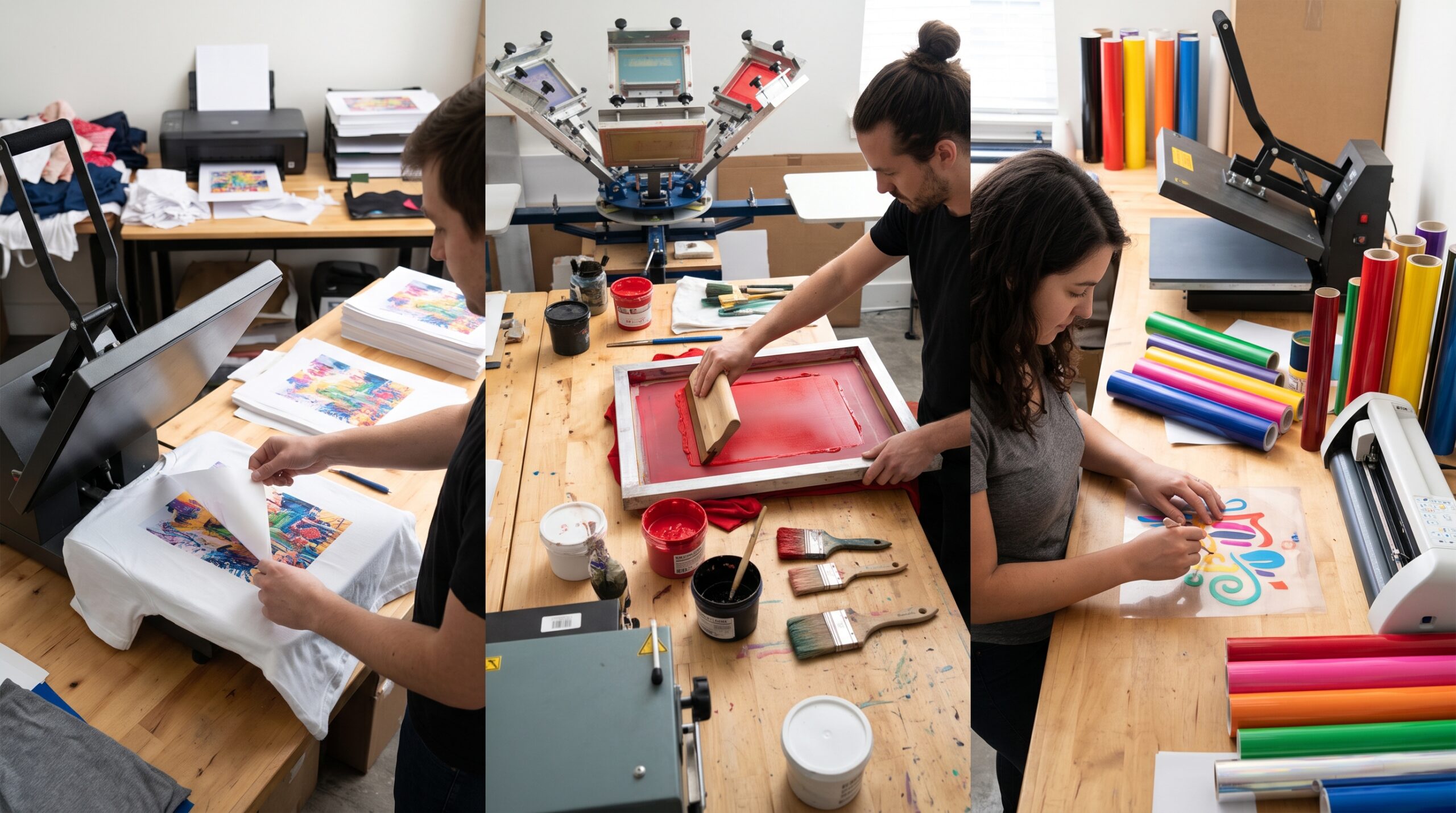
    Screen printing remains the global industrial benchmark for branded clothing. The process requires separating an artwork file into individual colour layers, exposing each colour onto a fine mesh screen coated in photosensitive emulsion, and loading them onto a carousel press. A squeegee pushes thick plastisol or water-based ink through the open mesh onto the fabric, which then cures inside an industrial tunnel oven. While the initial setup requires precision and workshop time, it provides deep colour saturation and exceptional unit economics on large production runs.

    Heat Transfer Vinyl

    Often referred to as HTV, this method is a mechanical and heat-bonded process. Vector artwork is mirrored and sent to a digital cutting plotter, which slices the outline into rolls of colour vinyl or printable polyurethane film. An operator manually weeds out the excess vinyl before aligning the cut graphic onto the garment. A flatbed heat press applies heat and calibrated pressure to activate the adhesive backing, welding the vinyl film directly to the face of the fabric.

    Direct Comparison: Fabric, Durability, and Volume

    Every branding project comes with specific trade-offs regarding budget, fabric composition, and wash resistance. Evaluating your project against core performance criteria ensures your garments survive rigorous daily wear and regular laundering:

    • Sublimation printing: Works exclusively on white or light-coloured polyester and polymer-coated substrates, offers indefinite wash durability with zero tactile feel, and accommodates unlimited colours or photo gradients without added setup fees.
    • Screen printing: Excels on 100 percent cotton, poly-cotton blends, fleece, and dark fabrics, provides years of durability, and delivers the lowest cost per unit on bulk orders over 50 garments.
    • Heat transfer vinyl: Bonds well to almost any flat textile including cotton, nylon, and polyester blends, offers moderate durability, but introduces a noticeable rubbery hand feel and requires careful low-temperature washing.

    Fabric Compatibility and Colour Matching

    Sublimation is physically incapable of dying natural plant fibres like cotton because cotton lacks synthetic polymers. If you run a sublimation print across dark fabric, the dye remains invisible because sublimation ink contains no white pigment and behaves like a transparent watercolour. Screen printing solves this limitation effortlessly by laying down a solid white underbase, allowing neon, metallic, and exact Pantone colours to stand out boldly against pitch-black hoodies, conti suits, and t-shirts. Vinyl provides excellent opacity on dark garments as well, but large solid designs can feel stiff and trap body heat, which is uncomfortable in high temperatures.

    Choosing the Right Printing Method for Your Order

    Selecting the optimal method requires balancing your artwork details against your timeline and total order size. If you are ordering custom branded promotional apparel for your team or organization, consider how these production rules align with your practical goals:

    • Select sublimation for full-coverage sportswear, moisture-wicking golf shirts, school athletics vests, and multi-colour designs where breathability and zero weight are essential.
    • Select screen printing for corporate staff uniforms, school matric jackets, promotional event shirts, and bulk merchandise runs where cost-efficiency and rich print density matter most.
    • Select heat transfer vinyl for individual names and player numbers on sports kits, small prototype batches, or single-colour logos on weather-resistant windbreakers.

    Production Timelines and Cost Efficiency in Gauteng

    Production logistics in South Africa require clear planning, especially when coordinating event deadlines around municipal power schedules and regional supply chains. The mechanical setup required for each method influences turnaround time and total project cost:

    • Initial setup costs: Screen printing requires individual screen burning and washouts for each colour, making small runs expensive but driving per-unit prices down dramatically as volume rises. Sublimation and vinyl require zero screen setups, making them financially viable for varied or smaller batches.
    • Labour intensity: Vinyl weeding demands manual labour for every single garment, meaning production costs stay flat and do not drop on large orders. In contrast, screen printing and roll-to-roll sublimation can run at high speed once the press is calibrated.
    • Maintenance and wear: Sublimation requires no special laundry precautions, while screen-printed and vinyl-pressed items should be washed inside out in cold water and never ironed directly over the print.

    Precision Solutions With Pink Crystal Clothing

    Pink Crystal Clothing manufactures dependable apparel and industrial workwear built to withstand demanding conditions across Southern Africa. Whether your team requires durable screen-printed work uniforms for heavy-duty environments, crisp heat-pressed identification numbers for athletic teams, or full-coverage sublimation prints for vibrant corporate sportswear, our production facility handles orders ranging from 50 to more than 10,000 units with meticulous quality control. Connect with our technical manufacturing team through our direct quote request form to discuss your garment specifications, artwork files, and bulk delivery schedules.

    Frequently Asked Questions

    Can sublimation print on dark cotton t-shirts?

    No. Sublimation chemistry requires synthetic polymer chains to bond, meaning it cannot bond with raw cotton fibres. Furthermore, sublimation ink is translucent and contains no opaque white ink, which prevents it from showing up on dark materials. To print bright graphics on dark cotton, screen printing or heat transfer vinyl is the proper choice.

    Which printing method lasts the longest through repeated washing?

    Sublimation printing lasts the longest because the dye permanently becomes part of the fabric yarn itself, making it impossible to crack or peel. Screen printing is a close second; when cured properly at commercial temperatures, high-grade screen-printed plastisol inks will last for many years without significant degradation.

    Why is heat transfer vinyl usually avoided for large bulk orders?

    Heat transfer vinyl requires manual weeding, where a technician hand-picks away the excess vinyl around letters and graphics using a dental hook. This manual step does not get faster with scale, making vinyl labour-intensive, slow, and expensive for production runs of 50 garments or more.

    What is the minimum order quantity for screen printing vs sublimation?

    Because screen printing requires burning distinct physical screens and mixing individual inks for every colour separation, commercial workshops typically set minimum order quantities around 50 units to offset setup labour. Sublimation printing uses digital wide-format transfer printers without screen fees, allowing greater flexibility for custom patterns, although bulk fabric cutting and stitching still benefit from larger production runs.
  • Does Sublimation Printing Fade or Wash Out, and How to Care for Sublimated Clothing

    Does Sublimation Printing Fade or Wash Out, and How to Care for Sublimated Clothing

    Sublimation printing does not fade, crack, peel, or wash out under standard laundering because the disperse dyes bond with polyester fibres at a molecular level rather than sitting on top of the fabric. During the heat press transfer, solid dye turns directly into a gas, penetrating the open pores of the synthetic yarn before locking inside as the garment cools. While the dye itself will not wash away in water, poor care habits, boiling water temperatures, and prolonged exposure to harsh Johannesburg sunlight can weaken the surrounding polyester fibres and dull the finish over time. Following a simple, protective laundry routine ensures that vibrant colours remain sharp throughout the entire lifespan of the garment.

    Why Sublimation Printing Does Not Wash Out

    Traditional screen printing and heat transfer vinyl place ink layers or plastic films directly onto the surface of a shirt. After repeated wash cycles, those surface layers dry out, fracture, and wash away in flakes. Sublimation functions differently by relying on chemical infusion. High temperature opens the polymer chains in synthetic textiles, allowing gaseous dye to permeate the core of each yarn strand. Because the colour now forms part of the textile itself, standard machine agitation and cold water cannot rinse the pigments free.

    Sublimation requires synthetic fabrics, primarily polyester or high-content poly blends, because natural cotton fibres lack the molecular structures required to trap the gaseous dye. When executed correctly on high-grade moisture-management fabric, the print retains original airflow properties without adding stiff, rubbery weight to the chest or back panels.

    Key structural reasons sublimated apparel outlasts conventional print methods:

    • Permanent molecular infusion prevents peeling, cracking, and flaking
    • Unblocked fabric weave maintains natural sweat-wicking performance and breathability
    • Resistant to cold water wash cycles, athletic friction, and detergent exposure
    • Lightweight finish adds zero extra weight or rigid plastic texture to team kits

    Step-by-Step Care Guide for Sublimated Clothing

    Proper garment care protects the underlying synthetic fibres from heat degradation and mechanical abrasion. Whether handling weekly sports kits or company team wear, adopting a consistent laundry method keeps colours vivid and prevents surface bobbling.

    Washing Best Practices

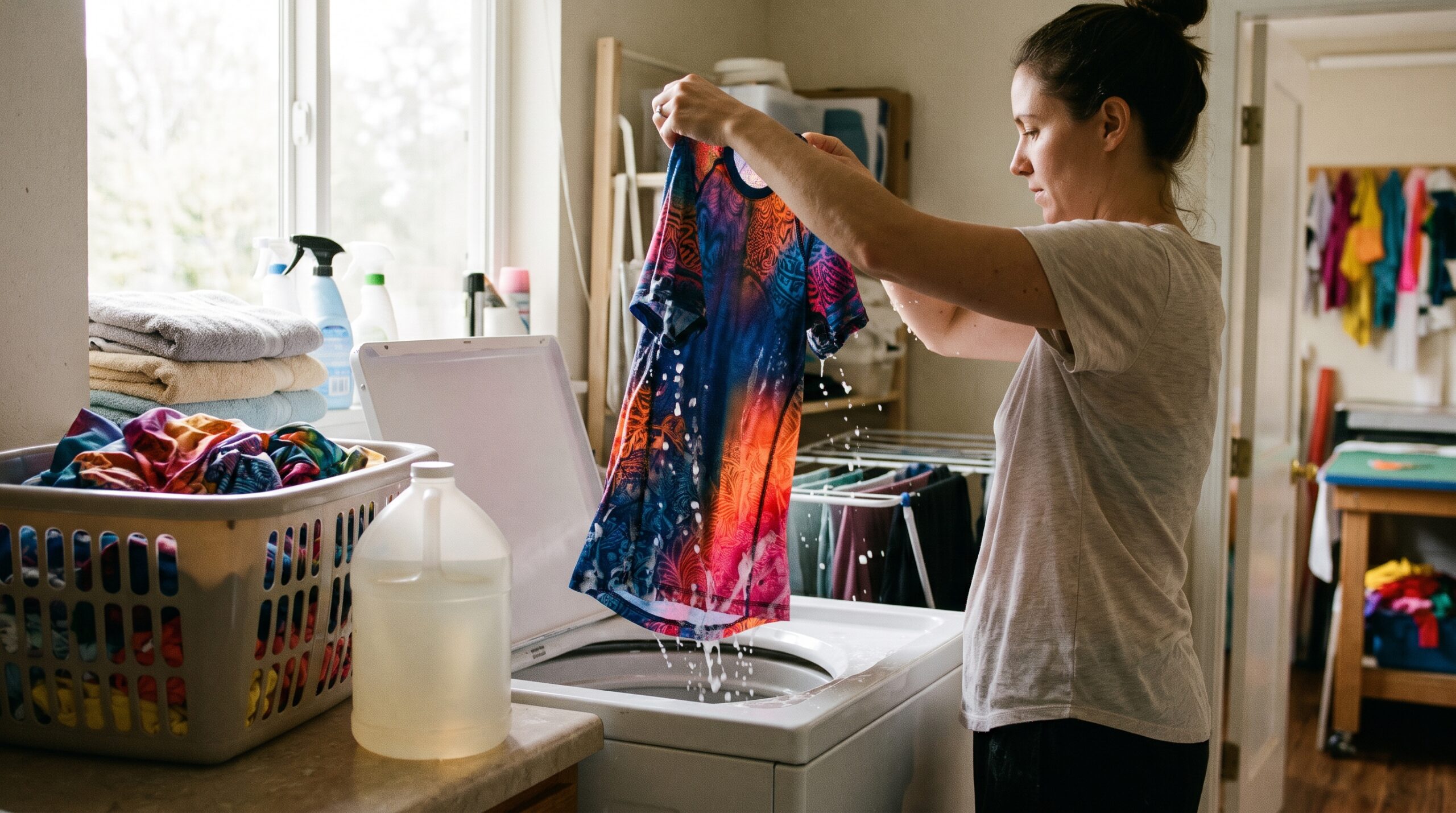
    Always turn sublimated garments inside out before placing them into the drum. This simple step protects the smooth exterior face from rubbing against metal buttons, coarse zippers, and heavy denim seams. Select a gentle cycle using cold or lukewarm water capped at thirty degrees Celsius. Heavy soil does not require scalding temperatures; quality sports detergents break down sweat, dirt, and odour effectively in cool water without stressing synthetic yarn.

    Detergent and Chemical Guidelines

    Choose mild liquid detergents formulated for synthetics or activewear. Avoid powdered detergents with abrasive granules that cause micro-scratches on polyester yarn. Never add chlorine bleach or aggressive oxygen-based stain removers to the wash cycle, as harsh bleaching agents break down the chemical bonds of the dye and weaken synthetic thread.

    Essential washing rules to preserve colour vibrancy:

    • Wash items inside out on a gentle cold-water cycle below thirty degrees Celsius
    • Use mild liquid detergents free from chlorine bleach and optical brighteners
    • Skip fabric softeners entirely to avoid coating moisture-wicking pores with silicone
    • Fasten all zips and hooks on nearby garments to eliminate snagging hazards

    Drying Without High Heat Damage

    Air drying remains the safest, most energy-efficient method for synthetic athletic apparel. The dry Highveld climate around Johannesburg dries polyester garments rapidly indoors or on a shaded line. Avoid hanging bright sublimated shirts under scorching midday sun for days at a time, since intense ultraviolet exposure will eventually degrade the synthetic yarn. If machine drying is necessary during wet summer thunderstorms or tight turnaround times, choose the lowest heat setting and remove the clothing while still slightly damp.

    Ironing Precautions

    Sublimation inks reactivate when exposed to extreme heat. Placing a hot household iron directly onto a sublimated pattern can scorch the polyester base and cause the ink to smear or transfer onto the iron plate. If smoothing out creases is necessary, steam the garment lightly or iron the fabric on the reverse side on a low synthetic setting using a clean cotton tea towel as a protective buffer.

    What Causes Sublimated Apparel to Degrade Over Time

    While the dye itself will not dissolve in water, external factors can alter the look and feel of sublimated garments. Identifying these hazards helps teams and corporate staff avoid premature wear.

    Common mistakes that shorten the lifespan of printed performance gear:

    • Running commercial dryers on high heat settings that distort synthetic fibres
    • Applying bare hot irons directly over printed panel seams and logos
    • Soaking kit in harsh chlorine bleach or industrial chemical solutions
    • Subjecting garments to rough friction against coarse velcro and backpack straps

    Sublimation Printing With Pink Crystal Clothing

    High-performance workwear and athletic apparel require experienced manufacturing standards from start to finish. Pink Crystal Clothing manufactures durable custom apparel in Johannesburg, combining quality synthetic fabrics with precision sublimation techniques for schools, sports clubs, and corporate teams across South Africa. Production runs cater to medium and high-volume orders starting from fifty units, ensuring consistent colour matching across every shirt, jacket, and pair of shorts. Click the button below to get your sublimation printing done at Pink Crystal Clothing.

    FAQs

    Can you wash sublimated shirts in warm water?

    Yes, but water temperatures should not exceed thirty to forty degrees Celsius. Cool or lukewarm cycles remove dirt and sweat thoroughly without stressing the synthetic fibres or risking thermal damage to the dye bonds.

    Will bleach ruin a sublimated shirt?

    Yes. Chlorine bleach and harsh chemical strippers attack the molecular structure of both the polyester fibre and the dye, leading to permanent discolouration, patchy spots, and weakened seams.

    Why is my sublimated shirt fading in the sun?

    The dye itself is heat-fused, but intense ultraviolet radiation from the Johannesburg sun gradually breaks down synthetic polyester polymers over prolonged periods. Always dry sublimated apparel in the shade or indoors rather than leaving damp kit baking in direct sunlight.

    Can you tumble dry sublimated garments?

    Tumble drying on low heat is acceptable when time is limited, but air drying on a hanger or rack is ideal. High dryer heat can melt or deform synthetic polyester yarn and cause shrinkage along seam lines.

  • What Clothing Items Can Be Sublimated in Johannesburg

    What Clothing Items Can Be Sublimated in Johannesburg

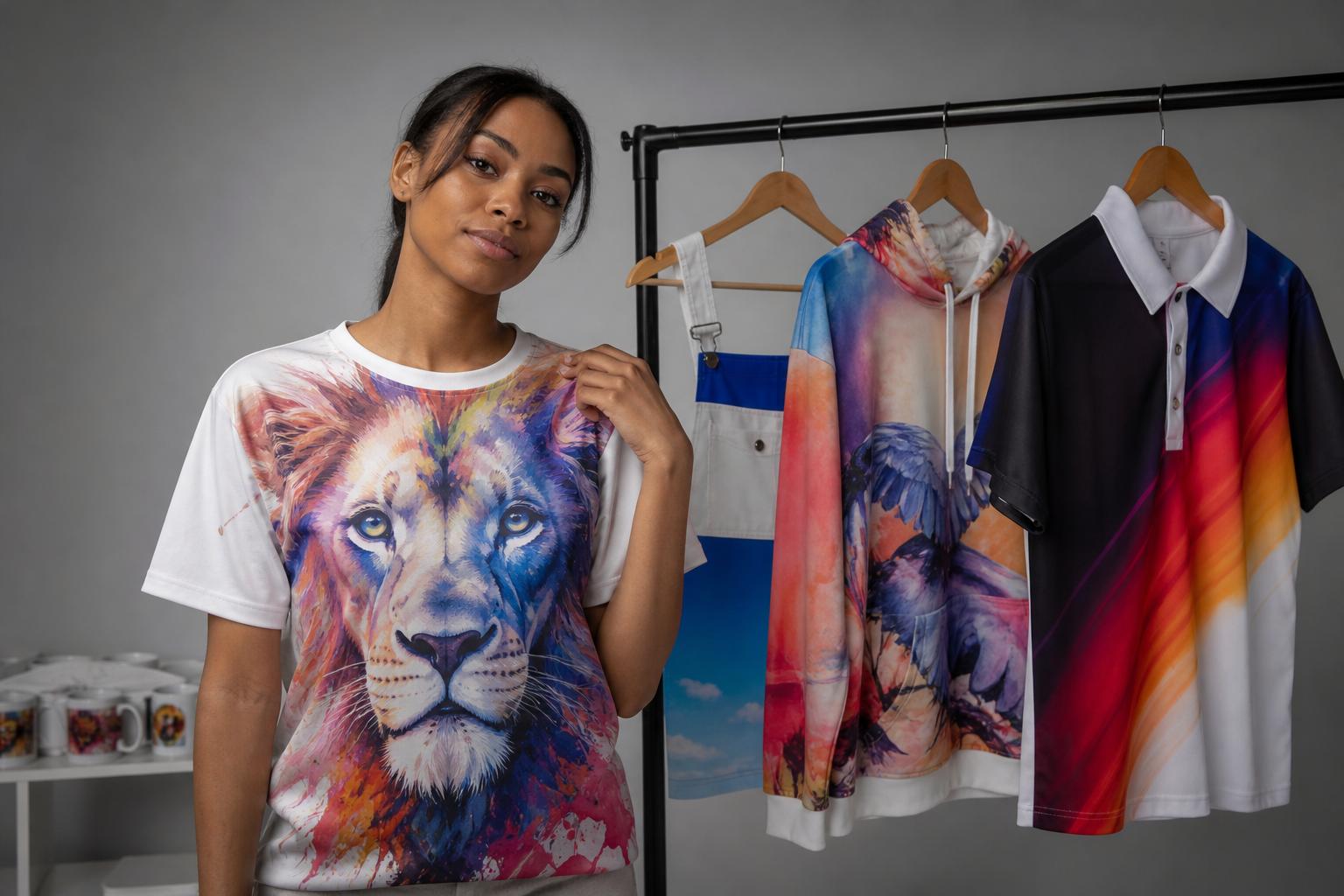
    In Johannesburg, almost any apparel item constructed from 100 percent polyester or high-content polyester blends can be sublimated, including performance jackets, athletic tracksuits, corporate golf shirts, motorsport racing shirts, and specialised flight suits. The sublimation process uses heat and pressure to infuse dye directly into the synthetic fibres at a molecular level, creating permanent, full-colour patterns that will not peel, crack, or fade under the harsh Highveld sun. Because the print becomes part of the yarn itself rather than sitting on top of the fabric, sublimated garments maintain their breathability, soft texture, and structural strength through rigorous daily wear.

    Core Garments Engineered for Sublimation Printing

    Sublimation allows complete design coverage across every square centimetre of a garment. Rather than stamping a small logo onto a pre-stitched blank, manufacturers print flat fabric panels before assembling them. This cut-make-and-trim process ensures continuous artwork across seams, zips, and collars.

    Pink Crystal Clothing manufactures five staple garment categories engineered specifically for full-coverage dye sublimation:

    • Jackets: Softshell jackets, lightweight windbreakers, bomber jackets, and matric outerwear receive rich edge-to-edge printing that withstands dry winter winds and repeated machine washing.
    • Tracksuits: Full warm-up sets, including matching tops and bottoms built from moisture-wicking micro-active or poly-fleece materials, serve sports clubs, private schools, and corporate fitness teams across Gauteng.
    • Golf Shirts: Performance golfers crafted from lightweight pique knit polyester provide breathable comfort for corporate golf days, sales staff, and trade events without heavy rubberised ink patches.
    • Racing Shirts: High-contrast pit shirts, motocross jerseys, and rally crew tops support complex sponsor branding, high-resolution photography, and crisp gradient fades suitable for events at Kyalami or regional dirt tracks.
    • Flight Suits: Heavy-duty single-piece and two-piece aviation jumpsuits built for flight schools, charter operators, and technical crews stationed at Lanseria or Rand Airport maintain crisp insignia and hi-vis panelling.

    Why Polyester Is Essential for the Process

    Dye sublimation relies on a specific thermal reaction that only occurs with synthetic polymer chains. When heat reaches approximately two hundred degrees Celsius, the solid dye turns into gas without becoming liquid. Synthetic fibres relax and open their pores, absorbing the gas before cooling and locking the pigment permanently into the yarn. Natural fibres like pure cotton cannot absorb disperse dyes; the ink simply washes away on the first laundry cycle.

    Technical Advantages of Sublimation for Johannesburg Teams and Businesses

    Johannesburg sits at high altitude, which means local sports teams and outdoor work crews face elevated levels of ultraviolet radiation. Standard heat vinyl and plastisol screen prints often stiffen, blister, and crack after prolonged exposure to the intense Gauteng climate.

    Opting for sublimated apparel delivers distinct practical advantages over traditional screen printing or heat transfers:

    • Permanent colour fastness: The dye embeds within the synthetic yarn, preventing fading, cracking, or peeling caused by intense UV exposure and repeated wash cycles.
    • Zero weight or breathability loss: Because no heavy ink layers sit on top of the fabric, performance materials retain their full breathability and moisture-management properties.
    • Unlimited design freedom: Gradient fills, photographic images, and multiple sponsor logos cost the same as a single-colour print since the entire pattern is printed in one run.
    • Seam-to-seam visual continuity: Sublimating fabric panels before CMT assembly ensures graphics run smoothly across zips, collars, and shoulder seams.

    Cut-Make-and-Trim Manufacturing Versus Off-the-Shelf Printing

    Printing directly onto already-made shirts often creates irregular white creases under the armpits, along seams, and around the collar. Professional manufacturing solves this by printing wide-format transfer sheets, heat-pressing the rolls of raw white polyester fabric, and then cutting and stitching each individual panel. This technique allows exact alignment of sponsor badges, chest stripes, and side-panel accents across tracksuits and flight suits.

    Selecting the Right Fabric for Your Garment Application

    The texture and density of your polyester base determine how the finished garment feels, drapes, and performs. Different weights and weaves suit different operational requirements, from fast-paced sports to cold-weather work environments.

    Selecting the correct poly-based textile ensures your apparel performs reliably for its intended environment:

    • Moisture-wicking bird-eye mesh: Ideal for golf shirts, running gear, and hot-weather motorsport racing shirts that require maximum airflow and rapid drying.
    • Micro-active and peach-skin polyester: Best suited for lightweight tracksuits, athletic shorts, and weather-resistant outer jacket shells.
    • Bonded softshell and brushed fleece: Formulated for warm corporate jackets, matric outerwear, and heavy-duty winter flight suits.

    Sublimation Printing With Pink Crystal Clothing

    Pink Crystal Clothing operates a full-scale manufacturing facility in Eastleigh, Edenvale, delivering custom sublimation apparel for companies, schools, and racing teams across Johannesburg. With in-house CMT production and wide-format sublimation presses, the team produces custom jackets, tracksuits, golf shirts, racing shirts, and flight suits built to exact technical specifications. Production runs accommodate wholesale volumes from 50 units up to 10,000 units, backed by generator systems to prevent municipal power interruptions from delaying client delivery schedules. Click the button below to get your sublimation printing done with Pink Crystal Clothing.

    FAQs

    Can 100% cotton garments be sublimated?

    No, sublimation requires synthetic polymers such as polyester to bond with the dye particles. When heat is applied, polyester fibres expand to absorb the gaseous dye, locking the pigment permanently into the yarn. Natural fibres like cotton do not open up to receive the dye, causing the ink to wash out immediately. For cotton garments, screen printing or direct-to-film transfers serve as better alternatives.

    How long does custom sublimation manufacturing take in Johannesburg?

    Standard turnaround times for cut-make-and-trim sublimated apparel in Johannesburg range between two to three weeks from final artwork approval. Production schedules depend on order volume and factory capacity. Established local manufacturers with in-house printing, heat-pressing, and stitching facilities maintain tight delivery timelines while managing potential power disruptions with automated backup power systems.

    Will sublimated graphics peel or crack over time?

    Sublimated designs cannot peel or crack because the ink never forms a separate layer on the surface of the fabric. Instead, the dye chemically infuses into the polyester fibres at a molecular level. The garment maintains its original soft feel and flexibility throughout its entire working life, even after extensive sun exposure and industrial laundering.

    What is the minimum order quantity for sublimated clothing?

    Because full-panel sublimation requires setup for large-format digital printing, paper transfer, and panel cutting, commercial manufacturers typically maintain minimum order quantities. At Pink Crystal Clothing, production runs begin at 50 units per design, accommodating bulk needs for sports teams, aviation schools, and corporate fleets up to 10,000 units or more.

  • What Is the Difference Between Sublimation Printing, Screen Printing and Heat Transfer Vinyl

    What Is the Difference Between Sublimation Printing, Screen Printing and Heat Transfer Vinyl

    The primary difference between sublimation printing, screen printing and heat transfer vinyl lies in how the design bonds to the garment, the compatible fabric types, and the overall production cost per unit. Sublimation uses heat to convert solid dye into gas, permanently infusing polyester fibres with zero ink texture. Screen printing forces liquid ink through individual stencils onto cotton or blended fabrics, providing the most cost-effective solution for bulk quantities. Heat transfer vinyl uses a computer plotter to cut coloured polyurethane sheets that are heat-pressed onto garments, making it ideal for low-volume runs, individual team names, and player numbers.

    Comparing the Mechanics: How Each Printing Method Operates

    Each printing method manipulates ink, vinyl, and textiles differently to produce finished workwear, sportswear, or promotional clothing. Knowing the fundamental mechanics behind each option makes it straightforward to match your design to the right garment.

    Sublimation Printing

    Sublimation relies on a thermal chemical process. Specialised water-based dye inks are printed onto transfer paper and placed onto a synthetic textile under a heavy heat press. When heated past 190 degrees Celsius, the dye turns straight from a solid into a gas, penetrating the polyester fibres before reverting to a solid. Because the colour infuses the polymer chains directly, the surface remains entirely smooth. This method works exclusively on synthetic materials such as 100 percent polyester or high-poly blends, and produces clear, photorealistic results on white or light backgrounds.

    Screen Printing

    Screen printing, also known as silkscreening, uses woven mesh screens prepared with photosensitive emulsion to create custom stencils for each colour in a graphic. Thick plastisol or water-based ink is placed onto the screen and pulled across with a rubber squeegee, pushing the ink through the open mesh onto the garment. The garment then travels down an infrared conveyor oven to cure. Screen printing bonds cleanly to natural cotton, poly-cotton blends, fleece, and dark fabrics. Because setting up individual screens takes preparation time, screen printing is geared toward larger orders.

    Heat Transfer Vinyl

    Heat transfer vinyl involves plotting cut lines on solid or patterned sheets of polyurethane backed with heat-activated adhesive. An automated cutter outlines the graphics, after which a technician weeds away the excess vinyl material by hand. The design is then placed directly on the garment and bonded using a commercial heat press. The result is a distinct, durable layer that rests on top of the fabric weave. Vinyl adheres reliably to virtually any fabric, including pure cotton, nylon, polyester, and heavy canvas.

    Key Differences in Durability, Feel and Fabric Compatibility

    How an embellished shirt holds up against frequent washing and daily wear in the Gauteng climate depends on selecting the proper pairing of print technique and textile base. The practical differences come down to texture, substrate restrictions, and maintenance:

    • Garment feel: Sublimation leaves zero physical texture on the shirt, ensuring lightweight athletic tops stay completely breathable and soft. Screen printing deposits a light to medium layer depending on whether discharge, water-based, or plastisol inks are used. Heat transfer vinyl leaves a noticeable, rubbery layer resting over the weave.
    • Fabric suitability: Sublimation only works on polyester fabrics or polymer-coated merchandise. Screen printing performs exceptionally well across cotton, poly-cotton blends, and darker garments. Vinyl attaches firmly to cotton, polyester blends, and treated synthetic materials.
    • Longevity and wash care: Sublimation prints do not crack, peel, or fade over time because the dye is trapped inside the yarn. Screen printing offers years of resilience under regular wash cycles when properly cured. Vinyl provides strong durability but can wrinkle, lift, or peel along thin borders if exposed to harsh detergents or high heat inside tumble dryers.

    Cost and Order Quantity Considerations for Local Production

    Balancing production volume against budget limits is a daily reality when supplying school athletics or outfitting corporate teams. Sourcing custom apparel in Johannesburg requires choosing the production method that minimises initial tooling fees while offering an attractive unit price:

    • Small quantities and one-off items: Heat transfer vinyl requires no screen setups or colour separation films, making it the most cost-effective option for batches under twenty shirts, prototype samples, or individual jersey numbers.
    • High-volume bulk apparel: Screen printing requires upfront screen preparation costs per colour, but the unit price drops steeply once an order reaches fifty or more shirts.
    • All-over, full-colour graphic apparel: Sublimation prints photographic artwork, complex gradients, and unlimited colour palettes in one press, keeping unit costs consistent on fully branded sports kits and technical jackets.

    Choosing the Right Print Method for Your Project

    Selecting the ideal process comes down to aligning your design complexity, order quantity, and garment composition. Match your apparel requirements to these real-world scenarios:

    • Select sublimation for technical sportswear, school running vests, soccer jerseys, and all-over printed apparel where breathability and unrestricted colour matter most.
    • Select screen printing for high-volume corporate giveaways, conference t-shirts, school uniforms, and retail streetwear crafted from cotton or poly-cotton fabrics.
    • Select heat transfer vinyl for personalised rugby numbers, individual employee names on work shirts, small-batch club kits, and durable single-colour chest logos.

    Sublimation Printing With Pink Crystal Clothing

    Pink Crystal Clothing manufactures corporate uniforms, custom jackets, tracksuits, and school sportswear from our production base in Edenvale, Johannesburg. We oversee printing and branding operations under one roof, keeping production on schedule and garments resilient under demanding daily conditions. Our specialists guide you to the exact method that fits your budget, timeline, and fabric choice. Click the button below to get your sublimation printing done with Pink Crystal Clothing.

    FAQs

    Can you screen print on 100 percent polyester activewear?

    Screen printing works on pure polyester, but it requires specialised low-cure inks and bleed-blocking barrier bases to stop the fabric dye from migrating into the design during oven drying. Sublimation remains the standard choice for technical polyester because it leaves no thick ink deposit and preserves the fabric breathability.

    Why does heat transfer vinyl sometimes lift or peel?

    Vinyl peeling generally happens when the heat press did not apply sufficient temperature, pressure, or dwell time during production. Laundering garments with scalding water, using concentrated fabric softeners, or ironing directly over the graphic also weakens the thermal adhesive over time.

    Can you sublimate onto black cotton t-shirts?

    Sublimation cannot print onto black or pure cotton garments. The process requires synthetic polyester fibres to open up and receive the dye gas. Because sublimation inks are translucent and contain no white pigment, they cannot cover dark surfaces or bond with natural cellulose fibres.

    Which print technique is best for corporate workwear in South Africa?

    Screen printing is the preferred choice for standard corporate orders exceeding thirty cotton or poly-blend garments due to its durability and low cost per piece. For smaller offices, or uniforms requiring individual employee names, a combination of screen printing for the main chest emblem and heat transfer vinyl for individual names works best.