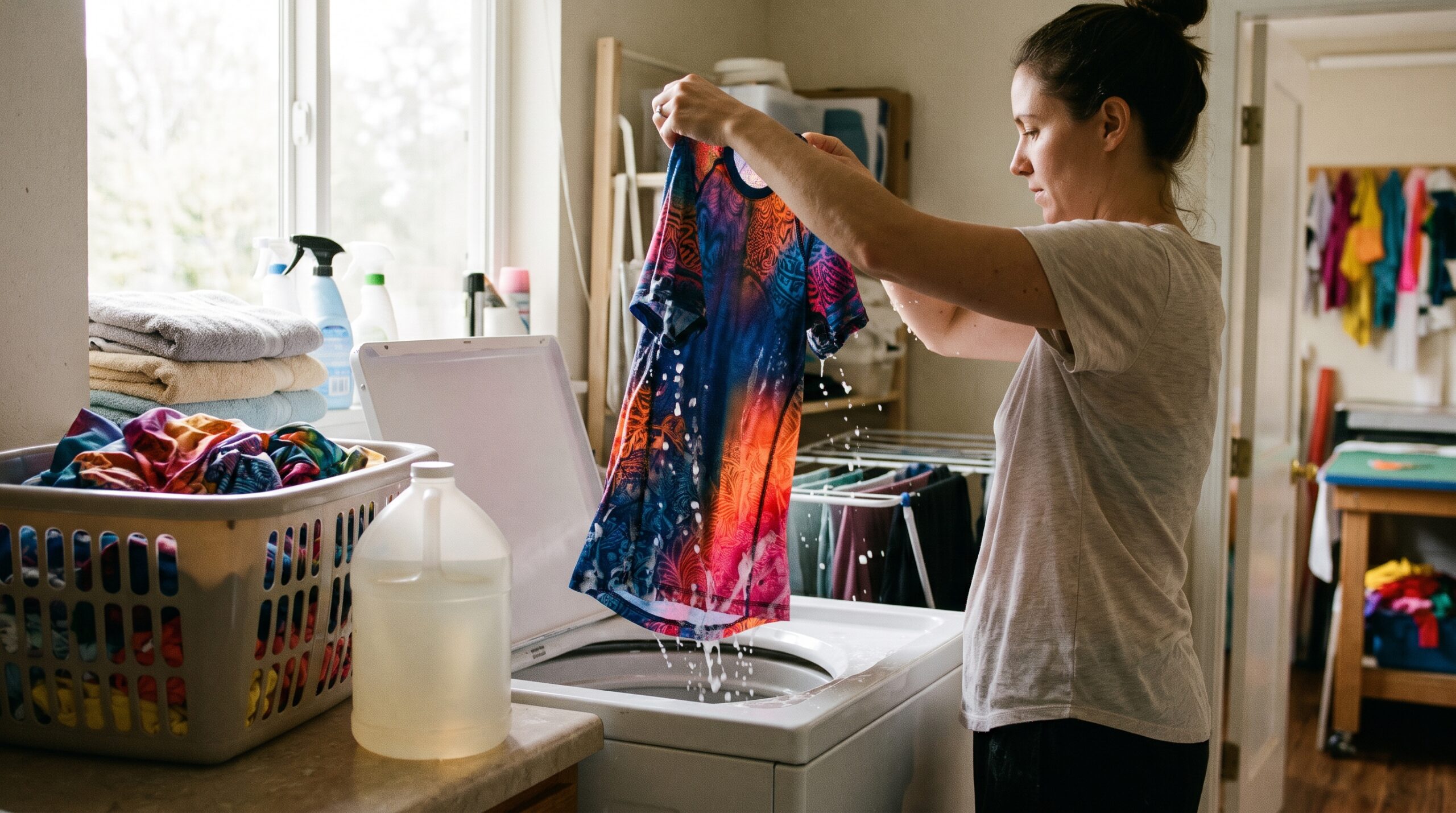
Sublimation printing does not fade, crack, peel, or wash out under standard laundering because the disperse dyes bond with polyester fibres at a molecular level rather than sitting on top of the fabric. During the heat press transfer, solid dye turns directly into a gas, penetrating the open pores of the synthetic yarn before locking inside as the garment cools. While the dye itself will not wash away in water, poor care habits, boiling water temperatures, and prolonged exposure to harsh Johannesburg sunlight can weaken the surrounding polyester fibres and dull the finish over time. Following a simple, protective laundry routine ensures that vibrant colours remain sharp throughout the entire lifespan of the garment.
Why Sublimation Printing Does Not Wash Out
Traditional screen printing and heat transfer vinyl place ink layers or plastic films directly onto the surface of a shirt. After repeated wash cycles, those surface layers dry out, fracture, and wash away in flakes. Sublimation functions differently by relying on chemical infusion. High temperature opens the polymer chains in synthetic textiles, allowing gaseous dye to permeate the core of each yarn strand. Because the colour now forms part of the textile itself, standard machine agitation and cold water cannot rinse the pigments free.
Sublimation requires synthetic fabrics, primarily polyester or high-content poly blends, because natural cotton fibres lack the molecular structures required to trap the gaseous dye. When executed correctly on high-grade moisture-management fabric, the print retains original airflow properties without adding stiff, rubbery weight to the chest or back panels.
Key structural reasons sublimated apparel outlasts conventional print methods:
- Permanent molecular infusion prevents peeling, cracking, and flaking
- Unblocked fabric weave maintains natural sweat-wicking performance and breathability
- Resistant to cold water wash cycles, athletic friction, and detergent exposure
- Lightweight finish adds zero extra weight or rigid plastic texture to team kits
Step-by-Step Care Guide for Sublimated Clothing
Proper garment care protects the underlying synthetic fibres from heat degradation and mechanical abrasion. Whether handling weekly sports kits or company team wear, adopting a consistent laundry method keeps colours vivid and prevents surface bobbling.
Washing Best Practices
Always turn sublimated garments inside out before placing them into the drum. This simple step protects the smooth exterior face from rubbing against metal buttons, coarse zippers, and heavy denim seams. Select a gentle cycle using cold or lukewarm water capped at thirty degrees Celsius. Heavy soil does not require scalding temperatures; quality sports detergents break down sweat, dirt, and odour effectively in cool water without stressing synthetic yarn.
Detergent and Chemical Guidelines
Choose mild liquid detergents formulated for synthetics or activewear. Avoid powdered detergents with abrasive granules that cause micro-scratches on polyester yarn. Never add chlorine bleach or aggressive oxygen-based stain removers to the wash cycle, as harsh bleaching agents break down the chemical bonds of the dye and weaken synthetic thread.
Essential washing rules to preserve colour vibrancy:
- Wash items inside out on a gentle cold-water cycle below thirty degrees Celsius
- Use mild liquid detergents free from chlorine bleach and optical brighteners
- Skip fabric softeners entirely to avoid coating moisture-wicking pores with silicone
- Fasten all zips and hooks on nearby garments to eliminate snagging hazards
Drying Without High Heat Damage
Air drying remains the safest, most energy-efficient method for synthetic athletic apparel. The dry Highveld climate around Johannesburg dries polyester garments rapidly indoors or on a shaded line. Avoid hanging bright sublimated shirts under scorching midday sun for days at a time, since intense ultraviolet exposure will eventually degrade the synthetic yarn. If machine drying is necessary during wet summer thunderstorms or tight turnaround times, choose the lowest heat setting and remove the clothing while still slightly damp.
Ironing Precautions
Sublimation inks reactivate when exposed to extreme heat. Placing a hot household iron directly onto a sublimated pattern can scorch the polyester base and cause the ink to smear or transfer onto the iron plate. If smoothing out creases is necessary, steam the garment lightly or iron the fabric on the reverse side on a low synthetic setting using a clean cotton tea towel as a protective buffer.
What Causes Sublimated Apparel to Degrade Over Time
While the dye itself will not dissolve in water, external factors can alter the look and feel of sublimated garments. Identifying these hazards helps teams and corporate staff avoid premature wear.
Common mistakes that shorten the lifespan of printed performance gear:
- Running commercial dryers on high heat settings that distort synthetic fibres
- Applying bare hot irons directly over printed panel seams and logos
- Soaking kit in harsh chlorine bleach or industrial chemical solutions
- Subjecting garments to rough friction against coarse velcro and backpack straps
Sublimation Printing With Pink Crystal Clothing
High-performance workwear and athletic apparel require experienced manufacturing standards from start to finish. Pink Crystal Clothing manufactures durable custom apparel in Johannesburg, combining quality synthetic fabrics with precision sublimation techniques for schools, sports clubs, and corporate teams across South Africa. Production runs cater to medium and high-volume orders starting from fifty units, ensuring consistent colour matching across every shirt, jacket, and pair of shorts. Click the button below to get your sublimation printing done at Pink Crystal Clothing.
FAQs
Can you wash sublimated shirts in warm water?
Yes, but water temperatures should not exceed thirty to forty degrees Celsius. Cool or lukewarm cycles remove dirt and sweat thoroughly without stressing the synthetic fibres or risking thermal damage to the dye bonds.
Will bleach ruin a sublimated shirt?
Yes. Chlorine bleach and harsh chemical strippers attack the molecular structure of both the polyester fibre and the dye, leading to permanent discolouration, patchy spots, and weakened seams.
Why is my sublimated shirt fading in the sun?
The dye itself is heat-fused, but intense ultraviolet radiation from the Johannesburg sun gradually breaks down synthetic polyester polymers over prolonged periods. Always dry sublimated apparel in the shade or indoors rather than leaving damp kit baking in direct sunlight.
Can you tumble dry sublimated garments?
Tumble drying on low heat is acceptable when time is limited, but air drying on a hanger or rack is ideal. High dryer heat can melt or deform synthetic polyester yarn and cause shrinkage along seam lines.
Leave a Reply