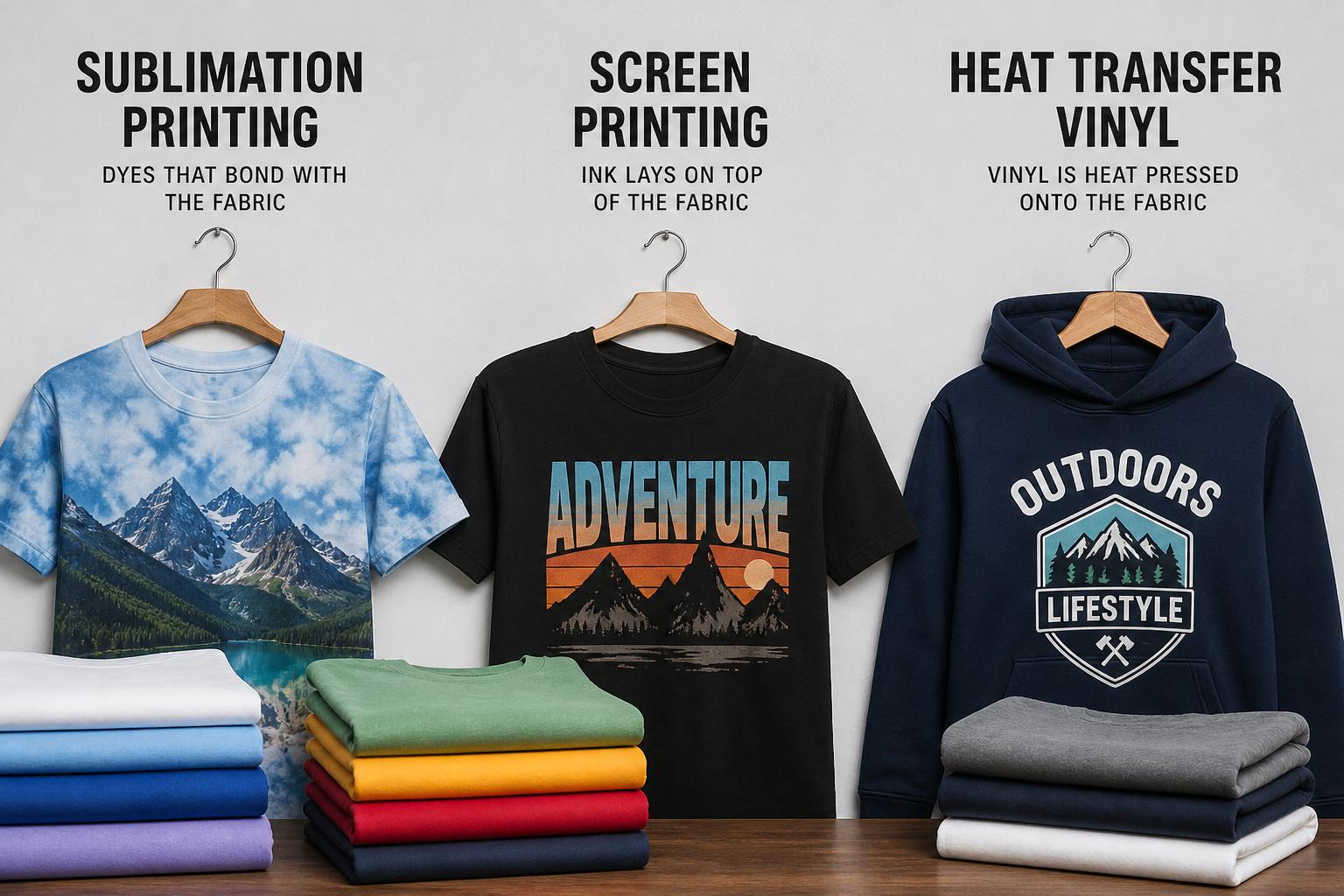
The primary difference between sublimation printing, screen printing, and heat transfer vinyl lies in how the design bonds with the fabric, which directly dictates durability, garment compatibility, and production cost. Sublimation turns solid dye into a gas that permanently infuses polyester fibres at a molecular level, leaving zero ink texture. Screen printing pushes liquid ink through mesh stencils directly onto cotton or blended fabrics, creating vibrant, long-lasting layers ideal for high-volume orders. Heat transfer vinyl uses a computer-guided blade to cut solid sheets of polyurethane material, which are then fused to the garment surface with a commercial heat press. Selecting the correct method depends on your order volume, design complexity, and garment material.
How Each Apparel Printing Method Works
Understanding the mechanical process behind each print technique helps determine which application will deliver the best finish for your corporate team, sports club, or promotional campaign. Each method interacts with textiles in a distinct way.
Dye Sublimation Printing
Sublimation relies on high heat and pressure to trigger a chemical phase change. Specialized disperse inks are printed onto transfer paper and pressed onto synthetic textiles at temperatures exceeding 190 degrees Celsius. The heat opens the synthetic polymer chains while simultaneously vaporising the ink into gas. Once cooled, the pores close, trapping the pigment inside the threads. Because the colour becomes part of the yarn itself rather than sitting on top, the print will never crack, peel, or fade under Johannesburg sun exposure.
Traditional Screen Printing
Screen printing remains the global industrial benchmark for branded clothing. The process requires separating an artwork file into individual colour layers, exposing each colour onto a fine mesh screen coated in photosensitive emulsion, and loading them onto a carousel press. A squeegee pushes thick plastisol or water-based ink through the open mesh onto the fabric, which then cures inside an industrial tunnel oven. While the initial setup requires precision and workshop time, it provides deep colour saturation and exceptional unit economics on large production runs.
Heat Transfer Vinyl
Often referred to as HTV, this method is a mechanical and heat-bonded process. Vector artwork is mirrored and sent to a digital cutting plotter, which slices the outline into rolls of colour vinyl or printable polyurethane film. An operator manually weeds out the excess vinyl before aligning the cut graphic onto the garment. A flatbed heat press applies heat and calibrated pressure to activate the adhesive backing, welding the vinyl film directly to the face of the fabric.
Direct Comparison: Fabric, Durability, and Volume
Every branding project comes with specific trade-offs regarding budget, fabric composition, and wash resistance. Evaluating your project against core performance criteria ensures your garments survive rigorous daily wear and regular laundering:
- Sublimation printing: Works exclusively on white or light-coloured polyester and polymer-coated substrates, offers indefinite wash durability with zero tactile feel, and accommodates unlimited colours or photo gradients without added setup fees.
- Screen printing: Excels on 100 percent cotton, poly-cotton blends, fleece, and dark fabrics, provides years of durability, and delivers the lowest cost per unit on bulk orders over 50 garments.
- Heat transfer vinyl: Bonds well to almost any flat textile including cotton, nylon, and polyester blends, offers moderate durability, but introduces a noticeable rubbery hand feel and requires careful low-temperature washing.
Fabric Compatibility and Colour Matching
Sublimation is physically incapable of dying natural plant fibres like cotton because cotton lacks synthetic polymers. If you run a sublimation print across dark fabric, the dye remains invisible because sublimation ink contains no white pigment and behaves like a transparent watercolour. Screen printing solves this limitation effortlessly by laying down a solid white underbase, allowing neon, metallic, and exact Pantone colours to stand out boldly against pitch-black hoodies, conti suits, and t-shirts. Vinyl provides excellent opacity on dark garments as well, but large solid designs can feel stiff and trap body heat, which is uncomfortable in high temperatures.
Choosing the Right Printing Method for Your Order
Selecting the optimal method requires balancing your artwork details against your timeline and total order size. If you are ordering custom branded promotional apparel for your team or organization, consider how these production rules align with your practical goals:
- Select sublimation for full-coverage sportswear, moisture-wicking golf shirts, school athletics vests, and multi-colour designs where breathability and zero weight are essential.
- Select screen printing for corporate staff uniforms, school matric jackets, promotional event shirts, and bulk merchandise runs where cost-efficiency and rich print density matter most.
- Select heat transfer vinyl for individual names and player numbers on sports kits, small prototype batches, or single-colour logos on weather-resistant windbreakers.
Production Timelines and Cost Efficiency in Gauteng
Production logistics in South Africa require clear planning, especially when coordinating event deadlines around municipal power schedules and regional supply chains. The mechanical setup required for each method influences turnaround time and total project cost:
- Initial setup costs: Screen printing requires individual screen burning and washouts for each colour, making small runs expensive but driving per-unit prices down dramatically as volume rises. Sublimation and vinyl require zero screen setups, making them financially viable for varied or smaller batches.
- Labour intensity: Vinyl weeding demands manual labour for every single garment, meaning production costs stay flat and do not drop on large orders. In contrast, screen printing and roll-to-roll sublimation can run at high speed once the press is calibrated.
- Maintenance and wear: Sublimation requires no special laundry precautions, while screen-printed and vinyl-pressed items should be washed inside out in cold water and never ironed directly over the print.
Precision Solutions With Pink Crystal Clothing
Pink Crystal Clothing manufactures dependable apparel and industrial workwear built to withstand demanding conditions across Southern Africa. Whether your team requires durable screen-printed work uniforms for heavy-duty environments, crisp heat-pressed identification numbers for athletic teams, or full-coverage sublimation prints for vibrant corporate sportswear, our production facility handles orders ranging from 50 to more than 10,000 units with meticulous quality control. Connect with our technical manufacturing team through our direct quote request form to discuss your garment specifications, artwork files, and bulk delivery schedules.
Frequently Asked Questions
Can sublimation print on dark cotton t-shirts?
No. Sublimation chemistry requires synthetic polymer chains to bond, meaning it cannot bond with raw cotton fibres. Furthermore, sublimation ink is translucent and contains no opaque white ink, which prevents it from showing up on dark materials. To print bright graphics on dark cotton, screen printing or heat transfer vinyl is the proper choice.
Which printing method lasts the longest through repeated washing?
Sublimation printing lasts the longest because the dye permanently becomes part of the fabric yarn itself, making it impossible to crack or peel. Screen printing is a close second; when cured properly at commercial temperatures, high-grade screen-printed plastisol inks will last for many years without significant degradation.
Why is heat transfer vinyl usually avoided for large bulk orders?
Heat transfer vinyl requires manual weeding, where a technician hand-picks away the excess vinyl around letters and graphics using a dental hook. This manual step does not get faster with scale, making vinyl labour-intensive, slow, and expensive for production runs of 50 garments or more.
What is the minimum order quantity for screen printing vs sublimation?
Because screen printing requires burning distinct physical screens and mixing individual inks for every colour separation, commercial workshops typically set minimum order quantities around 50 units to offset setup labour. Sublimation printing uses digital wide-format transfer printers without screen fees, allowing greater flexibility for custom patterns, although bulk fabric cutting and stitching still benefit from larger production runs.
Leave a Reply