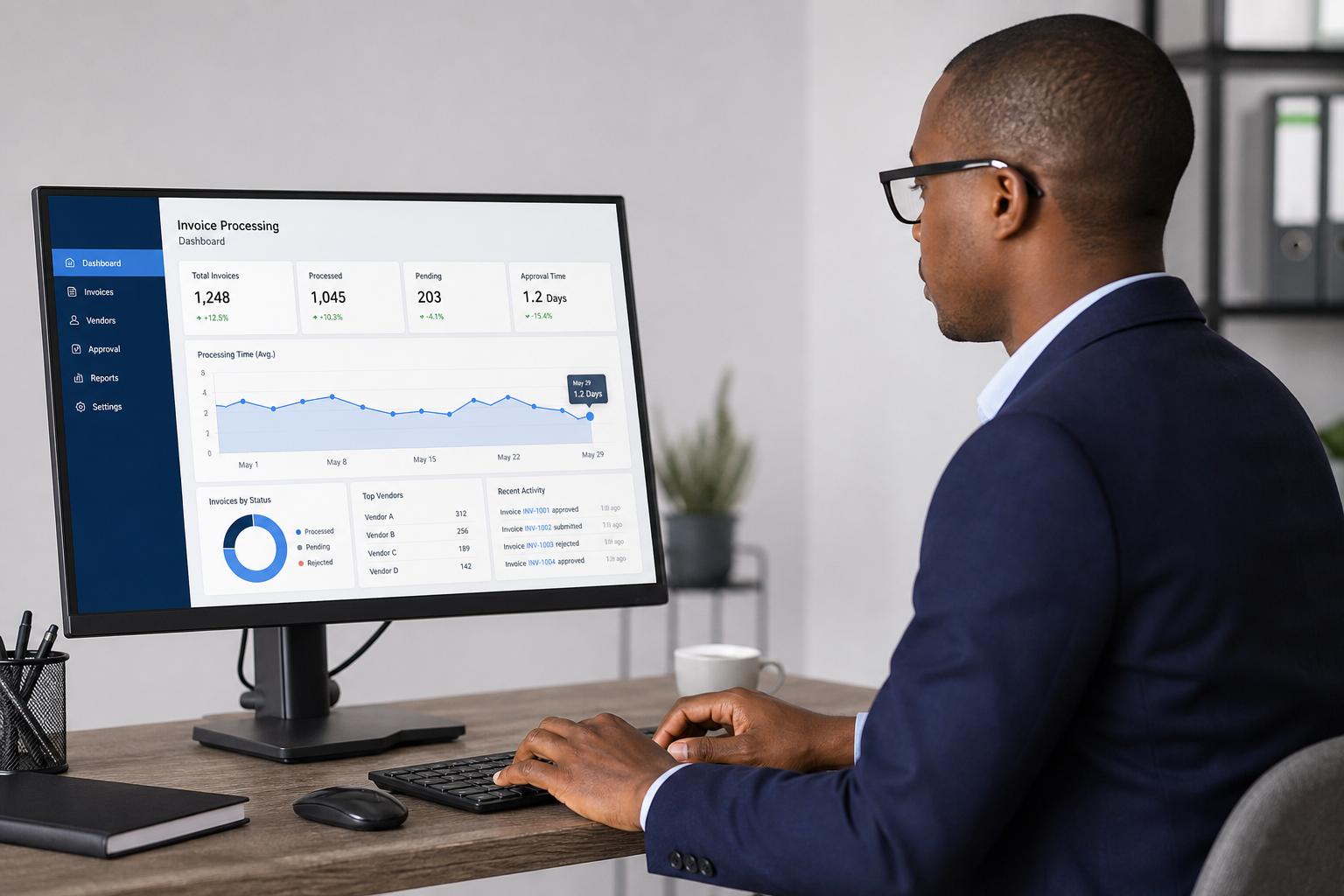
Automated invoice processing reduces accounts payable cycle times from weeks to minutes by eliminating manual data entry, standardising document intake, and running instant validation checks against enterprise ERP records. In large South African organisations, automated systems ingest supplier invoices across multiple formats, verify South African Revenue Service tax compliance automatically, and route approved payments without human intervention.<
Bottlenecks in Traditional Accounts Payable Workflows
Enterprise finance departments handle thousands of supplier documents every month. When processing happens manually, approval queues stall and accounting teams spend hours retyping line items into core accounting platforms. These delays often cause missed early-settlement discounts and strain vendor relationships.
Manual accounts payable departments face several operational obstacles on a daily basis:
- Manual data entry errors that require lengthy investigation and reconciliation
- Slow approval handoffs between branch managers, procurement leads, and head office finance teams
- Lost physical invoices or unread email attachments sitting in individual employee inboxes
- Time-consuming manual verifications for South African VAT compliance and vendor banking details
Core Mechanisms That Accelerate Processing Times
Implementing modern automated invoice processing in South Africa replaces disjointed, paper-heavy tasks with direct, straight-through digital workflows. Systems extract header and line-level data the moment an invoice arrives, matching the information directly to purchase orders and goods receipt notes.
Intelligent Data Extraction and Parsing
Enterprise tools use advanced character recognition and pattern matching to read invoices regardless of their layout. The software extracts essential variables such as tax invoice numbers, line-item quantities, VAT amounts, and supplier banking details instantly. By capturing this data at the source, finance teams bypass the manual capture phase entirely.
Automated Three-Way Matching and Exception Routing
When line items, purchase orders, and receiving slips match established tolerances, the system approves the invoice for payment automatically. Staff only intervene when genuine discrepancies appear, such as price variances or incorrect quantities. Reviewing AI-powered invoice processing benefits shows that isolating exceptions allows accounts payable teams to resolve errors in minutes rather than spending days cross-referencing paper receipts.
System automation speeds up validation through specific checkpoints:
- Instant matching of unit costs and totals against existing enterprise purchase orders
- Automated detection of duplicate invoice submissions across all regional branches
- Direct routing of non-matching invoices to designated category managers for swift sign-off
Regional Compliance and Operational Continuity
South African enterprises must adhere to strict tax invoice standards set by SARS. Invoices must contain valid corporate tax numbers, physical addresses, and correct calculation of the standard fifteen percent VAT rate. Automated systems check these fields instantly before posting to the general ledger, reducing audit queries.
Cloud-hosted accounts payable automation also safeguards operational continuity against regional infrastructure disruptions such as load-shedding or network downtime. Enterprise finance operations remain active across distributed teams regardless of regional power cuts.
Automated platforms uphold strict accounting controls through defined rules:
- Real-time verification of supplier VAT registration numbers against official databases
- Automatic calculation of withholding taxes and municipal levies where applicable
- Standardised audit trails recording every approval timestamp and system action
Precision Enterprise Solutions With S2P
S2P provides specialised accounts payable automation designed to integrate directly with enterprise ERP environments, eliminating manual touchpoints across multi-entity operations. Explore the S2P invoice automation platform to review workflow capabilities, schedule an operational evaluation, or request a system demonstration for your finance team.
Frequently Asked Questions
How much time does invoice automation save accounts payable teams?
Automated systems reduce invoice processing time by up to eighty percent. Straight-through invoices process in seconds, while complex invoices requiring manual approval typically move through the workflow within one business day.
How does the system handle SARS tax compliance requirements?
The platform checks each document for required tax invoice elements, including supplier VAT numbers, enterprise buyer details, and accurate standard-rate tax calculations before queuing the invoice for payment.
Can automated invoice processing integrate with legacy ERP systems?
Yes. Enterprise automation tools connect to standard enterprise ERPs such as SAP, Oracle, and Microsoft Dynamics using direct APIs or secure data transfers, ensuring continuous two-way synchronisation.
What happens when an invoice contains pricing discrepancies?
The system automatically flags the discrepancy and routes the specific line item directly to the relevant buyer or department manager for quick digital review, bypassing manual email threads.
Leave a Reply