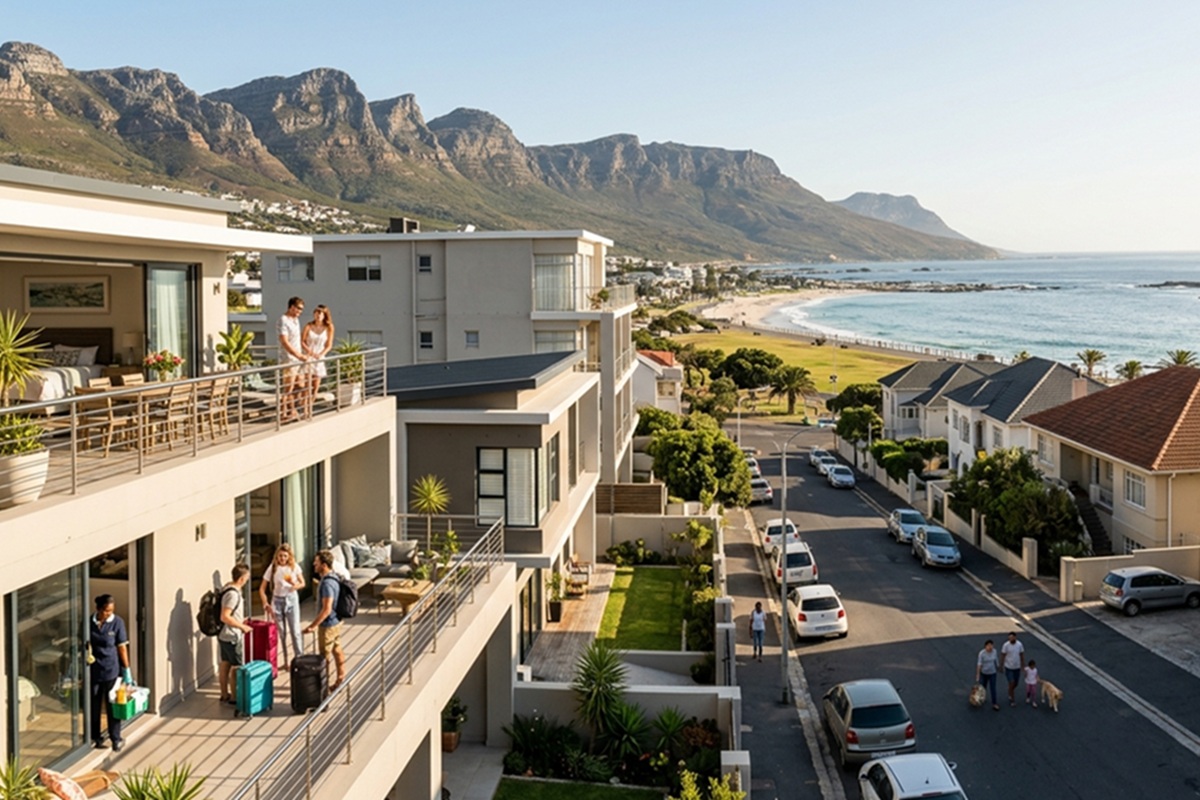
The primary difference between Airbnb management companies and traditional letting agents in Cape Town lies in the rental model, revenue structure, and daily operations. Airbnb management firms handle short-term, nightly stays by managing guest turnover, active rate management, property maintenance, and local hospitality logistics to maximise peak summer tourism yields. In contrast, traditional letting agents focus on securing long-term tenants for fixed 12-month leases, collecting standard monthly rent, and handling periodic inspections under the Rental Housing Act.
Revenue Potential and Rental Yields in Cape Town
Cape Town presents one of the most lucrative holiday rental markets in the southern hemisphere, particularly across the Atlantic Seaboard and City Bowl. Short-term rentals capitalise on seasonal demand surges during the December to March peak, generating substantially higher gross income compared to fixed long-term agreements. However, this model carries income variability during the quieter winter months, whereas traditional long-term rentals deliver consistent, predictable monthly cash flow year-round.
When evaluating which strategy matches your investment goals, consider these financial factors:
- Short-term rentals can command premium nightly rates during major events, conferences, and the summer holiday season.
- Long-term leases offer stable monthly income that protects cash flow against seasonal tourism dips.
- Short-term management fees typically range from 15% to 25% of gross revenue, compared to 8% to 12% for traditional letting agents.
- Property owners on short-term models retain flexible personal access to use their Cape Town holiday home whenever it is unbooked.
Operational Responsibilities and Day-to-Day Management
Managing short-term holiday accommodation involves intense daily involvement, while long-term property administration requires episodic oversight. Short-term managers coordinate housekeeping between check-outs, maintain hotel-standard linen, restock amenities, and arrange on-the-ground support for international guests. They also manage local infrastructure demands, such as maintaining solar inverter setups and backup power units during load-shedding periods.
Guest Communication and Listing Optimisation
Short-term operators manage continuous inquiries, automated messaging, and instant booking platforms across multiple online travel agencies. Professional teams leverage technology to sync calendars and optimise pricing, as seen in the benefits of using a channel manager for multi-platform distribution to prevent double bookings. Traditional agents, on the other hand, list vacancies on regional portals like Property24 or Private Property, vet tenant credit scores, and draw up standard lease agreements.
Maintenance and Property Preservation
Short-term properties undergo frequent visual checks after every single guest departure, ensuring minor damages or maintenance issues get resolved immediately. Long-term rentals undergo formal entry and exit inspections, alongside occasional annual check-ups, which means wear and tear might accumulate unnoticed over prolonged tenancies.
Legal Frameworks, Tenant Rights, and Flexibility
The regulatory and legal obligations governing property owners differ dramatically between short-term stays and standard leases. Traditional tenancies are governed by the Consumer Protection Act and South Africa’s Rental Housing Act, which grant long-term tenants extensive statutory protections against eviction and strict regulations around deposit holding.
Short-term arrangements operate primarily under hospitality service agreements, offering property owners distinct operational advantages:
- Guests have no legal tenancy status, eliminating prolonged eviction disputes if a guest overstays.
- Pricing can adjust daily based on local market demand, local festival dates, and international flight patterns.
- Lease agreements do not lock property owners into below-market rates for 12 or 24 months.
- Property owners can switch between short-term letting and corporate mid-term rentals as seasonal demand dictates.
Choosing the Right Management Strategy for Your Property
Selecting between an Airbnb property manager and a traditional letting agent depends on your property location, furnishing status, and financial objectives. Properties situated in Camps Bay, Sea Point, Green Point, and the V&A Waterfront perform exceptionally well on short-term platforms due to international tourist demand. If you are comparing strategies or vetting short-term rental management across major South African metros, understanding local market conditions is essential for protecting your property asset.
To determine the best fit for your Cape Town real estate, assess the following property characteristics:
- Furnishing: Short-term rentals require complete, high-quality furnishing, fully equipped kitchens, fast Wi-Fi, and inverter systems.
- Location: Properties walking distance to beaches, restaurants, or the Cape Town International Convention Centre thrive on short stays.
- Body Corporate Rules: Sectional title schemes in Cape Town increasingly regulate or restrict short-term rentals, requiring verification before listing.
- Owner Usage: Owners wanting regular holiday access to their own apartment benefit exclusively from the short-term model.
Let CTHA Manage Your Airbnbs in Cape Town
CTHA delivers end-to-end short-term and mid-term property management designed to optimise revenue while protecting your residential asset in Cape Town. From listing creation and 24/7 guest communications to housekeeping, property maintenance, and local compliance, our team handles every operational detail with local expertise. Click the button below to request a complimentary property assessment and rental revenue projection.
FAQs
Can I convert my long-term rental property into an Airbnb in Cape Town?
Yes, provided your property is furnished to high standards and your body corporate or sectional title rules permit short-term letting. You will also need reliable high-speed internet and backup power solutions for continuous operations.
Are management fees higher for Airbnb management than traditional letting?
Yes. Short-term management fees typically range between 15% and 25% because the team handles continuous turnovers, professional cleaning, daily rate adjustments, and around-the-clock guest support. Traditional agents charge 8% to 12% for monthly rent collection and lease administration.
What happens during Cape Town’s low winter season?
Experienced short-term managers adjust marketing strategies during winter by lowering minimum night requirements, marketing to digital nomads, or transitioning units to flexible one-to-three-month corporate rentals to maintain steady occupancy.
Do Airbnb guests have tenant rights under South African law?
No. Short-term holiday guests are classified as transient visitors under hospitality terms rather than residential tenants. They do not hold leasehold rights under the Rental Housing Act, which simplifies management and prevents eviction disputes.
Leave a Reply