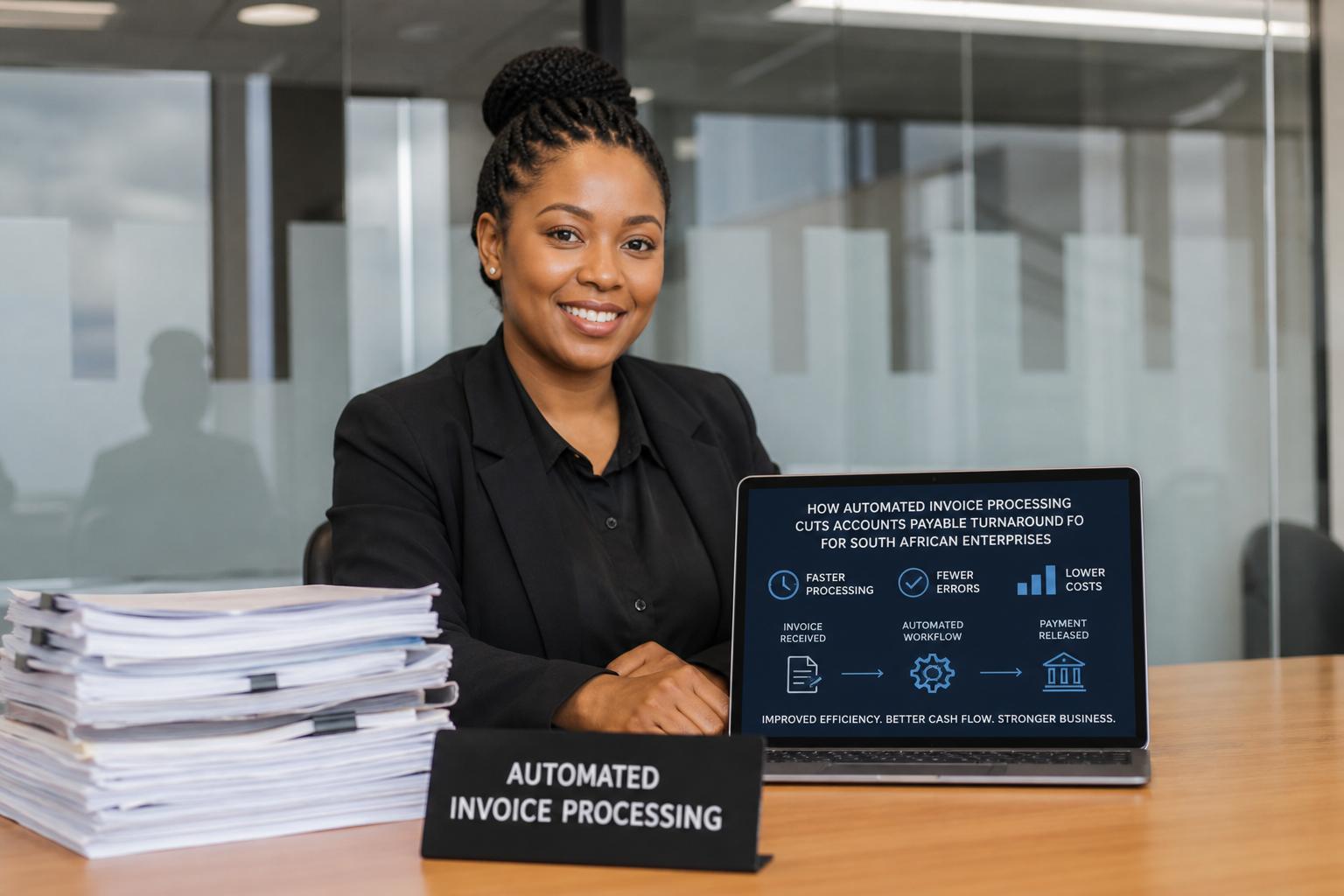
Automated invoice processing reduces accounts payable processing times for enterprise businesses in South Africa from weeks to hours by eliminating manual data entry, digitising document capture, and executing touchless three-way matching against purchase orders and goods receipts notes. By replacing manual administrative hand-offs with machine learning and automated approval routing, financial teams process complex high-volume invoices instantly while ensuring strict compliance with South African Revenue Service (SARS) tax invoice standards.
Eliminating Manual Data Capture Bottlenecks
Large South African corporations handle thousands of supplier invoices monthly across multiple formats, from scanned PDFs to paper slips. Modern invoice intelligence automatically extracts line items, VAT numbers, and banking details with high accuracy. Implementing automated invoice processing in South Africa removes the friction of manual spreadsheet typing, allowing finance teams to avoid backlog pile-ups during month-end closes.
Automated extraction eliminates processing delays across several daily accounts payable tasks:
- Instant ingestion of digital documents from dedicated supplier inboxes without manual file handling
- High-speed optical recognition that captures line-item descriptions, quantities, and Rand values
- Automatic validation of supplier VAT registration numbers directly against tax rules
Accelerated Verification and Approval Workflows
Traditional approval chains stall when paper documents sit on managers desks or get lost in email threads. Automated systems apply rules-based workflows to route invoices straight to designated budget holders based on cost centre, threshold limits, or project codes.
Automated Three-Way Matching
Manual reconciliation between purchase orders, delivery notes, and tax invoices consumes hours of departmental time. Automated platforms compare line items, quantities, and pricing instantly. When values match within acceptable tolerances, the system clears the invoice for payment scheduling without requiring human intervention. Understanding the wider AI-powered invoice processing benefits helps enterprise finance leaders identify where exceptions occur so staff only touch mismatched documents.
Modern matching engines handle standard validation checks automatically:
- Comparing purchase order values against supplier billing totals
- Cross-referencing goods receipt records to confirm physical delivery at local warehouses
- Flagging price discrepancies, duplicate billings, or missing tax invoice identifiers for rapid review
Managing Local Operational and Regulatory Pressures
South African enterprises face unique operational hurdles, such as load-shedding disruptions and fluctuating supply chain timelines. When power outages or connectivity drops halt office-based manual review, cloud-based automated systems maintain continuous background queues. Furthermore, meeting strict SARS requirements requires rigorous audit trails and rapid dispute resolution with domestic vendors.
Enterprise automation protects operational momentum through several key mechanisms:
- Cloud-hosted queues that continue ingesting and parsing supplier invoices during local infrastructure outages
- Centralised audit logs that record every approval, edit, and payment status change for tax compliance
- Automated vendor notification systems that immediately request corrected invoices when tax-required data is missing
Precision Solutions With S2P
S2P equips South African enterprise finance teams with intelligent tools designed to cut accounts payable cycle times, eliminate manual errors, and maintain strict governance. By replacing slow manual entry with automated document reading, matching, and ERP synchronisation, your organisation speeds up supplier settlements and captures early settlement discounts. Connect with S2P to transform your accounts payable operations into a lean, efficient finance hub.
Frequently Asked Questions
How much time can an enterprise save by automating invoice processing?
Most enterprise businesses cut their average invoice turnaround time by 60 to 80 percent, taking standard invoice lifecycles down from 15 to 20 days to less than two days.
How does automated invoice processing support SARS compliance?
The software validates necessary tax invoice components, including the registered business name, address, VAT number, and clear breakdown of standard-rated supplies, ensuring audit readiness before payments post to the general ledger.
Can automated accounts payable systems integrate with existing ERP platforms?
Yes, modern platforms integrate directly with major ERP systems like SAP, Oracle, and Sage, automatically synchronising master vendor records, purchase orders, and general ledger codes.
What happens when an invoice contains errors or pricing discrepancies?
The platform isolates the exception and routes an alert directly to the relevant procurement or finance officer with the discrepancy highlighted, allowing rapid resolution without delaying the rest of the payment batch.
Leave a Reply