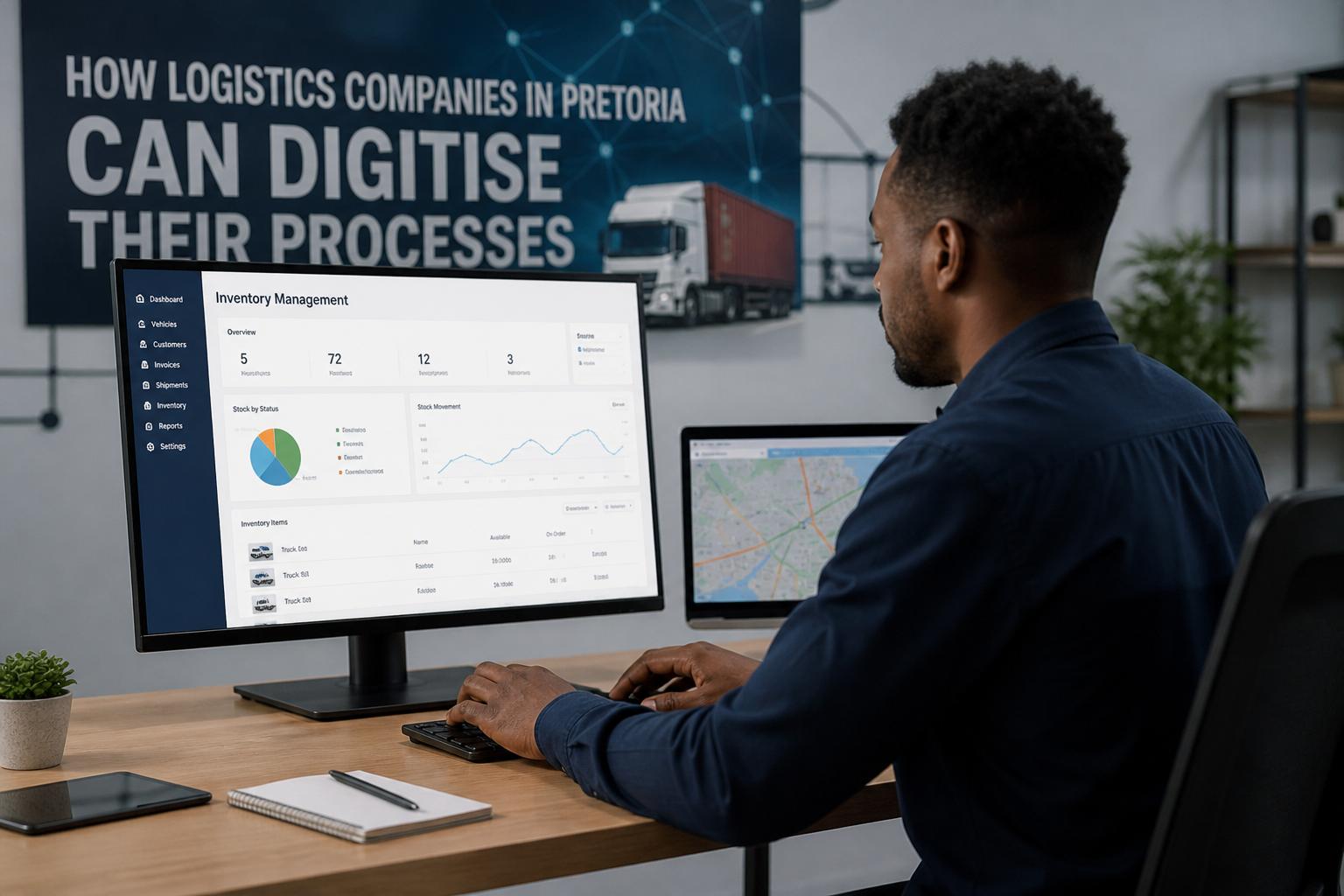
Logistics companies in Pretoria can digitise their processes by replacing paper manifests with mobile dispatch systems, automating delivery tracking, and centralising proof of delivery records into cloud databases. Shifting away from physical trip sheets and manual spreadsheets allows fleet operators across Waltloo, Silverton, and Rosslyn to cut administrative turnaround times, eliminate lost paperwork, and keep regional transport moving efficiently.
Eliminating Paper Waybills and Manual Data Capture
Physical paper waybills remain one of the biggest friction points for transport operators in Gauteng. Drivers collect physical signatures on clipboards, carry paper slips across long routes, and hand bundles of delivery notes back to the depot days later. This delay slows cash flow because administrative teams cannot invoice clients until the signed delivery slip returns to the office. Transitioning to mobile capture and automated document processing solves these operational bottlenecks by providing several immediate improvements:
- Digital proof of delivery captured directly on driver smartphones, complete with electronic signatures, timestamps, and site photos.
- Automated invoice generation triggered as soon as deliveries are confirmed on-site, cutting billing cycles from weeks to minutes.
- Centralised cloud storage that keeps delivery records intact and instantly searchable without physical filing cabinets.
Connecting Fleet Tracking to Core Business Systems
Most Pretoria transport operators already run GPS tracking units on their vehicles, yet this telematics data often sits in an isolated portal. Fleet managers monitor vehicles on one screen, manually check delivery schedules on another, and type updates into client emails separately. True digitisation connects vehicle location data directly to inventory, scheduling, and accounting platforms.
Managing Pretoria Freight Corridors and Fleet Communication
Moving freight along the N1 corridor toward Johannesburg or routing cargo through the N4 freight interchange requires precise timing. When delivery software links directly to dispatch boards, dispatchers know exact vehicle arrival times without calling drivers while they are on the road. A connected system feeds directly into daily scheduling to address local road conditions through clear functional steps:
- Automated status updates that inform depot supervisors and clients when trucks approach loading bays in industrial zones.
- Fuel and idle-time tracking that flags excessive consumption or unscheduled stops along regional delivery corridors.
- Offline-ready mobile interfaces that store collection and delivery logs when cellular coverage drops, syncing the data once signal restores.
Implementing Resilient Digital Systems for Local Conditions
Pretoria businesses operate in an environment where municipal power disruptions and network outages are routine realities. An effective digital system cannot rely on fragile local on-site servers that shut down during load-shedding. Moving operational data to modern cloud platforms allows depots to continue dispatching loads, processing stock, and updating clients regardless of substation maintenance or area power cuts. Explore our business automation services to discover how local transport operators modernise back-office systems without disrupting daily dispatches.
Transitioning from manual routines to digital workflows works best when implemented systematically across key departments. Deploying resilient digital workflows requires a phased rollout focused on operational stability:
- Audit daily operational handoffs to identify which administrative tasks consume the most labour hours each week.
- Move essential fleet schedules and inventory spreadsheets into accessible cloud platforms supported by mobile applications.
- Equip drivers and dispatch teams with user-friendly mobile interfaces that require minimal training during busy shifts.
Precision Solutions With Taylor Made Solutions
Adopting digital technology should simplify transport operations rather than complicate them with bloated software features. Taylor Made Solutions builds lean, practical systems that solve the exact administrative bottlenecks facing Pretoria logistics and transport firms. From digitising manual paperwork to connecting tracking data directly with invoicing workflows, our team helps you build reliable, automated operations that keep your fleet moving. Reach out through our contact form to discuss your operational requirements and receive practical guidance on modernising your business.
Frequently Asked Questions
What is the first step a Pretoria logistics firm should take toward digitisation?
The first step is identifying where paperwork causes the slowest turnaround, which is almost always manual proof of delivery processing. Converting paper delivery notes to digital sign-offs generates the fastest return on investment by accelerating customer invoicing.
How do logistics teams maintain digital workflows during load-shedding?
Cloud-based platforms decouple your software from on-site office power. While drivers continue capturing data on smartphones, dispatchers can access operational dashboards from laptops, mobile devices, or remote locations with cellular connectivity.
Is custom software more effective than generic logistics software?
Generic logistics platforms often bundle hundreds of unnecessary features while locking businesses into rigid, expensive subscriptions. Custom process digitisation targets your specific Pretoria routes, operational handoffs, and reporting formats without unnecessary bloat.
How long does it take to modernise manual logistics processes?
Digitising a single core operational process, such as delivery confirmation or dispatch scheduling, typically takes between two and six weeks. Rolling out digital improvements in stages prevents operational disruptions and allows fleet teams to adapt smoothly.
Leave a Reply