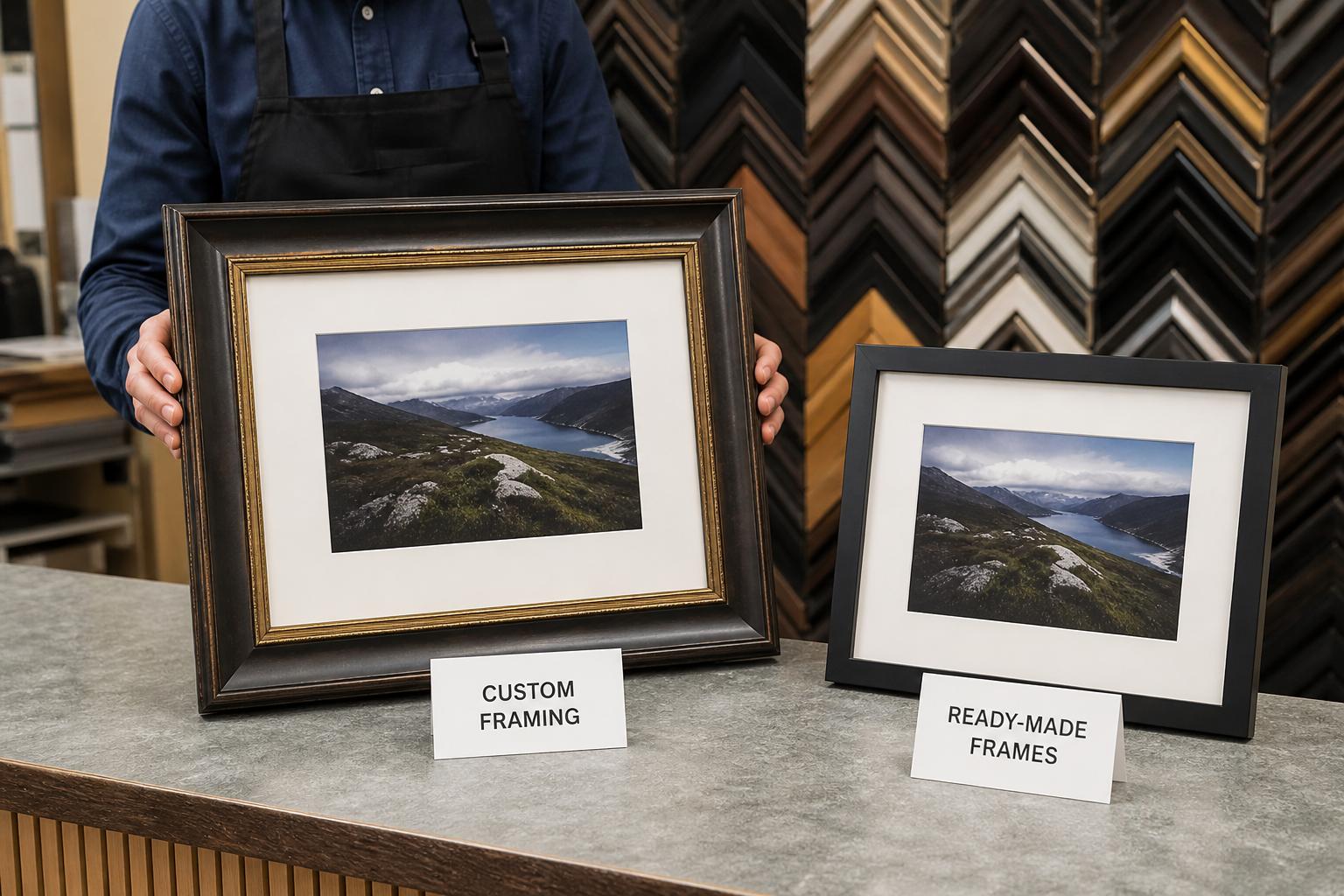
Custom framing is worth the investment whenever an item carries monetary, historical, or sentimental value, or when it requires protection against environmental degradation. Ready-made frames serve a distinct purpose for standard photographs, temporary prints, and quick decor updates where longevity is secondary. However, mass-produced off-the-shelf frames cut corners by using untreated composite wood, acidic cardboard backings, and standard float glass that discolours paper over time. Custom framing provides conservation-grade materials, precision fit down to the millimetre, and specialised ultraviolet-filtering glass designed to keep artwork pristine for decades.
The Core Differences Between Ready-Made and Custom Framing
Deciding whether custom framing warrants the higher initial spend requires looking beneath the surface of the frame. Ready-made frames are mass-produced in factory batches to fit standard international paper sizes such as A4, A3, or standard photographic ratios. Because factories produce them to hit low retail price points, the materials focus on immediate presentation rather than preservation.
Store-bought frames and handmade custom frames differ across four main construction standards:
- Material composition: Ready-made units rely on compressed MDF, plastic mouldings, and wood veneers that release acidic off-gasses, whereas custom frames use solid, treated hardwoods and anodised aluminium profiles.
- Mounting and mat boards: Mass-market frames include acidic pulp paper mats or none at all, while custom studios use 100 percent acid-free cotton rag boards that buffer your art from chemical deterioration.
- Glazing protection: Off-the-shelf frames feature basic float glass or thin plastic sheeting that permits ultraviolet radiation to fade pigments, whereas professional framers offer conservation glass blocking up to 99 percent of UV light.
- Structural integrity: Factory corners are held together with lightweight corrugated metal fasteners that give way under weight, whereas studio frames feature precision-cut mitres glued and braced with heavy-gauge V-nails.
The Hidden Costs of Inexpensive Ready-Made Frames
Buying an inexpensive frame from a home decor retailer often feels like a practical budget choice. The issue arises two or three years later when irreversible damage appears on the framed piece. Acid migration from cheap cardboard backings causes dark brown borders, known as mat burn, around the edge of valuable prints and family heirlooms. Without archival barrier backing papers, seasonal humidity enters the frame rebate and creates damp microclimates that invite mildew, foxing, and fungal stains.
Why the Helderberg Climate Demands Archival Protection
Living in Somerset West exposes interior wall displays to particular environmental forces that standard frames cannot withstand. The Helderberg basin sits between False Bay and the Hottentots Holland Mountains, creating noticeable humidity fluctuations across wet Cape winters and dry, scorching summers. In addition, the region experiences intense daily sunlight that rapidly bleaches unfiltered artwork.
Artwork hung in Somerset West homes faces distinct environmental challenges that off-the-shelf frames cannot resist:
- High ultraviolet exposure: Bright Western Cape sunshine breaks down ink binders and fades delicate watercolours, photography, and lithographs within just a few seasons under standard retail glass.
- Salty coastal moisture: Damp sea air drifting inland from Strand and False Bay slips through unsealed frame backing boards, promoting mould growth and paper cockling.
- Seasonal timber movement: Drastic temperature transitions cause low-grade pine and composite frames to warp and bow, allowing dust and insects to breach the backing cavity.
When to Choose Ready-Made Versus Custom Framing
Custom framing is not mandatory for every single piece of paper in your home. A practical, budget-conscious collector balances off-the-shelf solutions with conservation framing based on the provenance and purpose of the piece. For everyday prints or fast decorating swaps, ready-made frames provide unbeatable convenience.
Use this practical checklist to determine which framing route matches your project:
- Choose ready-made frames for standard-sized posters, inexpensive children drawings, decorative digital prints, or short-term event displays that can be easily replaced.
- Choose custom framing for original fine art, signed limited editions, historical documents, watercolours, cross-stitch textiles, and sports memorabilia.
- Choose custom framing for non-standard artwork sizes that would otherwise require destructive trimming or awkward gaps inside a standard frame.
- Choose custom framing for sentimental family photography where negative copies or digital originals no longer exist.
The Vital Role of Glazing Spacers and Archival Mounting
One of the most damaging flaws of ready-made frames is placing the glass directly against the print. As temperatures fluctuate inside your home, condensation gathers on the inner surface of the glass pane. When paper or photographic emulsion rests directly against wet glass, it bonds permanently to the surface. Attempting to peel the print away tears the artwork. Professional studios eliminate this risk by cutting multi-ply matboards or fitting hidden spacers, keeping the art suspended safely in its own protective pocket. Explore our professional picture framing services to understand how different glazing and mounting methods safeguard fragile mediums.
Precision Solutions With Wally’s Framing Studio
Wally’s Framing Studio builds handmade, conservation-standard frames in Somerset West for collectors, homeowners, and artists who want their pieces to last. Every frame is assembled in our local studio using archival barrier boards, acid-neutral adhesives, and high-clarity UV glazing suited to Western Cape conditions. Whether you have an antique Cape map, an oil painting on canvas, or a cherished heirloom, our framers build the exact frame needed to protect and showcase it. Get in touch through our studio consultation form to discuss your framing ideas and view our wide selection of mouldings.
Frequently Asked Questions
How much more does custom framing cost compared to ready-made?
Ready-made frames from department stores typically cost between R150 and R600. Custom picture framing in Somerset West generally starts from R350 to R750 for smaller standard formats and scales upward based on timber selection, dimensions, matting styles, and UV glazing. While custom framing costs more upfront, it eliminates the expensive restoration fees required when acidic ready-made frames ruin valuable artwork.
Can custom framing reverse existing sun fade or acid damage?
Framing cannot reverse pigment loss or undo acid burn that has already stained the paper fibres. However, placing damaged artwork into a custom frame with conservation mount board and UV-filtering glass stops ongoing deterioration immediately, preventing further fading or disintegration.
Why does artwork stick to the glass in ready-made frames?
Ready-made frames rarely include matboards or frame spacers, forcing the glazing to rest directly against the surface of the art. When ambient humidity and temperature fluctuate, condensation forms on the inside of the glass. Over time, the gelatin or ink emulsion on the print softens and fuses to the glass surface.
How long does a professionally built custom frame last?
A frame built with conservation-grade timber mouldings, acid-free backing, and archival mounting materials will protect your piece for 50 to 100 years or more. Unlike mass-market frames that loosen at the corners and degrade within a few years, custom frames remain structurally solid and chemically inert for decades.
Leave a Reply