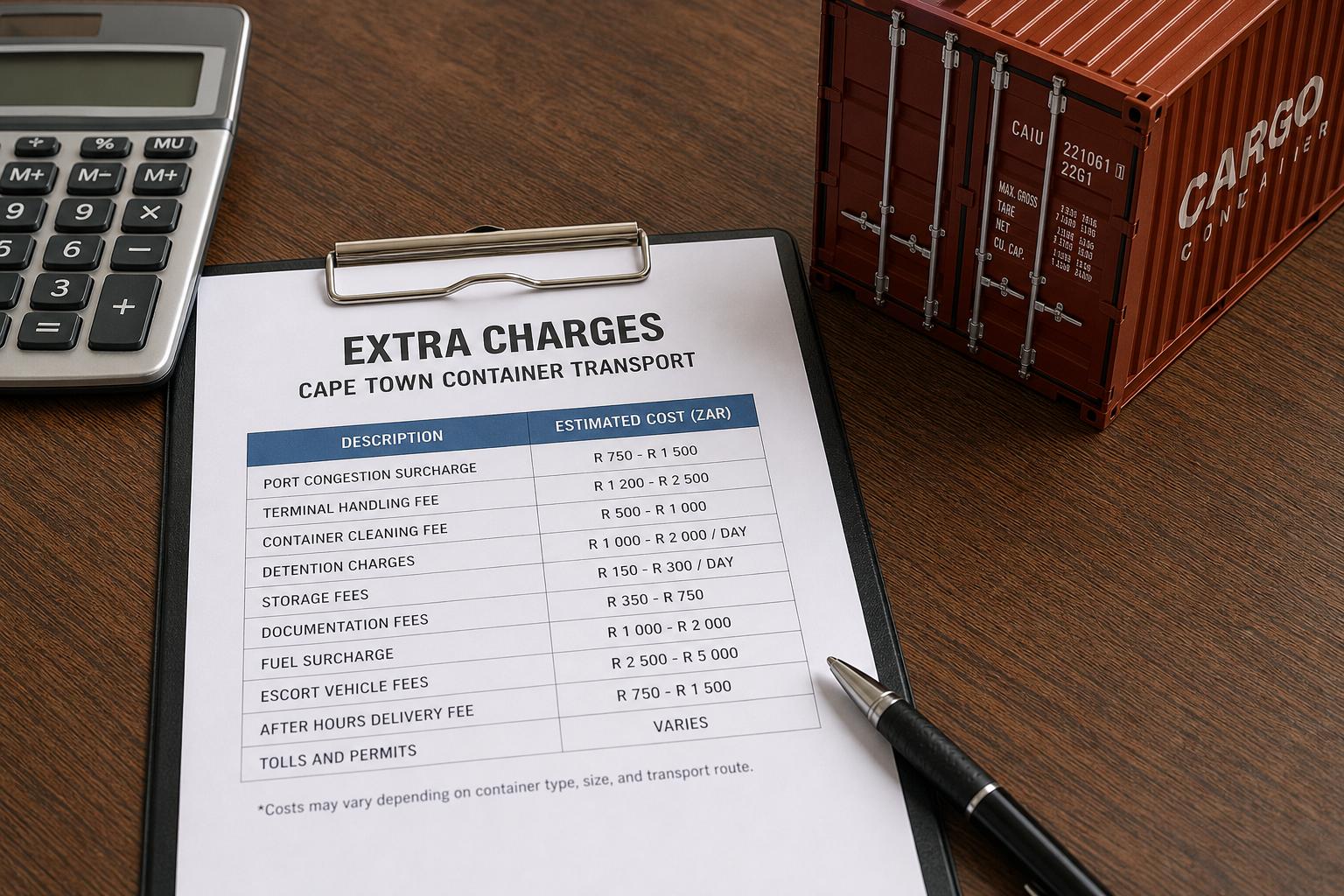
When moving shipping containers through the Port of Cape Town, standard cartage rates rarely cover every line item on your final billing statement. Cargo owners should expect extra charges including port storage, truck standing time, container depot handling fees, fuel adjustment factors, and statutory customs inspection costs. Understanding these expenses before your box docks at the Cape Town Container Terminal enables tighter cargo staging and prevents unbudgeted freight invoices.
Port and Terminal Surcharges
Transnet Port Terminals manages vessel discharge and container release through strict booking systems and limited free-time periods. When delays occur inside the harbour gates, port authorities and shipping lines assess penalties directly against the cargo clearing account. Working with reliable port cartage and freight logistics specialists helps clear your release documentation well before these terminal deadlines expire.
Terminal-related line items frequently added to freight bills include:
- Port storage fees: Transnet assesses daily storage rates on standard dry containers and refrigerated boxes once free-time allowances expire inside the marine terminal.
- Navis slot booking adjustments: Hauliers must secure operational appointment slots to collect or stage boxes, and failed gate entries during congestion periods can attract wasted-run surcharges.
- Reefer electricity and monitoring charges: Temperature-controlled units incur running costs for daily electrical plug-in connections while held on terminal ground.
Wind Delays at the Container Terminal
Cape Town weather presents distinct transport challenges, particularly between October and March when the Cape Doctor south-easterly wind exceeds safe operational thresholds. Terminal cranes halt operations when winds surpass 80 kilometres per hour, creating substantial vessel backlogs and delaying gate turnarounds. Even though wind shutdowns are acts of nature, terminals still bill storage if free days pass before your haulier gains terminal access.
Carrier Equipment and Detention Fees
Shipping lines supply the physical containers but charge steep daily hire fees whenever units remain outside their depots longer than agreed contract windows. Cargo owners must separate transporter truck fees from shipping line equipment fees, as both run on independent schedules.
Equipment penalties generally fall into three billing tiers:
- Line demurrage: Fees assessed by ocean carriers while a full container sits inside terminal facilities past allowable commercial days.
- Equipment detention: Daily penalties incurred from the moment an empty or full container leaves the port until the empty unit returns to the shipping line empty depot.
- Depot turn-in and repositioning charges: Ocean lines often route empty returns to specific inland staging facilities around Paarden Eiland, Bellville, or Montague Gardens, which may require cross-town shuttling fees.
Unpacking Delays and Truck Demurrage
Transporters provide an allocated window, usually two to three hours, for loading or unloading your container at regional warehouses in areas such as Epping, Airport Industria, or Blackheath. When offloading takes longer due to staff shortages, palletising bottlenecks, or equipment failure, hauliers assess truck demurrage, charged per hour or as a fixed half-day standing charge.
Depot and Regulatory Compliance Costs
Containerised freight passing through the Western Cape faces regular statutory scrutiny from the South African Revenue Service and port health officials. Selected containers are stopped for cargo examinations, which triggers automatic third-party operational fees outside your transporter basic haulage quote.
Regulatory and depot charges to anticipate include:
- Customs examination handling: SARS stops require container transit to an external inspection depot like SACD, where unstacking, scanning, and repacking fees apply.
- Depot lift-on and lift-off fees: Intermediate holding facilities bill handling tariffs each time container handling equipment lifts your unit on or off a skeletal trailer chassis.
- Fuel adjustment factor charges: Local diesel price adjustments are added monthly to haulage base rates to reflect shifting national fuel costs.
- Axle overload penalties: Transporting dense, uncalculated bulk cargo risks heavy fines and cross-loading fees if gross vehicle mass limits are exceeded at provincial weighbridges.
Precision Solutions With RRE Logistics
Uncontrolled transport surcharges erode margin on import and export operations. Managing these secondary costs requires careful booking schedules, real-time tracking, and immediate communication with terminal personnel. By partnering with the best container transport companies in Cape Town, you gain disciplined staging strategies that mitigate terminal standing charges and keep container handovers efficient. Connect with RRE Logistics to organise your harbour deliveries, manage container depot turn-ins, and obtain direct haulage quotes with clear, predictable billing structures.
Frequently Asked Questions
How much free time do I get at the Port of Cape Town?
Transnet Port Terminals typically provides between three to four calendar days of free time for standard dry import containers following discharge from the vessel. Refrigerated containers receive less free time, often limited to 48 hours, due to heavy power and plug-point requirements in the staging stacks.
What is the difference between demurrage and truck standing time?
Demurrage is a fee billed by shipping lines for keeping their container equipment beyond the permitted contractual free period. Truck standing time, also known as driver detention, is a separate charge billed by your transport company when a driver waits at your loading or offloading facility longer than the agreed free window.
Why does Cape Town weather impact container transport costs?
Gale-force south-easterly winds force port crane operators to shut down terminal operations for safety reasons. These wind delays lead to gate booking cancellations, vessel queues, and storage accruals, as free-time counters frequently continue to run while containers sit trapped in windbound terminal stacks.
How can importers reduce unexpected container charges?
Clear customs declarations before the vessel arrives, book delivery slots at your warehouse well in advance, and confirm that receiving teams possess appropriate offloading equipment. Direct communication between your clearing agent and haulier ensures containers move the instant release status reflects on terminal systems.
Leave a Reply