When choosing a container transport company in Cape Town, you must look for direct port access accreditation, modern fleet capability with side loaders and skeletal trailers, transparent demurrage policies, and proven reliability in managing Cape Town Port delays. The local freight sector presents distinct operational challenges, including terminal congestion, severe southeasterly wind stoppages, and strict truck booking slots through Transnet. A dependable logistics partner keeps cargo moving efficiently between the Port of Cape Town, regional industrial hubs like Paarden Eiland and Montague Gardens, and national distribution corridors without racking up avoidable storage penalties.
Port Terminal Accreditation and Direct Harbor Access
Securing your container from the harbor requires more than standard long-haul trucks. Transnet Port Terminals operates on strict slot allocations via their Truck Booking System, requiring drivers and vehicles to carry valid port permits and RFID tags. When partnering with a provider for dedicated port cartage and freight logistics, verify that their fleet enters the terminal without intermediary third parties. Direct harbor access prevents communication breakdowns, secures fast gate movements, and minimises idle dwell time on the quay.
To avoid costly terminal storage fees, verify that your transporter manages the following operational requirements directly:
- Active registration on the Transnet Truck Booking System to claim available collection windows promptly.
- Drivers equipped with valid port entry credentials and compliant safety gear for harbor terminal operations.
- Direct depot facilities near Paarden Eiland or adjacent corridors for short-term staging when receiver premises are closed.
- Real-time electronic interface with harbor booking gates to respond immediately to terminal gate closures.
Fleet Versatility and Equipment Capabilities
Container haulage demands specific trailer configurations depending on cargo weight, receiver offloading infrastructure, and container dimensions. If your delivery site lacks a dedicated gantry crane or reach stacker, hiring a standard flatbed trailer creates immediate offloading bottlenecks.
Sidelifter and Skeletal Trailer Capabilities
Sidelifter trailers allow drivers to place 20-foot and 40-foot shipping containers directly on the ground, allowing your warehouse team to unpack at ground level without elevated loading docks. Conversely, skeletal trailers reduce tare weight, permitting maximum legal payload weights for heavy export commodities such as wine, fruit, and industrial machinery.
A capable Cape Town carrier must maintain fleet assets engineered for diverse container specifications:
- Sidelifters for ground-level offloading at sites lacking loading bays or heavy forklifts.
- Skeletal tri-axle chassis to transport heavy 20-foot and 40-foot containers legally within South African gross vehicle mass limits.
- Modern mechanical hookups and electrical connections for refrigerated reefer containers needing continuous temperature control.
- Twist-lock safety mechanisms inspected and certified to satisfy national road transport standards.
Local Experience with Cape Town Port Delays and Weather
The Cape Doctor, Cape Town’s notoriously powerful southeasterly wind, frequently forces container cranes at the port to halt operations for safety reasons. When crane operations pause, container backlogs accumulate rapidly, creating ripple effects across the entire Western Cape supply chain. In any objective review of the best container transport companies in Cape Town, operational agility during these weather stoppages separates professional operators from average hauliers.
Experienced hauliers manage local environmental bottlenecks by maintaining strict protocols:
- Continuous tracking of port wind speeds to anticipate terminal wind-bound declarations before trucks dispatch.
- Alternative routing around high-traffic freight chokepoints along Marine Drive, the N1, and the N7.
- Flexible scheduling that shifts driver shifts to night runs when harbor gates operate with shorter queues.
- Constant liaison with shipping lines to adjust container return slots before detention windows lapse.
Transparent Pricing and Demurrage Protection
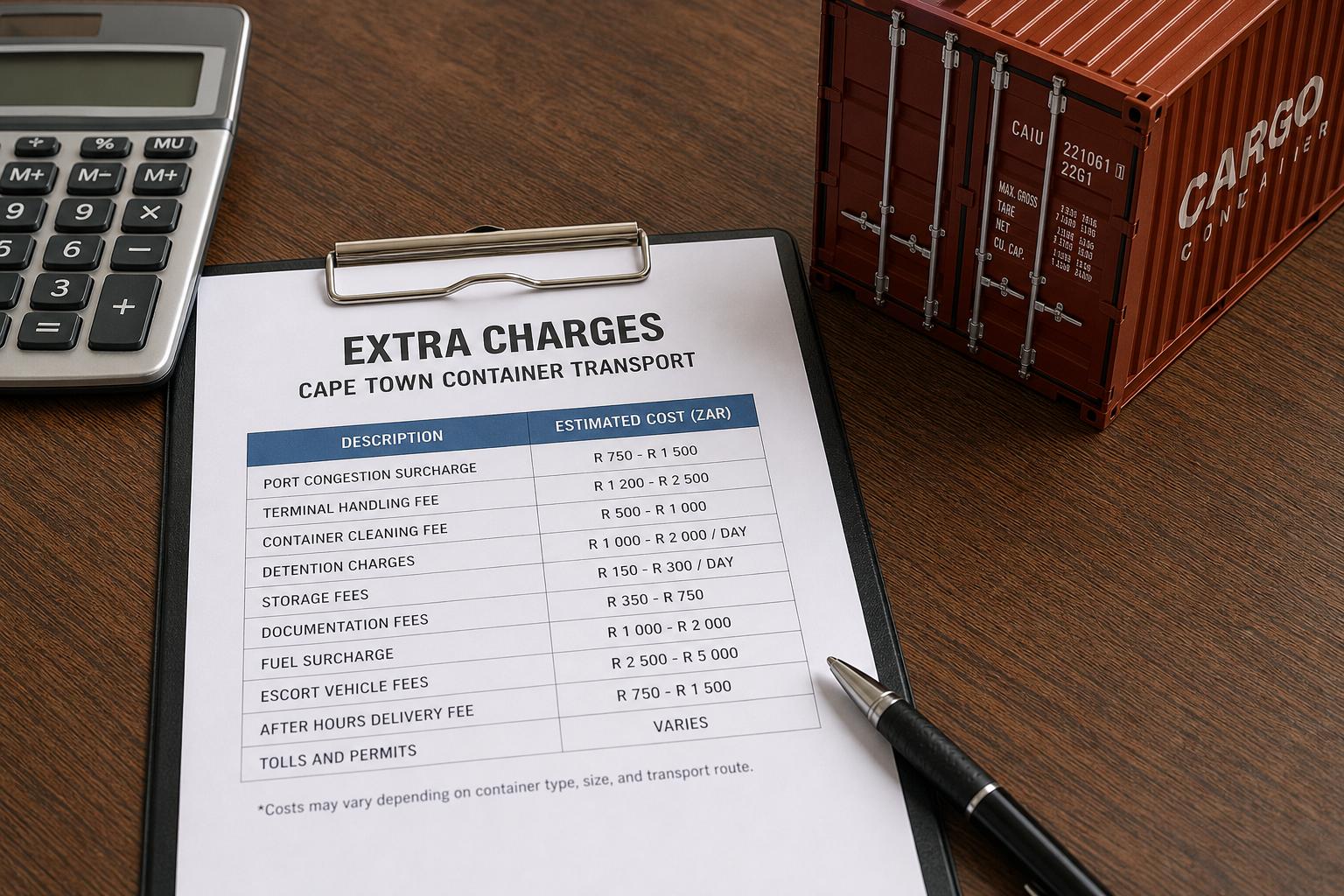
Shipping lines enforce strict detention timelines on containers, while port terminals grant limited free days before charging punitive storage rates. An inexperienced or disorganized transporter can easily cost your business tens of thousands of rands in detention penalties. Transparent pricing structures distinguish reputable logistics providers from operators who surprise clients with unexpected ancillary fees.
Before signing a service agreement, inspect the billing schedule for clear terms regarding these standard line items:
- Specified free loading and offloading time allowances at receiver and shipper premises.
- Fixed hourly demurrage rates once standard offloading allowances expire.
- Clear breakdown of port handling surcharges, diesel adjustments, and toll fees.
- Pre-arranged staging charges if containers must rest overnight in a secure depot prior to final delivery.
Precision Solutions With RRE Logistics
Efficient freight movement across the Western Cape requires local experience, proper port infrastructure, and reliable rolling stock. RRE Logistics delivers dependable container haulage services, connecting the Port of Cape Town with commercial centres across the region. Contact our logistics team to discuss your cargo schedules, request freight rates, and keep your container supply line operating on time.
Frequently Asked Questions
How do Cape Town wind delays affect container transport timelines?
Strong southeasterly winds exceeding safe operational thresholds force container cranes at the Port of Cape Town to stop lifting. When wind delays occur, harbor gates close or slow down significantly, creating multi-day vessel and container backlogs. Transporters must reschedule collection slots and deploy staging strategies to mitigate container demurrage costs.
What is the difference between skeletal trailers and sidelifters for container delivery?
Skeletal trailers are lightweight chassis designed strictly to transport containers on the road, requiring an external crane, reach stacker, or raised loading dock to load and unload the box. Sidelifters feature integrated hydraulic lifting arms that pick up or lower containers directly to ground level, eliminating the need for specialized offloading equipment at your facility.
How can importers avoid container detention and demurrage fees in Cape Town?
Importers can minimise detention fees by pre-clearing customs paperwork prior to vessel berthing, booking transport slots as soon as the container status turns available, and using a carrier with off-dock staging facilities. This allows hauliers to pull containers from the quay within the free period and store them safely before final site delivery.
Does a container transport company handle customs clearance at the Port of Cape Town?
Most container cartage companies focus strictly on physical haulage and depot staging, collaborating with your clearing and forwarding agent to collect the release documentation. However, full-service logistics providers coordinate closely with customs brokers to ensure cargo release status aligns perfectly with truck booking slots.