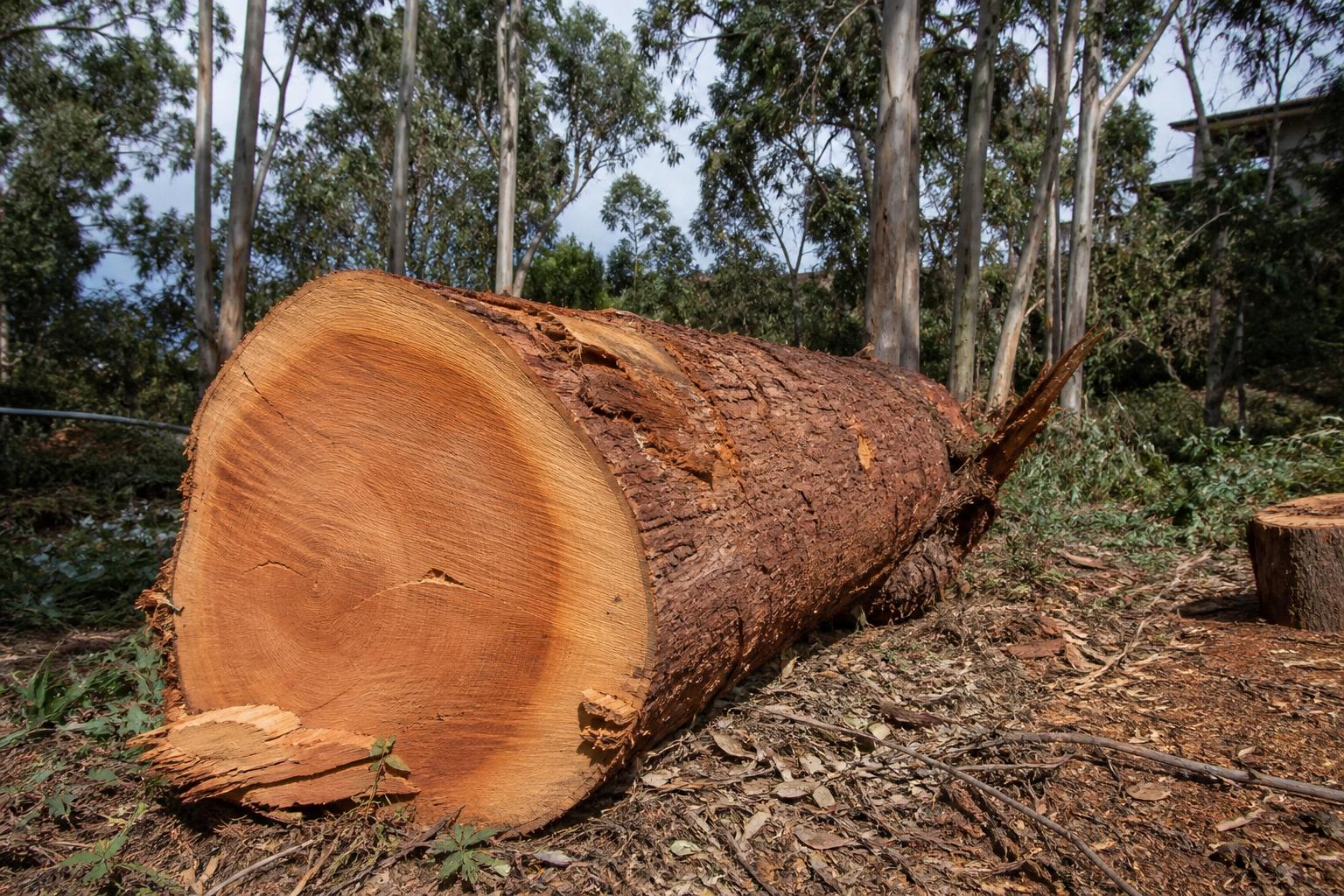
In Fourways, the trees most commonly felled are Jacarandas, Blue Gums (Eucalyptus), Pines, Tipu trees, and Box Elders infested by the Polyphagous Shot Hole Borer beetle. Property owners across suburbs like Lonehill, Broadacres, and Dainfern remove these species because of aggressive root networks cracking driveways and pools, brittle boughs snapping during Highveld summer thunderstorms, and structural rot that threatens boundary walls and electric fencing.
Common Tree Species Removed Across Fourways
Fourways properties feature a mix of established exotic trees planted decades ago and fast-growing shade varieties that outgrow modern stand sizes. Several specific species account for the majority of tree removal requests across the northern suburbs:
- Jacaranda trees: Prized for purple spring blooms, older specimens frequently develop internal hollows and heavy horizontal limbs that snap under the weight of summer downpours.
- Eucalyptus (Blue Gum): Massive, moisture-hungry root networks dry out gardens, while brittle upper limbs shed without warning, threatening roof tiles and vehicles.
- Tipu trees (Tipuana tipu): Fast-growing giants with shallow, sprawling surface roots that lift driveway paving, crack sewer connections, and push over boundary walls.
- Pine trees: Tall evergreen species with shallow root plates that struggle to hold purchase in saturated soil during severe high-wind squalls.
Why Fourways Property Owners Remove Problem Trees
Managing large timber on residential stands requires balancing shade against structural risk. Fourways experiences distinct seasonal weather and property layout constraints that make certain mature species hazardous over time.
Highveld Summer Storm Hazards
Late-afternoon thunder squalls in Gauteng bring torrential rains, lightning strikes, and violent wind gusts. Trees with brittle wood or heavy, unbalanced crowns routinely drop large boughs onto carports, outbuildings, and boundary fences. When severe weather hits, knowing who to call for emergency tree felling in Fourways after a storm prevents secondary damage and clears blocked driveways fast.
Subsurface Infrastructure Damage
Fast-growing exotic species possess aggressive root systems that exploit hairline fractures in subterranean pipes. Over multiple seasons, these roots thicken, cracking swimming pool shells, blocking municipal sewer lines, and lifting expensive driveway bricks. Property owners face repeated repair expenses unless they eliminate the problem tree at the source.
Borer Beetle Infestations and Structural Dieback
The Polyphagous Shot Hole Borer beetle has damaged thousands of mature trees across Johannesburg north. Infested Box Elders, London Planes, and English Oaks suffer fungal infection and vascular collapse. This infestation leaves limbs hollow and brittle, creating unpredictable fall hazards near homes.
Property owners typically schedule removals after identifying one or more structural risk factors:
- Visible cracking or lifting along boundary walls, pool surrounds, and paved parking bays
- Extensive canopy overhang touching electric fencing, solar panel arrays, or roof tiles
- Fungal brackets, sap bleeding, or sawdust around the trunk base indicating internal decay
- Noticeable leaning or soil shifting around the root plate following heavy rains
Assessing Risk and Practical Removal Considerations
Felling a mature tree in Fourways requires precise planning. Secure estates enforce strict rules regarding noise, boundary safety, and disposal hours, while compact stands leave minimal room for free-felling. When evaluating whether to remove a tree, review how much tree felling costs in Fourways to plan your budget around tree size, accessibility, and waste removal.
High-risk removals close to houses, glass pool fencing, or neighbouring boundary lines require rigging equipment and sectional dismantling. Always verify safety standards and insurance coverage by checking how to choose an insured tree felling company in Fourways before hiring a team.
A safe tree removal plan balances several essential site factors:
- Clearance distances from overhead electric fence wiring, service cables, and neighbouring roofs
- Controlled lowering techniques using pulleys and friction brakes to protect garden features
- Stump grinding depth to prevent invasive regrowth and prepare the ground for fresh planting
Tree Felling in Fourways With Best Tree Felling
Removing hazardous or invasive trees requires technical experience, specialised equipment, and strict site management. Best Tree Felling provides reliable, controlled solutions for residential stands and secure estates throughout Fourways. Whether managing an overgrown Tipu tree damaging your paving or dismantling a storm-damaged Blue Gum, our crew handles every stage from sectional cutting to complete stump grinding and site clearance.
Protect your home and grounds by selecting experienced specialists for expert tree felling services. Click the button below to arrange an on-site evaluation and receive a clear quote.
FAQs
Which tree species causes the most structural damage in Fourways?
Tipu trees and Blue Gums cause the highest frequency of physical damage. Their roots crack boundary walls, fracture swimming pools, and lift driveways, while their brittle limbs are prone to snapping during summer storms.
Can I remove a mature Jacaranda tree on my private property?
Yes, property owners can remove Jacaranda trees situated within their private stands, particularly if the tree is dying, unstable, or threatening structures. Trees growing on public verges or municipal pavements require local council permission prior to removal.
Why are so many trees dying suddenly across Fourways?
The primary cause is the Polyphagous Shot Hole Borer beetle. This invasive pest introduces a fungus that blocks water circulation within susceptible host trees like Box Elders and English Oaks, causing limbs to die back and become brittle.
How are large trees safely felled in compact estate gardens?
Contractors use sectional dismantling. Certified climbers ascend the tree, secure individual limbs with rigging ropes, cut them into manageable sections, and lower them gently to ground workers without damaging surrounding garden beds, walls, or patios.
Leave a Reply