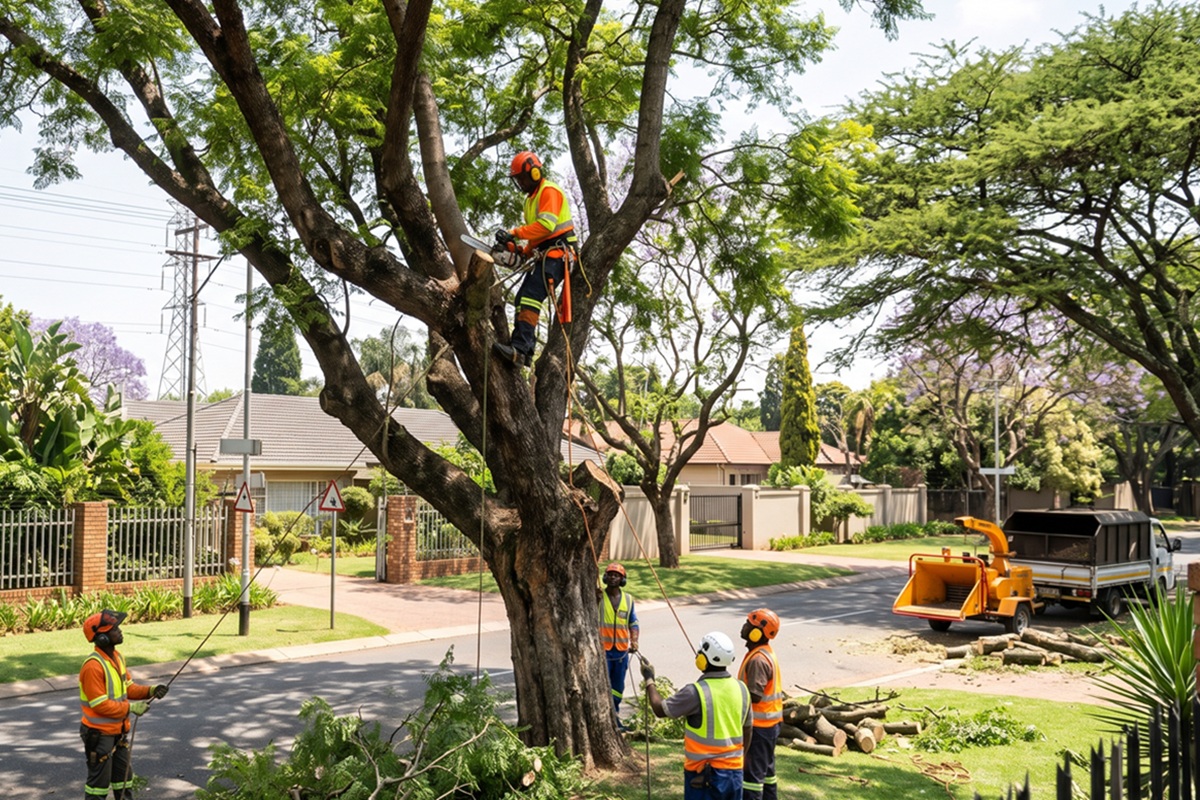
In most cases, you do not need a municipal permit to fell a tree located entirely on your private property in Fourways or Johannesburg, provided the species is not legally protected under South African forestry legislation. However, if the tree stands on the pavement, extends onto council land, or is located within an estate with strict environmental bylaws, formal permission is mandatory before any cutting begins.
Understanding Municipal and National Tree Regulations
City of Johannesburg municipal bylaws strictly protect all vegetation situated on public property. Johannesburg City Parks and Zoo manages every tree planted on verges, pavements, islands, and public parks. Property owners cannot trim, lop, or cut down pavement trees outside their boundary wall, even if branches overhang an electric fence or roots crack a paved driveway. Felling a street tree without written council approval is an offence that results in heavy fines or prosecution.
For trees fully inside private stands, local council bylaws generally take a backseat to national environmental statutes. The National Forests Act protects specific indigenous species across South Africa regardless of where they grow. Felling, pruning, or disturbing a protected species without a licence issued by the Department of Forestry, Fisheries and the Environment is illegal.
Common protected species occasionally found in northern Johannesburg gardens include:
- Podocarpus falcatus (Outeniqua Yellowwood) and other indigenous yellowwood varieties
- Sclerocarya birrea (Marula), sometimes planted in older suburban properties
- Boscia albitrunca (Shepherd Tree) and select indigenous acacia varieties
- Prunus africana (Red Stinkwood), strictly conserved across Gauteng
Estate Rules and Property Boundary Situations
Fourways is home to numerous gated communities, security clusters, and golf estates, including Dainfern, Fourways Gardens, and Cedar Lakes. While the City of Johannesburg may not require a permit for private yard work, residential associations enforce their own environmental guidelines. Removing a mature tree without estate approval can trigger immediate architectural penalties and fines.
Boundary Line Disputes and Shared Trees
When a tree trunk sits directly on the boundary line between two residential stands, it is legally co-owned by both neighbours under South African common law. Neither party may cut down or significantly alter the tree without the other person written consent. If branches from your neighbour yard overhang your boundary fence, you are entitled to trim them back strictly to your boundary line, provided the offcuts are offered back to the owner and the tree overall health is not destroyed.
Protected Heritage Trees
Certain historical trees in Johannesburg carry formal heritage status. These specimens are listed on provincial heritage registers due to age, cultural importance, or historical events. Cutting down a registered heritage tree requires formal de-listing and heritage council authorization, which involves public participation and specialised ecological assessments.
When Tree Felling Requires Urgent Action
Summer thunderstorms in Gauteng bring fierce winds and lightning strikes that routinely split mature gums, pines, and jacarandas. When a storm-damaged tree leans precariously over an electric fence, thatch roof, or power cables, waiting weeks for standard administrative approvals is simply not realistic. In an immediate hazard, property owners must secure the area and consult trained specialists who understand how to document safety risks.
Before scheduling work on a dangerous or decaying tree, take the following steps:
- Photograph the visible structural damage, ground heave, or trunk hollows from multiple angles
- Check whether the trunk root collar sits within your boundary pegs or on council verge land
- Notify your homeowners association manager if your property falls within an estate
- Contact a professional team for safe removal through expert tree felling services
If violent weather leaves you facing an immediate structural threat, know who to call for emergency tree felling in Fourways after a storm so hazards can be safely isolated without delay.
Permit Application Processes and Professional Removal
Acquiring a licence for a protected species involves submitting an official application to the regional forestry department office. The process requires site inspections, photographic evidence, and a documented justification explaining why pruning or relocation is not possible. For pavement trees, requests must be submitted directly to Johannesburg City Parks, whose arborists will inspect the tree and either execute the work or issue written felling authorization.
When hiring an external team for difficult removals, pricing and credentials matter equally. Getting clear estimates ahead of time helps prevent surprise invoices; review how much tree felling costs in Fourways to understand standard regional rates for different trunk diameters and heights.
Ensure your chosen contractor provides verifiable qualifications and safety guarantees:
- Public liability insurance cover of at least five to ten million Rand
- Proper rigging and directional felling equipment suitable for tight suburban yards
- Certified operators trained in operating chainsaws near high-voltage lines
- Responsible off-site wood removal and complete site cleanup
Always review our guidelines on how to choose a reliable insured tree felling company in Fourways before allowing any team onto your property.
Tree Felling in Fourways With Best Tree Felling
Handling large, unstable, or legally sensitive trees requires experience, correct technical rigging, and a clear understanding of regional guidelines. Best Tree Felling provides prompt, professional tree care and felling across Fourways, Bryanston, Lonehill, and surrounding Johannesburg suburbs. Our fully insured team handles complex sectional dismantling, crown reduction, stump grinding, and emergency storm clear-ups while protecting your walls, roofs, and paving. Click the button below to book an on-site evaluation and receive an upfront quote.
FAQs
Can I cut down a tree on the pavement outside my house in Johannesburg?
No. Street trees are the property of the City of Johannesburg and are maintained exclusively by Johannesburg City Parks and Zoo. Cutting, poisoning, or severely topping a council tree without formal written permission from City Parks is illegal and carries significant financial penalties.
Which tree species in South Africa always require a permit to cut down?
Trees listed under the National Forests Act require a licence from the Department of Forestry, Fisheries and the Environment before they can be cut, trimmed, or damaged. Common protected species include yellowwood varieties, marula, red stinkwood, and camel thorn trees.
Do I need my neighbour permission to fell a tree in my backyard?
If the tree base is situated entirely inside your boundary line and is not a protected species, you do not need your neighbour permission. However, if the trunk sits directly on the boundary line, it is joint property, and you must obtain your neighbour consent before taking it down.
What happens if a tree falls on my boundary wall during a storm?
Document the damage immediately with clear photos for insurance purposes. If the fallen tree originated on your stand, your insurance policy covers repairs and debris removal. If it fell from municipal land, Johannesburg City Parks must be notified immediately to clear public roadways, while your insurer handles wall repairs.
Leave a Reply