Blog

  • What You Need to Start a Plastic Welding Workshop in Johannesburg

    What You Need to Start a Plastic Welding Workshop in Johannesburg

    Starting a plastic welding workshop in Johannesburg requires industrial-grade hot air equipment, a steady power supply with load-shedding backup, proper extraction ventilation, and a reliable inventory of thermoplastic materials. Local demand across Gauteng is substantial, spanning water tank repairs, automotive bumper restoration, geomembrane lining, and industrial acid tank fabrication. Setting up your operation correctly from day one protects your seams from failure under harsh Highveld UV conditions and keeps your business profitable.

    Core Tooling and Welding Equipment

    Your welding gear forms the backbone of daily operations. Cheap DIY heat guns cannot maintain the continuous operating temperatures required for structural welds on heavy polymers. Professional fabricators prioritize equipment with digital temperature displays and independent airflow controls. Before buying equipment, understand what features to look for in hot air plastic welding tools from Johannesburg suppliers to ensure your tools survive heavy workshop duty.

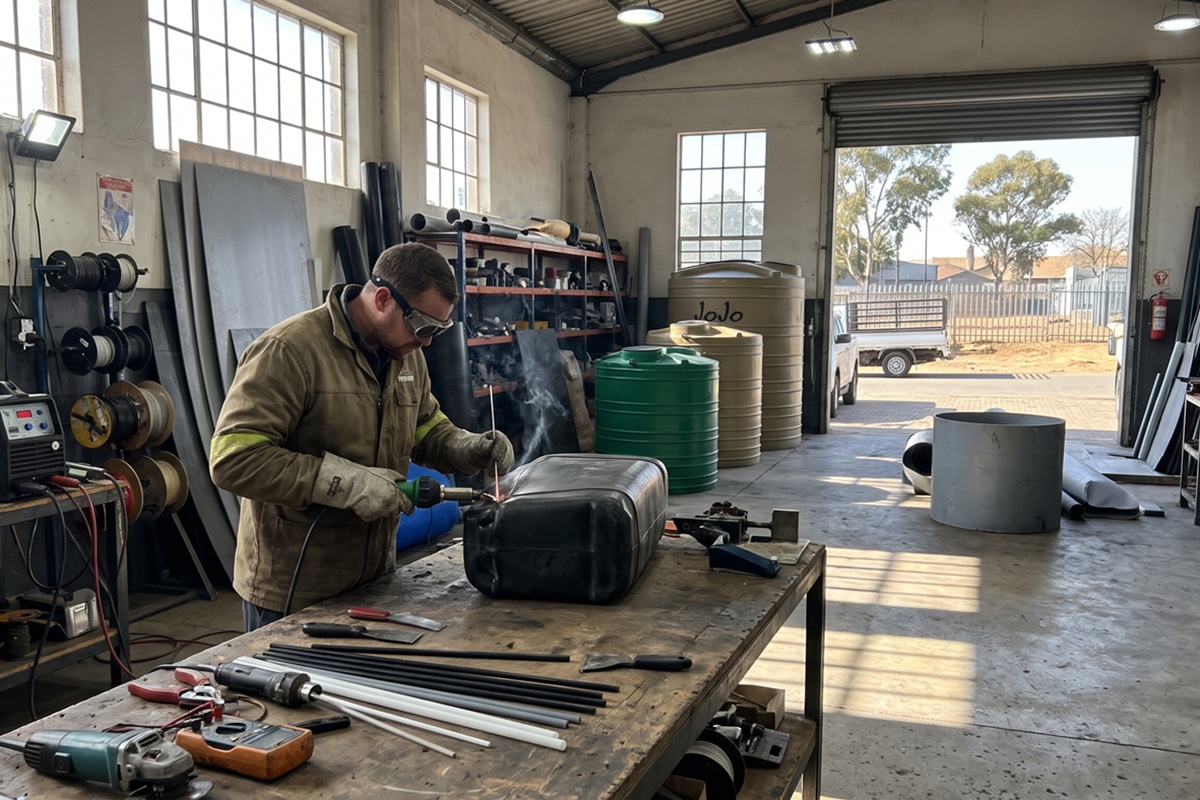
    Every standard plastic fabrication workshop relies on a core setup of welding machinery:

    • Handheld hot air welding guns fitted with speed welding nozzles and tacking tips
    • Extrusion welders capable of outputting two to four kilograms of material per hour for thick tank walls
    • Scrapers, deburring blades, and rotary burrs for mechanical oxide layer removal prior to welding
    • Digital contact pyrometers and air temperature gauges for precise thermal verification
    • Specialised clamping jigs, sheet benders, and pipe fusion clamps to hold workpieces steady during cooling

    Hand Tools Versus Extrusion Welders

    Handheld hot air guns handle thin sheet materials, automotive plastics, and tight corners where precision matters most. For tank construction and thick containment liners exceeding four millimetres, hand tools become too slow and cannot produce sufficient thermal mass. An extrusion welder melts both the parent material and a continuous feed rod inside an internal barrel, depositing a single, structural bead in one pass. Many local contractors discover that why Swiss made plastic welding tools outperform standard heating tools in Johannesburg comes down to ceramic heating element durability and the ability to maintain thermal stability when workshop temperatures shift.

    Workshop Infrastructure and Johannesburg Local Factors

    Setting up in industrial nodes like Alrode, Kya Sand, or Laser Park puts you close to major transport corridors and raw material suppliers. Operating on the Highveld also introduces environmental realities that direct your workshop layout. Johannesburg sits at roughly 1,750 metres above sea level, meaning thinner air alters thermal heat transfer and demands tools that compensate for air density changes.

    Equipping your physical premises requires careful attention to health, safety, and electrical stability:

    • Three-phase electrical connections paired with a generator or battery backup system to survive load-shedding during active weld cycles
    • Local exhaust ventilation hoods positioned directly above welding benches to extract hazardous thermal decomposition fumes
    • Dedicated, dust-free preparation zones to keep grease, swarf, and grit away from freshly scraped weld grooves
    • Fire-rated workstations equipped with heat-resistant composite surfaces or stainless steel tops

    Managing Power Interruptions

    Plastic welding relies on consistent thermal profiles. If the power drops midway through an extrusion weld on a polypropylene tank, the weld freezes, creates cold spots, and ruins the structural integrity of the joint. You must grind out the entire cold section and start again. Installing automatic voltage regulation protects sensitive circuit boards in modern digital welders from grid surges when municipal power returns.

    Raw Materials and Testing Essentials

    Working with plastics demands strict discipline around material compatibility. Polyethylene cannot fuse to polypropylene, and PVC requires distinct temperature curves and specialised venting because overheated vinyl releases corrosive fumes. Sourcing virgin welding rod that precisely matches your sheet stock ensures high weld factors and prevents stress cracking under Gauteng sunshine.

    Building client trust in your workshop depends on keeping critical quality verification tools on hand:

    • High-voltage spark testers to detect pinholes and void defects along long containment seams
    • Tensile test coupon cutters to evaluate lap and butt weld strength before handing over large projects
    • Ultrasonic thickness gauges to verify base material integrity on repair jobs
    • Dedicated rod storage cabinets with desiccant packs to prevent moisture absorption in hygroscopic polymers like nylon

    Securing reliable machinery with local support is simple once you know where to find heavy duty BAK plastic welding tools Johannesburg contractors trust for tough field and workshop duties.

    Plastic Welding With Plastek

    Equipping a profitable workshop requires more than just buying heat tools off a shelf. You need dependable equipment, rapid spare parts availability, and expert advice to tackle commercial jobs across Gauteng. Plastek supplies Swiss-engineered BAK plastic welding systems, hot air blowers, wedge welders, and extrusion tools built for continuous commercial production. Get in touch with our specialist team by clicking the button below to review your workshop tooling requirements and request a direct quote.

    FAQs

    Do I need specialised certification to open a plastic welding business in South Africa?

    While basic repairs do not legally mandate a trade licence, commercial and civil clients routinely demand compliance with SANS 10268 standards for welding thermoplastics. Achieving certification through recognized training bodies establishes credibility, qualifies your shop for municipal tenders, and enables you to sign off on certified tank fabrications.

    How does Johannesburg altitude affect plastic welding equipment?

    Johannesburg sits at high altitude, where lower atmospheric air density reduces the mass of air forced over heating elements. Basic heating tools can overheat their elements or fail to transfer enough heat into thick plastic substrates. Choosing tools with electronically controlled air volumes and closed-loop temperature sensors ensures your target temperatures remain rock steady.

    What plastics offer the highest repair and fabrication demand in Gauteng?

    High-density polyethylene (HDPE) leads the market for water storage, chemical transport, and mining pipes. Polypropylene (PP) is standard for chemical processing tanks and laboratory fittings. Automotive work focuses heavily on polypropylene blends, ABS, and polycarbonate, while PVC remains dominant in ducting and commercial drainage.

    Can I run hot air welding tools from a standard workshop generator?

    Yes, provided the generator provides clean power through an inverter or automatic voltage regulator. Digital plastic welding tools contain sensitive microprocessors that manage thermal heating elements. Power spikes or frequency fluctuations from cheap generators can destroy control boards, so always pair equipment with rated commercial power units.
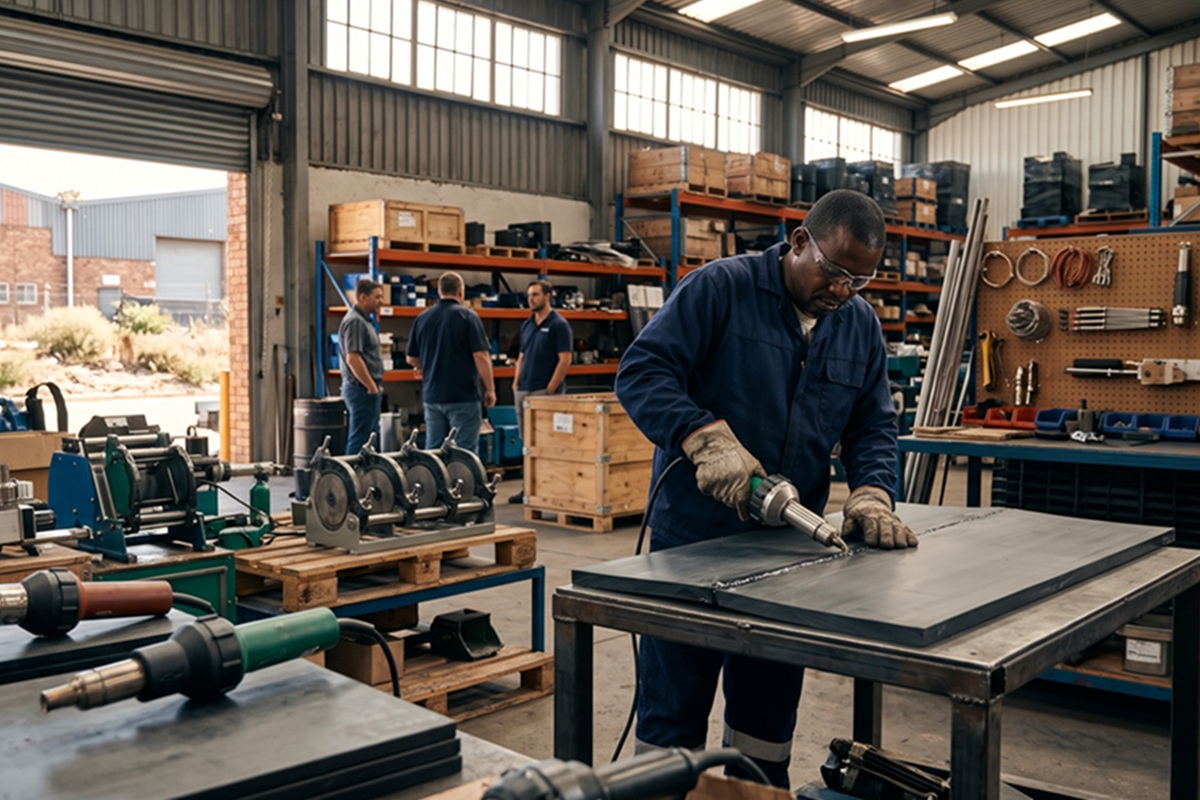

  • Who Supplies Plastic Welding Machines in Johannesburg

    Who Supplies Plastic Welding Machines in Johannesburg

    Plastek is the leading industrial supplier of plastic welding machines in Johannesburg, supplying civil engineering firms, commercial fabricators, and mining contractors across Gauteng with professional extrusion welders, hot air hand tools, and automatic geomembrane wedge welders. Located near major Witwatersrand industrial transport routes, Plastek pairs European-manufactured machinery with local technical support, original replacement elements, and routine calibration services to prevent unscheduled operational downtime.

    Industrial Plastic Welding Equipment Available in Gauteng

    Plastic fabrication and containment projects require distinct technologies depending on joint design, site access, and sheet gauge. Local workshops and site teams evaluate what features to look for in hot air plastic welding tools from Johannesburg suppliers to ensure consistent temperature delivery and long motor lifespans under continuous use.

    Contractors across industrial nodes such as Jet Park, Alrode, and City Deep select their welding systems based on specific operational requirements:

    • Handheld hot air welders engineered for detail fabrication, tank fittings, vehicle plastic repairs, and overlap seam welding on thin liners.
    • Hand extrusion welders designed for heavy structural tank construction, thick HDPE plate joining, and large-diameter utility pipe fabrication.
    • Automatic hot wedge and hot air welders calibrated for civil lining projects, including tailings dams, leachate reservoirs, and municipal landfills.
    • Electrofusion and butt fusion machinery configured for high-integrity pressure piping networks in mining and water distribution.

    Selecting Machinery for Highveld Operating Conditions

    Operating hot air equipment on the Highveld presents technical challenges that standard hobbyist heat tools cannot endure. Johannesburg sits at approximately 1,700 metres above sea level, where thinner atmospheric density alters thermal convection and airflow efficiency. Combined with erratic grid power and frequent reliance on generator sets during load-shedding cycles, equipment must incorporate robust electronic controls to maintain stable temperatures.

    Thermal Regulation and Voltage Stability

    Sudden voltage drops and spikes from site generators can burn out unshielded heating elements. High-grade industrial welders utilize closed-loop digital controls that actively compensate for fluctuations in incoming voltage, ensuring that the plasticizing temperature remains locked to material specifications regardless of external electrical shifts.

    Demanding Highveld conditions demonstrate why Swiss-made plastic welding tools outperform standard heating tools in Johannesburg sites where dust, altitude, and unstable generator feeds are everyday realities.

    To avoid premature heating element burnout and ensure joint integrity under demanding field conditions, operators must adhere to standard site protocols:

    • Monitor generator output voltage with an in-line meter before connecting sensitive electronic welding systems.
    • Clean stainless steel air intake filters daily to stop fine mining dust and Highveld topsoil from degrading motor windings.
    • Initiate mandatory tool cool-down cycles before disconnecting mains or auxiliary generator supplies.

    Industrial Applications and Certified Hardware Supply

    Fabrication shops and containment contractors across Gauteng depend on robust tools capable of non-stop production cycles. Engineering teams consistently research where to find heavy-duty BAK plastic welding tools Johannesburg contractors trust for harsh lining and heavy structural fabrication work.

    Plastek supplies verified hardware configured to weld demanding thermoplastic polymers across multiple Gauteng sectors:

    • Chemical manufacturing infrastructure, including acid pickling tanks, chemical scrubbers, and industrial drainage sumps using high-density polyethylene and polypropylene.
    • Environmental and civil containment projects, including hazardous waste lining, farm dams, stormwater attenuation basins, and mining retention ponds.
    • Ventilation and extraction installations, joining rigid unplasticized PVC ducting for corrosive industrial fumes.
    • Logistics and bulk materials handling, rebuilding cracked transport bins, pallets, and bulk containers to restore logistics efficiency.

    Plastic Welding Machines From Plastek

    Plastek supplies genuine BAK technology, original spare parts, specialized welding nozzles, and complete technical services directly to industrial contractors across Johannesburg. Working with an authorized supplier ensures you receive equipment backed by local stockholding, eliminating the extended delays of international shipping when replacement ceramics, blowers, or heating elements are required. Reach out directly to discuss your fabrication or containment requirements, or submit project specifications by clicking the button below to request equipment pricing and technical assistance.

    FAQs

    Can I weld different plastic types together using a hot air tool?

    No; thermoplastics must be joined with a matching polymer base. Polyethylene welds only to polyethylene, and polypropylene welds only to polypropylene. Attempting to weld incompatible plastics produces weak, mechanical bonds that fail under physical stress or hydraulic pressure.

    How does altitude in Johannesburg affect plastic welding?

    At 1,700 metres above sea level, thinner air absorbs and transfers heat differently than at coastal elevations. Hot air welding machines must move air efficiently and utilize precise closed-loop sensors to maintain exact melt temperatures despite reduced atmospheric density.

    Are spare parts for plastic welding machines stocked locally in Johannesburg?

    Yes; Plastek carries inventory for heating elements, motor brushes, replacement ceramics, and extrusion shoes in Gauteng, allowing contractors to service equipment quickly without waiting weeks for overseas shipments.

    What power source is required to run industrial plastic welders on site?

    Handheld hot air welders typically operate on standard 230V single-phase power, requiring a steady 1.6 kW to 3.4 kW supply. Large extrusion welders and automatic wedge machines often need clean 3.5 kW to 6 kW generator capacity equipped with automatic voltage regulation to prevent electronics damage.

  • How to Transfer Inherited Property in Cape Town and What Must Be Done First

    How to Transfer Inherited Property in Cape Town and What Must Be Done First

    To transfer property you inherited in Cape Town, the estate must first be formally reported to the Master of the High Court so that an executor can be appointed. You cannot transfer title deeds, list the home for sale, or register your ownership at the Cape Town Deeds Office until the Master issues Letters of Executorship. Once the executor has authority and settles the estate debts, an admitted conveyancing attorney manages the formal transfer of the property title into your name.

    Reporting the Estate: What Must Be Done First

    Before any deeds change hands, the deceased estate must move through formal probate administration under South African law. In Cape Town, estates are lodged with the Master of the High Court on Albertus Street. The person nominated in the deceased will, or an agreed family representative if there is no will, must submit the initial estate documents to obtain formal standing.

    The Master requires specific statutory documentation to register the estate and issue Letters of Executorship:

    • The original death certificate issued by the Department of Home Affairs.
    • The original signed will, or an affidavit stating that no valid will exists.
    • A completed Death Notice form detailing the surviving family members and assets.
    • The completed Inventory form listing all known property, bank accounts, and liabilities.
    • An Acceptance of Trust as Executor form signed by the nominated executor.

    If the gross value of the estate is under R250,000, the Master issues Letters of Authority under Section 18(3), which follows a simpler process. For properties in Cape Town, values almost always exceed this threshold, requiring full Letters of Executorship. Gathering the paperwork promptly avoids administrative delays at the Master office.

    The Core Steps Before Transferring the Title Deed

    Receiving Letters of Executorship gives the executor authority to act, but legal transfer still cannot happen instantly. The executor must follow the prescribed steps under the Administration of Estates Act to protect creditors and beneficiaries alike. You can review what documents you need to transfer property in Cape Town to prepare every record the deeds registry requires.

    Advertising for Creditors

    The executor must place an advertisement in the Government Gazette and a local newspaper distributed in Cape Town, such as the Cape Times or Cape Argus. This notice gives creditors 30 days to lodge any claims against the deceased estate. Skipping this step halts the estate transfer process later on.

    Drafting the Liquidation and Distribution Account

    Once the creditor period expires and estate bank accounts are reconciled, the executor drafts a formal Liquidation and Distribution account. This document lists every asset, outstanding bond, municipal account, and administration expense, showing exactly how the inherited home is distributed. The account lies open for formal public inspection for 21 days at the Cape Town Magistrate Court and the Master Office.

    The Conveyancing and Deeds Office Registration Process

    After the Master approves the distribution account without objection, the executor instructs a conveyancer to handle the legal registration. Estate transfers require specialised oversight through our property and real estate legal team to ensure the title deed reflects the exact terms of the will or intestate succession.

    The conveyancing attorney must assemble several regional clearances before lodging documents at the Cape Town Deeds Office:

    • City of Cape Town municipal rates clearance certificate showing all property rates, water, and refuse charges are paid ahead.
    • SARS transfer duty exemption certificate, confirming the transfer is exempt from transfer duty under Section 9(1)(e) of the Transfer Duty Act.
    • Western Cape beetle clearance certificate confirming the timber roof structures are free from wood-destroying insects.
    • City of Cape Town plumbing certificate, ensuring the water installation complies with local water by-laws and meters operate correctly.
    • Electrical certificate of compliance, gas certificate, and electric fence compliance certificates where installations exist.

    When inherited real estate forms part of a commercial entity, company shares or close corporation member interests must also be handled correctly. If the deceased ran a commercial enterprise from the premises, examine our guide on how to sell a business that owns property in Cape Town to understand the structural differences between direct title deed transfers and corporate asset transfers.

    Costs Associated With Inheriting Cape Town Real Estate

    Although heirs do not pay transfer duty on inherited real estate in South Africa, acquiring the property is not entirely free. The estate or the heir must settle several fixed administrative fees before registration can finalize.

    Key financial liabilities to plan for include the following items:

    • Conveyancing legal fees, which follow tariff guidelines determined by the Legal Practice Council.
    • Deeds Office registration fees charged by the national government to register the new title deed.
    • Municipal advance payments to secure the City of Cape Town rates clearance certificate, often calculated several months forward.
    • Inspection and repair costs required to obtain statutory electrical, beetle, and plumbing compliance certificates.
    • Estate administration fees, capped by statute at 3.5 percent of the gross estate value plus VAT, unless negotiated differently with the executor.

    Let Parker Attorneys Help You With Property Transfers

    Administering an estate and transferring inherited property in Cape Town involves strict statutory deadlines, municipal clearances, and technical property deeds filings. Missing a single requirement at the Master Office or the Deeds Registry can stall an inheritance for months. Parker Attorney provides hands-on conveyancing and estate transfer services, managing every stage from initial Master lodgements to final deed endorsement. Click the button below to schedule an appointment at our Cape Town office to move your transfer forward without unnecessary delays.

    FAQs

    Do I have to pay transfer duty on an inherited house in Cape Town?

    No. In South Africa, property acquired through inheritance, whether under a valid will or through intestate succession, is exempt from transfer duty under Section 9(1)(e) of the Transfer Duty Act. However, an application must still be made to SARS to issue a formal Transfer Duty Exemption Certificate before the Deeds Office will register the transfer.

    Can I sell the inherited home before the transfer into my name is finished?

    Yes, but only through a tripartite agreement or directly through the executor. The executor can enter into a sale agreement with a third-party purchaser directly from the estate, provided all heirs consent in writing and the Master endorses the power of attorney. This avoids paying double transfer registration fees.

    How long does the entire transfer process take in Cape Town?

    On average, the process takes between 6 and 18 months. Obtaining Letters of Executorship from the Master of the High Court in Cape Town generally takes 2 to 4 months. The creditor notice period, preparation of the liquidation account, municipal clearance, and final registration at the Deeds Office require several additional months.

    What happens if the deceased still had an active mortgage bond on the property?

    The existing home loan must be settled before or concurrently with the transfer. If the deceased had bond protection life insurance, that policy settles the debt. If no insurance exists, the estate must settle the bond from other cash assets, the heir must secure a new mortgage bond in their own name, or the property must be sold to settle the outstanding balance.

  • How Buying Off-Plan From a Developer in Cape Town Works Legally

    How Buying Off-Plan From a Developer in Cape Town Works Legally

    Buying property off-plan from a developer in Cape Town means signing a legally binding deed of alienation for an immovable property unit that does not yet exist physically. Governed primarily by the Alienation of Land Act, the Sectional Titles Act, and the Consumer Protection Act (CPA), this process binds you to architectural specifications and contractual milestones rather than an inspected structure. You pay a deposit into an attorney trust account, secure mortgage finance through suspensive conditions, wait for development completion, and take ownership once the Cape Town Deeds Registry registers the opening of the sectional title register or subdivision.

    The Contractual Framework and Pre-Construction Conditions

    When you purchase off-plan, the developer provides a dual-part contract: a deed of sale for the undivided share of the land and a construction contract detailing building specifications. Because construction relies on municipal sign-offs and commercial viability, developers always include suspensive conditions that protect their capital exposure before earthworks begin.

    Before building commencement, developers typically require these conditions to be met:

    • A pre-sales threshold, requiring sixty to eighty percent of units sold before construction funding releases
    • Formal approval of building plans and site development frameworks by the City of Cape Town
    • Procurement of development finance and water and sanitation clearances from municipal engineers
    • Opening of the sectional title register or approval of general plans by the Surveyor-General

    If these conditions fail within the stipulated timeframe, the contract lapses and your initial deposit must be refunded with accrued interest, provided your agreement required investment under Section 86(4) of the Legal Practice Act.

    Developer Obligations, NHBRC Protection, and the CPA

    South African law provides statutory safeguards so buyers do not shoulder the entire risk of building defects or structural failures. Every developer and builder constructing residential homes in the Western Cape must be registered with the National Home Builders Registration Council (NHBRC).

    Statutory Warranties Under the Housing Consumers Protection Measures Act

    Before construction begins, the developer must enrol the project with the NHBRC. This statutory enrolment provides mandatory warranties that survive the transfer of ownership:

    • A five-year warranty against major structural defects arising from poor design or workmanship
    • A twelve-month warranty requiring the builder to rectify roof leaks caused by defective materials or construction
    • A ninety-day latent and patent defect rectification period running from the official handover date

    Consumer Protection Act Rights

    Section 55 and Section 56 of the CPA impose an implied warranty of quality on every developer selling residential property in the ordinary course of business. Developers cannot hide behind a traditional ‘voetstoots’ clause when selling off-plan units. If materials deviate substantially from the finishes schedule annexed to your agreement, you retain statutory rights to demand repair, replacement, or price reduction. Engaging expert property and real estate legal representation before signing preserves your ability to enforce these statutory rights against corporate developers.

    Financial Mechanics: VAT, Occupational Rent, and Deeds Office Registration

    Buying directly from a registered VAT vendor eliminates transfer duty, which would otherwise be payable to SARS on an existing residential resale. Instead, the purchase price includes VAT at fifteen percent. Transfer fees remain payable to the developer appointed conveyancing attorney, alongside your own bond registration fees.

    Delays often occur between physical completion and formal deed registration. Once the City of Cape Town issues an Occupancy Certificate, the developer will demand that you take occupation and pay occupational rent. This monthly rental amount is stipulated in the agreement and covers the interim period until the property registers in your name. For corporate structures or developers managing larger asset transfers, familiarising yourself with how to sell a business that owns property in Cape Town highlights how corporate ownership changes tax treatment compared to direct individual sectional title acquisitions.

    Registration occurs at the Cape Town Deeds Office on Parliament Street once all municipal rates clearances, transfer clearances, and sectional title registers are lodged. Carefully understanding what documents you need to transfer property in Cape Town prevents administrative bottlenecks from delaying your formal registration date.

    Key Risks to Audit Before Signing a Developer Contract

    Off-plan contracts are drafted by the developer attorneys to favour the developer. You must review the fine print to identify one-sided clauses that strip away buyer protections or allow the developer unlimited scope to alter building plans.

    Always verify the presence and fairness of these terms before committing your signature:

    • Variation clauses that let developers swap out finishes without buyer consent or price adjustment
    • Escalation clauses that pass building material inflation onto the purchaser after contract signing
    • Uncapped extension clauses that give developers indefinite timeframes to complete construction
    • Snag list dispute mechanisms that designate the developer architect as the final arbitrator

    Precision Solutions With Parker Attorney

    Developer contracts contain complex risk allocations that standard home buyers rarely spot until construction delays or build defects arise. Parker Attorney reviews off-plan development contracts, audits Sectional Title scheme governance rules, and protects buyer deposits through strict escrow verification. Reach out by clicking the button below to schedule an agreement review before signing your development sale agreement.

    FAQs

    Can a developer cancel an off-plan sale if building costs rise?

    A developer can only cancel if the contract explicitly includes an escalation clause or a development cancellation clause tied to financial viability. Without an express cancellation clause, the developer remains legally bound to deliver the property at the agreed purchase price.

    What happens to my deposit if the developer goes into liquidation?

    If your deposit was deposited into the conveyancing attorney trust account and invested under Section 86(4) of the Legal Practice Act, the funds remain separate from the developer insolvent estate. The attorney must refund your principal capital plus accrued interest to you.

    Can I choose my own conveyancing attorney when buying from a developer?

    In South African practice, the seller or developer retains the legal right to appoint the conveyancing attorney because they manage the entire multi-unit scheme registration. However, you can and should appoint an independent conveyancer to review the agreement and safeguard your interests.

    Does the cooling-off period apply to off-plan property purchases?

    The standard five-day cooling-off period under Section 29A of the Alienation of Land Act only applies if the purchase price is R250,000 or less and the buyer is an individual. Because Cape Town development pricing almost universally exceeds this statutory threshold, the cooling-off period does not apply.

  • What Happens to the Deposit if a Property Sale Falls Through in Cape Town

    What Happens to the Deposit if a Property Sale Falls Through in Cape Town

    When a property sale falls through in Cape Town, the fate of the deposit depends entirely on why the transaction collapsed and the specific wording of the Offer to Purchase. If a suspensive condition, such as obtaining bond approval or securing rates clearance, is not met before the agreed deadline, the agreement lapses automatically and the buyer receives a complete refund of their deposit plus accrued interest. If, however, the contract was unconditional and one party unlawfully breaches its terms, the innocent party can either cancel the contract and seek damages, or enforce performance, which often leads to the deposit being forfeited or claimed against legal expenses.

    When the Buyer Receives a Full Refund

    The vast majority of residential sales in the Western Cape contain suspensive conditions. These are contractual safety nets that pause the binding nature of the sale until specific events happen. When a condition fails through no fault of the buyer, the law treats the contract as if it never existed. The conveyancer holding the funds must return the principal sum alongside all interest earned during the investment period. For guidance on structuring these protective clauses correctly, explore our property and real estate legal services to understand how our team protects transactional capital.

    A buyer is legally entitled to a full refund of their deposit along with any accrued interest in several common situations:

    • The bank rejects the home loan application, or grants approval on terms that fall short of the minimum threshold specified in the contract.
    • The buyer fails to sell their existing home within the agreed time frame under a subject-to-sale clause, despite making genuine efforts.
    • The seller refuses or fails to deliver mandatory compliance certificates, such as electrical, beetle, gas, or plumbing certificates required in the City of Cape Town municipality.
    • The agreement included a statutory cooling-off period under the Alienation of Land Act, and the buyer exercised their right to revoke the offer within five business days.

    When the Seller Can Claim the Deposit

    If all suspensive conditions were fulfilled, the sale becomes fully binding. Should the buyer suddenly experience buyer remorse, stop communicating, or fail to deliver bank guarantees, they place themselves in breach of contract. A seller cannot instantly seize the deposit, however. The conveyancer must first serve a formal notice demanding that the default be cured within a set number of business days, typically seven to fourteen days depending on the contract.

    The Role of the Mora Notice

    A formal notice to remedy breach, often referred to as a mora notice, is a mandatory step before any forfeiture occurs. If the buyer remains in default after the notice period expires, the seller has two choices: hold the buyer to the contract through an order for specific performance, or cancel the sale and claim damages.

    For a seller to lawfully cancel the agreement and claim the deposit, the conveyancer must confirm that specific breach protocols have occurred:

    • The buyer received formal written notice via their chosen domicilium citandi et executandi specifying the exact contractual breach.
    • The full grace period stated in the Offer to Purchase elapsed without the default being remedied.
    • The seller formally issued a written cancellation notice following the expired deadline.
    • The forfeited deposit amount complies with the Conventional Penalties Act, ensuring it does not represent an unreasonable penalty out of proportion to the seller actual financial loss.

    How the Transferring Attorney Holds and Releases Funds

    In South Africa, deposits are never paid directly to the private seller. They are deposited into the trust account of the transferring attorney or the estate agency. Under Section 86(4) of the Legal Practice Act, the conveyancer invests these funds into an interest-bearing account upon receipt of the buyer written consent and Financial Intelligence Centre Act documentation. Knowing the procedural roadmap early prevents costly misunderstandings; reviewing what documents you need to transfer property in Cape Town clarifies where responsibilities lie during each phase.

    The conveyancer acts as an impartial stakeholder regarding trust funds. If a dispute erupts over who gets the deposit after a cancellation, the conveyancer cannot unilaterally choose a side or transfer the money to the seller on verbal demand.

    Releasing disputed funds from a trust account requires strict adherence to statutory rules:

    • Both the buyer and the seller must sign a written agreement or settlement deed directing the conveyancer to distribute the funds.
    • In the absence of consensus, the parties must submit the dispute to formal arbitration or obtain an order from the Western Cape High Court.
    • Any legitimate deductions, such as bank administration charges or statutory contributions to the Legal Practitioners Fidelity Fund, must be calculated before final payout.

    The stakes multiply when commercial assets or corporate entities are involved. If you are structuring an acquisition involving business premises, our guide on how to sell a business that owns property in Cape Town breaks down the additional compliance hurdles that dictate how deposits and corporate guarantees are handled.

    Let Parker Attorneys Assist You With Property Sales

    Property disputes create immediate financial gridlock for both buyers and sellers across the Atlantic Seaboard, Southern Suburbs, and greater Cape Town. Parker Attorney provides decisive, practical legal guidance to resolve deposit standoffs, enforce contractual rights, and keep property transactions moving forward. Whether you are facing an unlawful cancellation, dealing with a defaulting buyer, or drafting an Offer to Purchase with airtight conditions, our conveyancing attorneys deliver clear answers and rapid execution. Reach out by clicking the button below to schedule a consultation with our legal team.

    FAQs

    Can a conveyancer automatically pay the deposit to the seller if the buyer defaults?

    No. A conveyancer is bound by the rules of the Legal Practice Council and cannot release trust monies to either party without a mutual written instruction, or a formal court or arbitration order confirming the forfeiture.

    How long does it take to get a property deposit refunded?

    If the sale lapses due to an unmet suspensive condition, the refund is typically processed within two to five business days once the conveyancer receives written confirmation of the failed condition and the buyer verified bank details.

    Does the estate agent take commission out of a forfeited deposit?

    Many standard Offers to Purchase contain a clause stating that if the sale collapses due to the buyer breach, the estate agency is entitled to claim their commission from the forfeited deposit. The remaining balance then goes to the seller.

    Who earns the interest accrued on the deposit while in trust?

    If the buyer signed the required Section 86(4) investment mandate, the interest accrued on the deposit belongs to the buyer, minus five percent of the interest which is paid statutorily to the Legal Practitioners Fidelity Fund, unless the deposit is lawfully forfeited due to breach.

  • What to Do if Your Dry Cleaning Comes Back With a Stain Still on It

    What to Do if Your Dry Cleaning Comes Back With a Stain Still on It

    If your dry cleaning returns with a persistent mark, leave the garment on its hanger, keep the store tags attached, and contact the dry cleaner immediately. Reputable cleaning services re-clean garments at no extra charge when notified promptly. Avoid attempting home treatments, applying water, or pressing the fabric with a domestic iron, because added heat and household chemicals can permanently bond residue into the delicate fibres.

    Immediate Steps to Take Right Away

    Finding an untreated spot on a freshly collected garment is frustrating, but acting quickly and methodically gives you the highest chance of complete removal. Cleaners handle hundreds of garments daily, and catching an oversight early ensures immediate rectification.

    Follow these practical first steps as soon as you unpack your order:

    • Inspect the garment under natural daylight while keeping all store tags, plastic poly-covers, and invoice slips attached.
    • Avoid applying water, household dishwashing liquids, or commercial spot removers onto the fabric.
    • Check whether the cleaner attached an explanatory tag indicating the mark is chemically bonded or unremovable without textile damage.
    • Notify the customer desk or collection driver within 24 to 48 hours to schedule a complimentary re-clean.

    Why Some Stains Resist Standard Dry Cleaning

    Dry cleaning relies on liquid chemical solvents rather than water, which works wonders for dissolving grease, body oils, and butter. However, sugar-based liquids, perspiration, and tannins require wet-side spot treatments. Learning what to do before sending clothes to a dry cleaner helps identify these trouble areas before items enter the main washing cycle.

    Oil Solvents Versus Water-Based Spotting

    Dry cleaning solvents do not naturally dissolve water-soluble substances like soda, fruit juice, or alcohol. When these spills dry clear, they can easily slip past initial visual checks. An experienced spotter must treat them manually with specialised steam guns and chemical agents before dry cycle immersion.

    Heat Setting and Invisible Sugars

    Spills containing fruit sugars or white wine often turn invisible as they dry. When the garment goes through the pressing and finishing stage, the steam press acts like an oven, caramelising those sugars into a noticeable yellow or light brown patch. Once baked into the weave, these marks demand dedicated chemical restoration.

    How to Request a Professional Re-Clean

    Approaching your cleaner politely with factual details yields the best outcome. Professional dry cleaners take pride in their craft and want to resolve quality issues quickly, especially when dealing with executive workwear and formal garments across Midrand.

    When discussing the problem with the cleaning team, be ready to share these specific details:

    • The exact substance that caused the mark, such as red wine, coffee, engine grease, or Highveld red dirt.
    • Any past attempts you made to clean or dab the mark at home before bringing it to the depot.
    • The age of the mark and whether the garment sat exposed to heat or sun inside your vehicle.

    Turnaround Expectations for Second Treatments

    Targeted stain removal takes patience. Spotters must apply gentle chemical solutions gradually, testing fabric colourfastness between steps to avoid stripping dyes. While normal services operate on steady timelines, understanding typical turnaround times for dry cleaning in Midrand helps you plan around the extra day or two required for complex re-cleans.

    Preventing Stubborn Garment Marks in the Future

    Preventative steps protect your wardrobe investment and eliminate repeat visits. Giving your dry cleaner accurate information right at handover makes spot removal far more effective.

    Adopt these straightforward habits to keep your wardrobe spotless on every visit:

    • Point out every spill to the counter staff or collection driver so they can apply pre-spotting agents immediately.
    • Never press a stained shirt, trousers, or blazer at home, as domestic heat locks organic compounds into the weave.
    • Send stained items in for processing right away rather than letting them sit in laundry hampers for weeks.

    Professional Garment Care With Laundry Studio

    Stains require scientific precision and fabric awareness. In Midrand, busy professionals moving between meetings in Waterfall City and Midrand CBD depend on reliable, high-calibre garment care. Choosing experienced professional dry cleaning services ensures each piece receives individual fabric testing and expert spotting before pressing. For total convenience, working with trusted dry cleaners in Midrand offering home collection and delivery saves you trips across town while guaranteeing dependable garment care directly from Laundry Studio. Click the button below.

    FAQs

    Will dry cleaners charge me again to treat a missed stain?

    Reputable dry cleaners do not charge for re-cleaning an item if you return it promptly with the original tags intact. A missed mark falls under quality control guarantees, meaning the team will re-spot and re-press the garment at no additional expense.

    Can every stubborn mark be completely removed?

    Not every mark can be eliminated safely. If a substance has chemically stripped the dye or merged with synthetic fibres, aggressive spotting agents might melt the fabric or leave a bleached spot. Cleaners deliberately stop treatment when continued action risks ruining the garment.

    Can I try hand-washing the garment if dry cleaning did not work?

    Only wash the garment if the care label allows water washing. Wetting dry-clean-only fabrics such as wool, acetate, or structured silk suits causes lining puckering, structural collapse, and permanent fabric shrinkage.

    How soon should I return a garment with a remaining stain?

    Return the piece within 48 to 72 hours. Bringing it back promptly proves the garment was not worn after collection and prevents ambient heat from settling the untreated substance deeper into the weave.

  • Where to Get a Leather or Suede Jacket Cleaned in Midrand

    Where to Get a Leather or Suede Jacket Cleaned in Midrand

    You can get a leather or suede jacket professionally cleaned in Midrand through Laundry Studio, where delicate natural hides receive specialist hand treatment and conditioning instead of standard industrial washing. Midrand dry winter conditions, red Highveld dust, and unexpected thunderstorms can quickly stiffen leather or matt suede fibres. Entrusting your outerwear to a dedicated specialist ensures the original oils, texture, and colour remain intact season after season.

    Why Standard Dry Cleaning Ruins Leather and Suede

    Natural leather and suede are skin, not woven textiles. Placing them inside conventional dry cleaning drums with standard chemical solvents strips away the vital oils that keep the hide supple. Once those oils evaporate, the skin cracks, shrinks, or hardens irreversibly. Suede is even more vulnerable because its velvety nap traps fine dust particles deep within the fibres, requiring gentle mechanical brushing alongside targeted solvent application. When selecting specialist dry cleaning services in Midrand, you need technicians who understand the distinct chemistry of natural hides.

    Hiring a dedicated leather cleaner prevents several common hazards associated with amateur or automated washing:

    • Permanent oil loss that causes collar and elbow cracking
    • Colour fading or bleeding across uneven panel dyes
    • Shrinkage along structural seams and inner lining distortion
    • Hardened, flattened suede pile caused by moisture exposure

    What to Expect from Professional Suede and Leather Cleaning

    Proper leather maintenance takes time because every hide responds differently to treatment. Rather than rushing garments through high-heat machines, experienced technicians assess the skin type, grain density, and existing finish before choosing an extraction method. Depending on whether your jacket is buttery lambskin, rugged cowhide, or delicate split suede, the restoration process involves multiple gentle steps.

    Detailed Inspection and Pre-Spotting

    Your jacket undergoes a meticulous check to identify collar grease, water marks, road grime, and cuff wear. Technicians inspect the stitching, zippers, and interior lining to ensure the structure can handle specialised cleaning agents.

    Oil Replenishment and Finish Revitalisation

    After soil removal, technicians reintroduce natural fat liquors back into the hide. This vital step restores the soft drape of the leather. For suede jackets, fine wire or crepe brushes lift the nap, followed by a weather-resistant protective spray that repels Midrand dust and rain showers.

    Preparing Your Jacket for Collection in Midrand

    Taking a few moments to inspect your jacket before handoff guarantees clear communication with your cleaning team. Proper inspection also protects personal items and prevents unnecessary delays. Following standard practices for preparing garments before professional cleaning ensures your jacket receives the exact treatment it requires.

    Before sending your jacket in for treatment, run through this practical checklist:

    • Empty all exterior and interior pockets, removing receipts, coins, and lip balms
    • Note any pre-existing scratches, oil stains, or thinned areas around the cuffs
    • Check zippers, snap buttons, and belt buckles for loose threads or hardware damage
    • Leave existing stains alone rather than rubbing them with wet wipes or home detergents

    Turnaround Expectations for Specialist Outerwear

    Because leather and suede require slow, controlled air-drying and manual conditioning, turnaround times are naturally longer than everyday business shirts or trousers. Understanding how long dry cleaning takes in Midrand helps you plan ahead, especially before winter trips or corporate events. A standard leather or suede restoration cycle typically takes between five and ten working days to allow solvents to flash off completely and conditioning oils to absorb deep into the dermal layers.

    Specialist leather turnaround depends on several operational factors:

    • The depth of embedded grease and sweat along the collar and cuffs
    • The time required for gradual, ambient drying without artificial heat
    • Multi-stage dye touch-ups if the original shade has faded under direct sunlight
    • Re-application of water-repellent coatings to protect against future stains

    Precision Solutions with Laundry Studio

    Laundry Studio provides expert garment care throughout Midrand, handling everything from vintage biker jackets to fine designer suede overcoats. Instead of losing your Saturday fighting traffic between Waterfall City and Kyalami, take advantage of our dependable Midrand dry cleaning collection and delivery service. Our team collects your jacket right from your home or office, applies specialist leather-safe methods, and returns it supple, clean, and ready to wear. Schedule your pickup today by clicking the button below to give your leather outerwear the care it deserves.

    FAQs

    Can you remove ink or oil stains from a suede jacket?

    Ink and motor oil penetrate suede quickly due to its open porous structure. While complete removal cannot always be guaranteed without altering the dye, professional spot treatments can significantly fade and lift most oil and ink marks without destroying the nap.

    How often should I have my leather jacket cleaned?

    Most leather jackets only require professional cleaning once every twelve to eighteen months, ideally at the end of the winter season before placing the item into long-term wardrobe storage.

    Will cleaning change the colour of my suede jacket?

    Natural suede can shift slightly in shade during deep cleaning, particularly if sunlight or body heat has already degraded the original dye. Professional technicians apply conditioning mists and subtle recolouring agents to keep the tone as close to original as possible.

    Can I store my leather jacket in a plastic dry cleaning bag?

    Never store leather or suede in non-breathable plastic bags. Plastic traps ambient humidity, which promotes mildew growth and suffocates the hide. Always store your jacket on a wide wooden hanger inside a breathable cotton garment bag.

  • Where to Dry Clean and Preserve Your Wedding Dress in Midrand

    Where to Dry Clean and Preserve Your Wedding Dress in Midrand

    You can professionally dry clean and preserve your wedding dress in Midrand at Laundry Studio, located conveniently to serve brides across Waterfall City, Kyalami, Vorna Valley, and Carlswald. Wedding gowns feature delicate lace, hand-sewn beadwork, and fine fabrics that standard washing cycles will ruin, requiring specialized solvents and acid-free archival storage to prevent yellowing over time.

    Why Prompt Bridal Cleaning Matters in Midrand

    Gauteng weather brings sudden afternoon thunderstorms in summer and fine red dust during dry winter winds. Even if an outdoor ceremony at a Midrand estate seems clean, hemlines quickly collect hidden soil, sugar from spilled champagne, and body oils that oxidize into dark stains if left untreated for weeks. Following sensible steps to prepare garments before cleaning ensures delicate bridal fabrics arrive ready for targeted stain treatment.

    Invisible stains pose the greatest threat to wedding fabrics over the long term, and they usually originate from everyday celebration mishaps:

    • Clear beverage spills like white wine and soda that caramelize into yellow patches months later
    • Perspiration along the bodice and underarms that weakens delicate silk fibers
    • Makeup, fake tan, and perfume residue along the neckline that attracts moisture and insect damage
    • Fine red soil ground into train hems during photo sessions on local estate lawns

    The Process for Cleaning and Preserving Wedding Gowns

    Bridal preservation requires far more care than routine dry cleaning. Fabrics like tulle, organza, chiffon, and mikado silk demand neutral pH solvents, controlled drying temperatures, and manual spot treatment. Investing in specialist professional dry cleaning services protects intricate embellishments, pearls, and crystals from melting or coming loose under heat.

    Detailed Inspection and Hand Spotting

    Every dress undergoes a light table inspection to map out loose beading, seam splits, and hidden sugar stains. Technicians treat each spot by hand using customized agents matched to the fiber content before the gown enters a gentle dry cycle.

    Museum-Grade Archival Boxing

    Standard plastic covers trap humidity and emit chemical fumes that turn white satin yellow. Long-term preservation relies on specialized archival boxing techniques that keep your gown in pristine condition:

    • Wrapping the gown entirely in pure, acid-free tissue paper to absorb atmospheric humidity
    • Stuffing the bodice and folded sleeves with neutral tissue to preserve structural shape
    • Sealing the dress inside an archival-grade, lignin-free storage chest that shields fabric from sunlight
    • Providing a breathable viewing window so you can admire the gown without breaking the seal

    Turnaround Times and Storage Advice for Midrand Brides

    Wedding dress cleaning is an exacting craft that cannot be rushed, particularly during peak wedding season between September and April. Planning ahead is key, and understanding realistic turnaround timelines for dry cleaning helps you protect your gown immediately after the honeymoon rather than letting stains settle.

    Once your gown returns in its preservation chest, proper home storage ensures it stays immaculate for decades:

    • Store the box flat under a bed or in an interior closet away from outside walls
    • Avoid hot attics or damp garages prone to temperature swings and ceiling leaks
    • Keep the storage area dark to prevent fabric discoloration from UV rays
    • Check the container once a year with clean cotton gloves to ensure seals remain intact

    Wedding Dress Preservation With Laundry Studio

    Laundry Studio takes the stress out of bridal preservation by managing the entire process with meticulous care. Whether your gown needs urgent grass stain extraction after an outdoor reception or full archival boxing for generational storage, our facility provides the right equipment and experience. You do not even have to navigate heavy traffic along New Road or the N1; simply book our scheduled collection and delivery in Midrand to have your dress picked up straight from your doorstep and returned safely boxed. Click the button below

    FAQs

    How long after the wedding should I have my dress cleaned?

    You should send your dress for cleaning within two to three weeks of the wedding. Allowing stains to sit through hot summer weeks allows oils and sugars to oxidize deeper into fibers, making total removal much harder.

    Can you clean a dress with heavy beadwork and sequins?

    Yes. Delicate embellishments are tested beforehand and protected with protective wraps or cleaned using gentle hand-spotting techniques so beads do not dissolve or loosen.

    Why should I avoid storing my gown in a normal plastic bag?

    Ordinary plastic dry cleaning bags off-gas chemicals that break down fibers and cause fabric to yellow. They also trap humidity during humid summer days, creating mildew risks.

    Where in Midrand do you collect and deliver wedding dresses?

    Collection and delivery services cover all major Midrand suburbs and estates, including Waterfall Estate, Kyalami Estates, Carlswald, Crowthorne, Blue Hills, and Vorna Valley.

  • What Security Gates Are Best for Shops, Warehouses and Factories in Port Elizabeth

    What Security Gates Are Best for Shops, Warehouses and Factories in Port Elizabeth

    Heavy-duty retractable trellis gates with slam-lock mechanisms, industrial roller grilles, and hot-dip galvanised swing gates represent the best security gates for commercial properties in Port Elizabeth. Local conditions dictate this choice: high humidity and airborne salt from Algoa Bay rapidly rust standard steel, while regular load-shedding makes purely motorised access control risky. Installing high-tensile, anti-corrosive physical barriers ensures business operations stay defended regardless of power interruptions or severe coastal weather.

    Matching Gate Types to Commercial Property Demands

    Different facilities face vastly different risk profiles. A storefront along Govan Mbeki Avenue requires daytime visibility to display merchandise alongside impenetrable night-time defense, while a logistics depot in Markman requires wide-span barriers to control vehicle movement and staff access. Investing in certified industrial security gates allows property managers to match physical strength with daily workflow demands.

    Retail stores, storage depots, and production facilities each demand a distinct barrier profile based on access patterns and foot traffic:

    • Retail shops: Heavy-duty retractable security gates allow clear window shopping when closed, stack away neatly during trading hours, and withstand brute-force crowbar attempts.
    • Warehouses: High-gauge steel sliding barriers and industrial roller shutters safeguard wide loading bays and pallet transit zones against syndicate theft.
    • Manufacturing factories: Internal cross-braced trellis gates compartmentalise tool rooms, chemical storage areas, and staff-only assembly lines.

    The Coastal Factor: Protecting Industrial Gates from Port Elizabeth Weather

    Port Elizabeth features relentless south-westerly winds and salt-laden air that eats through cheap mild steel in months. In industrial hubs like Deal Party and North End, coastal humidity combines with chemical emissions, creating a severely corrosive atmosphere. Standard gates quickly seize at the hinges and tracks if the base material is substandard.

    Corrosion Resistance for Coastal Facilities

    Specifying high-grade epoxy powder coatings over electro-galvanised or hot-dip galvanised steel protects the metal substrate from premature oxidisation. Understanding why Gorilla Door security gates lead Port Elizabeth installations comes down to structural engineering designed specifically to resist ocean spray and strong winds without jamming or corroding along sliding tracks.

    Protecting commercial entryways along the Nelson Mandela Bay coastline requires hardware built around specific defensive features:

    • Enclosed top and bottom track channels that prevent coastal sand build-up from derailing heavy sliding panels.
    • Double-layer cross-bracing that resists severe wind loading and prevents lever-arm separation during break-in attempts.
    • Multi-stage pre-treatment coatings applied before final powder baking to block hidden rust beneath the finish.

    Why Rapid-Locking Systems Matter in High-Risk Zones

    Industrial operations in Struandale and Neave face opportunist theft, particularly during shift changes or early morning dispatch. If an unauthorized intruder approaches an open loading bay, staff need the ability to secure the perimeter in a single motion without searching for keys.

    Immediate Latching on Busy Factory Floors

    Slam-lock technology allows personnel to push the gate shut firmly, engaging internal multi-point deadbolts instantly. Reviewing how slam-lock gates deliver instant protection illustrates why this feature is standard practice for dispatch doors, stock cages, and cashier back-offices where seconds dictate personal safety.

    Active dispatch docks and high-volume retail backdoors benefit directly from modern slam-lock hardware:

    • Instant deadlocking without keys during sudden workplace threats or forced-entry attempts.
    • Mechanical independence that ensures reliable operation during municipal power cuts and load-shedding stages.
    • Tamper-resistant lock plates that prevent hacksaw attacks and slide-hammer jimmying.

    Security With Gorilla Door

    Gorilla Door manufactures and installs commercial security barriers built to withstand both professional burglary tactics and Port Elizabeth coastal conditions. Every barrier is engineered with structural steel components, secure locking systems, and tough anti-rust treatments to protect retail stock, plant equipment, and workforce safety. Click the button below to arrange an on-site structural evaluation and custom security quote for your premises.

    FAQs

    Can security gates in coastal Port Elizabeth resist rust long-term?

    Yes, provided the steel receives proper anti-corrosion treatment. Hot-dip galvanising or high-grade electro-galvanising combined with UV-stabilised exterior powder coating creates a resilient seal against salt spray, even in beachfront or harbour-adjacent zones like North End and South End.

    How do security gates function during scheduled load-shedding?

    Mechanical trellis gates and manual sliding barriers remain fully functional during power cuts because they do not rely on electricity or backup batteries. Retractable systems equipped with slam-locks allow uninterrupted security management throughout all load-shedding stages.

    What makes slam-lock gates safer for warehouse loading bays?

    Slam-lock gates latch automatically upon impact when pushed closed. Warehouse workers receiving shipments can shut off access to unauthorized outsiders in an emergency without having to locate, insert, or turn a physical key.

    Are custom gate sizes available for oversized factory roller openings?

    Yes. Commercial and industrial facilities frequently require non-standard widths and heights to accommodate forklifts, gantry access, and delivery trucks. Gates can be built to exact doorway dimensions using reinforced uprights to maintain structural stability across broad expanses.

  • How Much Do Security Gates Cost in Port Elizabeth

    How Much Do Security Gates Cost in Port Elizabeth

    In Port Elizabeth, standard residential security gates cost between R1,800 and R12,500 depending on gate style, opening dimensions, and material grade. A basic swing gate for an exterior doorway runs between R1,800 and R3,500. Expanding trellis gates for standard front doors typically cost between R2,800 and R6,500, while wider multi-panel retractable gates for sliding patio doors range from R6,500 to R14,000 including installation. Coastal atmospheric conditions in Nelson Mandela Bay also affect long-term cost, as corrosion resistance determines how long the gate lasts without replacement.

    Average Security Gate Prices in Port Elizabeth

    To plan your home barrier budget accurately, review the expected pricing bands for typical installations across Nelson Mandela Bay:

    • Standard steel swing gates: R1,800 to R3,500 for single doorways.
    • Expanding trellis gates: R2,800 to R6,500 for standard single front or rear doors.
    • Patio sliding door barriers: R6,500 to R14,000 depending on overall width and track configuration.
    • Custom driveway and pedestrian gates: R7,000 to R22,000 depending on automation and steel gauge.

    Installation and Fitment Costs

    Professional installation in Port Elizabeth generally adds between R600 and R1,500 per doorway. This fee covers site measurement, anchoring into masonry or reinforced brickwork, track alignment, and testing lock mechanisms. Attempting DIY fitments on uneven coastal plaster often leads to misaligned tracks and jammed slam locks.

    Factors Influencing the Final Price Tag

    Several distinct structural and environmental factors dictate whether your installation sits at the lower or higher end of the pricing spectrum. When selecting durable security gate options, consider how the following elements alter total expenditure:

    • Opening dimensions: Standard single doors require fewer raw materials than wide stack-away patio openings.
    • Locking mechanisms: Dual locks, multi-point deadbolts, and emergency slam locks cost slightly more than standard manual deadlocks.
    • Corrosion protection: Electro-galvanising, marine primers, and epoxy powder coating prevent rust caused by Algoa Bay sea spray.
    • Mounting structure: Fixing into hollow drywall or crumbly older mortar demands heavy-duty wall anchors and structural sub-frames.

    The Cost of Coastal Corrosion in Nelson Mandela Bay

    Port Elizabeth properties, particularly across Summerstrand, Humewood, and Bluewater Bay, battle airborne salt spray daily. Uncoated or cheap mild steel begins oxidising within twelve months. Investing upfront in hot-dip galvanised steel or architectural-grade aluminium saves substantial cash by eliminating frequent repainting, track rust, and premature structural failure.

    Choosing the Right Gate Type for Your Home

    Different entry points require different operational designs to balance everyday access with rapid deterrence.

    Retractable Trellis Gates

    Expanding steel trellis barriers remain the most popular choice for domestic doorways and patio sliders. They fold compactly against the reveal when opened, preserving natural daylight and foot traffic width. Discover why homeowners select reliable security barriers that withstand forced entry without rattling in high coastal winds.

    Slam Lock Systems

    For urgent moments when quick closure matters, specialised locking systems make an immediate difference. Learn how slam lock systems secure doorways instantly without fumbling for physical keys during an emergency or unexpected power cuts during load-shedding.

    Before confirming an order, evaluate these practical considerations:

    • Ensure the bottom track sits flush with the floor to eliminate tripping hazards in high-traffic hallways.
    • Check that flight paths for keys remain clear of external reach through the mesh lattice.
    • Verify that the locking cylinder incorporates pick-resistant brass or stainless steel internal pins.

    Security With Gorilla Door

    Gorilla Door manufactures and installs tough, coastal-ready physical security barriers built specifically for Port Elizabeth homes and commercial facilities. Every unit features high-tensile steel, robust locking hardware, and multi-stage anti-corrosion treatments designed to outlast salt-laden sea winds. Click the button below for a quote or assistance.

    FAQs

    What is the cheapest type of security gate in Port Elizabeth?

    Fixed-hinge steel swing gates are the most budget-friendly option, starting around R1,800 excluding installation. However, they require swinging clearance and do not provide the space-saving convenience of sliding trellis systems.

    Does coastal air increase gate maintenance expenses?

    Yes. Salt moisture in Port Elizabeth corrodes untreated steel quickly. Choosing a gate with hot-dip galvanisation and UV-stabilised powder coating prevents corrosion, reducing long-term recoating and repair expenses.

    How much does installation usually cost?

    Professional installation ranges from R600 to R1,500 per gate. Costs depend on whether installers anchor directly into solid brickwork, structural timber, or require sub-frame reinforcement on older properties.

    Are slam lock gates worth the extra money?

    Yes. A slam lock engages automatically upon closing without needing a key to secure the latch. This feature provides immediate defensive safety when entering or exiting, particularly during evening hours or load-shedding disruptions.