Blog

  • How South African Small Businesses Automate Microsoft 365 Setups

    How South African Small Businesses Automate Microsoft 365 Setups

    South African companies integrate Microsoft automations into existing Microsoft 365 setups by connecting native cloud tools like Power Automate, SharePoint, and Teams directly to their existing business licences. Instead of purchasing separate third-party software subscriptions, businesses map out repetitive manual bottlenecks, such as PDF invoice routing, customer inquiry dispatch, or leave approvals, and build automated workflows using pre-configured Microsoft connectors. This approach bridges daily operational apps like Outlook, Excel, and OneDrive without disrupting existing user permissions or requiring custom software development.

    Assessing Existing Microsoft 365 Licencing and Infrastructure

    Most small enterprises across Johannesburg, Cape Town, and Durban already pay for Microsoft 365 Business Basic, Standard, or Premium. These plans include Power Automate for cloud flows, giving internal teams immediate access to hundreds of automated triggers without extra software overhead. Auditing your current digital workspace ensures you avoid paying double for external tools while discovering practical automation tools for small businesses that already exist in your subscription.

    Auditing your technical setup involves several baseline checks:

    • Reviewing active user licences to confirm Power Automate and Power Apps access across departments.
    • Setting up centralised SharePoint lists to serve as structured databases for team records.
    • Establishing consistent naming conventions and shared folder permissions in OneDrive and SharePoint.
    • Configuring multi-factor authentication and role-based access to safeguard operational data.

    Connecting Core Apps to Streamline Routine Workflows

    Once your licencing baseline is clear, the next phase is establishing direct connections between your daily workplace tools. Integrating these apps eliminates manual handoffs between team members and cuts down response times for client requests.

    Automating Customer Inquiries and Lead Routing

    When a prospective client submits a contact form on your website or sends an email to a general inbox, a cloud flow immediately logs the request in a SharePoint list. At the same moment, Power Automate pushes an instant notification into a dedicated Microsoft Teams channel and assigns a follow-up task in Microsoft Planner.

    Managing Approvals and Financial Administration

    Chasing signatures and invoice sign-offs slows down daily operations. By linking Outlook and Teams through automated approval flows, managers can approve supplier quotes or staff expense claims with a single click directly from their mobile phones.

    Practical Steps for a Phased Rollout in South Africa

    Rolling out digital automations successfully requires a structured schedule that protects daily productivity. Addressing specific regional realities, such as managing power disruptions or remote staff coordination during load-shedding, ensures your systems continue running unattended in the cloud.

    Executing an effective rollout involves following a clear operational sequence:

    • Identify high-volume, repetitive administrative tasks that consume more than five hours of staff time each week.
    • Build initial automated prototypes in a test environment using standard Microsoft templates.
    • Validate data flow accuracy by running parallel test runs alongside existing manual methods.
    • Train staff on how to monitor flow notifications in Teams and Outlook before retiring old paper habits.

    Maintaining Security and Performance Governance

    Integrating tools inside Microsoft 365 keeps your company data inside your secure tenant boundary, complying with the Protection of Personal Information Act (POPIA). Creating clear data governance policies ensures automations run smoothly without exposing sensitive commercial files.

    Key governance practices for local teams include:

    • Applying Data Loss Prevention policies to stop confidential files from leaving approved company channels.
    • Assigning dedicated service accounts for core workflows rather than tying them to individual employee logins.
    • Setting automated error alert emails to notify administrators whenever a scheduled workflow fails.

    Automate With Taylor Made Solutions

    Setting up smooth, dependable automated workflows inside your existing Microsoft environment does not have to be complicated. Taylor Made Solutions helps South African companies optimise their technology, eliminate manual administrative friction, and extract maximum value from their Microsoft 365 investment. Fill in the form below to discuss your automation goals.

    FAQs

    What Microsoft 365 plans include workflow automation features?

    Microsoft 365 Business Basic, Standard, and Premium include standard Power Automate capabilities for creating cloud flows. Premium licences are only required if your organisation needs specialised connectors, such as direct database integrations or specific enterprise accounting systems.

    Can Microsoft automations continue running during load-shedding?

    Yes. Because Power Automate workflows run in the Microsoft cloud rather than on local office computers, all scheduled triggers, email processors, and data transfers continue operating normally even when local office power or internet connections go offline.

    Do small businesses need professional coding skills to integrate Microsoft automations?

    No. Microsoft 365 uses low-code and no-code visual builders. Most everyday administrative automations, such as document routing, form processing, and team alerts, can be configured using pre-built templates and drag-and-drop actions without writing custom code.

    How does Microsoft automation integration comply with POPIA?

    Because automated flows operate entirely within your existing Microsoft 365 tenant, customer information and internal documents stay protected under your existing data privacy settings, encryption protocols, and access permissions, keeping data processing fully compliant with South African POPIA regulations.


  • Effective Applications of Microsoft Automations for South African Small Businesses

    Effective Applications of Microsoft Automations for South African Small Businesses

    The most effective applications of Microsoft Automations for South African small businesses focus on eliminating repetitive administrative tasks, streamlining invoice processing, managing service interruptions, tracking client leads, and maintaining strict regulatory compliance. By connecting tools like Power Automate, Microsoft Teams, SharePoint, and Outlook, local companies can run continuous operations with minimal overhead.

    Streamlining Financial Administration and Invoicing

    Cash flow stability requires prompt invoicing and clean record-keeping. Power Automate connects your email accounts, shared drives, and accounting systems to eliminate manual data entry and reduce human error.

    Implementing automated financial flows allows your team to handle several routine accounting tasks:

    • Extracting line items from supplier PDF invoices and routing them directly to approval managers.
    • Sending automated payment reminders to clients before accounts fall past due.
    • Saving digital proof-of-payment slips from customer emails straight into designated SharePoint audit folders.

    Maintaining Continuity During Power Disruptions

    Operational continuity is a daily concern across South Africa. When load shedding or infrastructure faults disrupt local office hours, cloud automations continue running on remote Microsoft servers to keep client communications active.

    Automated Notification and Scheduling Triggers

    You can configure automated workflows that trigger instant alerts to field staff, dispatch drivers, or scheduled clients whenever service schedules change. To evaluate how these systems fit into your software stack, explore our guide to the best automation tools for small businesses.

    Lead Capture and POPIA-Compliant Customer Management

    Converting prospects into paying clients requires rapid follow-up while adhering strictly to the Protection of Personal Information Act (POPIA). Microsoft Automations connects web forms, Microsoft Bookings, and team channels to distribute inquiries immediately.

    Effective sales automations help your team maintain consistent customer contact through several standard processes:

    • Routing new website inquiries directly into a dedicated Microsoft Teams channel for immediate salesperson assignment.
    • Capturing timestamped consent records in SharePoint to satisfy POPIA compliance standards.
    • Sending instant calendar confirmations and meeting links via Microsoft Bookings without manual scheduling.

    Standardising Staff Onboarding and Internal Operations

    Small teams rarely have large human resources departments to manage paperwork. Automating internal workflows guarantees that new employees, contract staff, and contractors receive proper documentation and system permissions on day one.

    Structured operational automations consistently deliver several practical benefits across your team:

    • Triggering digital contract signing alerts and storing finished agreements in restricted folders.
    • Provisioning Microsoft 365 user accounts and SharePoint permissions automatically based on job roles.
    • Distributing health, safety, and operational policies while collecting digital acknowledgements from staff.

    Automate Today With Taylor Made Solutions

    Building reliable workflows requires deep knowledge of the Microsoft ecosystem and practical insight into local operating conditions. Taylor Made Solutions implements automated systems that remove manual bottlenecks, protect business data, and keep your company productive around the clock. Contact our team by filling in the form below to review your current processes and implement systems that save hours of manual work every week.

    FAQs

    What license is required to use Microsoft Automations in South Africa?

    Standard Microsoft 365 Business plans, including Business Basic, Standard, and Premium, include Power Automate for cloud flows connecting standard Microsoft services. Connecting to external databases or specific third-party systems requires standalone Power Automate licenses billed in South African Rand.

    How does Microsoft Power Automate support POPIA compliance?

    Automations enforce data governance by automatically storing personal information in access-restricted SharePoint folders, encrypting sensitive attachments, and triggering scheduled data disposal routines once legal retention periods end.

    Do Microsoft Automations continue working during load shedding?

    Yes. Power Automate operates entirely within Microsoft cloud data centres. Scheduled tasks, email parsers, and data integrations execute on time regardless of local power status or office connectivity.

    Can Microsoft Automations connect to external accounting software?

    Yes. Power Automate supports hundreds of connectors for popular business platforms like Xero, QuickBooks Online, and Google Workspace, and can connect to proprietary systems using custom REST APIs.

  • Can a Small Business Do SEO Themselves, or Do They Need an Agency?

    Can a Small Business Do SEO Themselves, or Do They Need an Agency?

    Yes, a small business can handle foundational search engine optimisation independently, but whether you should depends entirely on your available time, technical skill, and local competition. If you run a specialised local service in South Africa with low competition in your suburb, basic DIY tactics can secure visible rankings on Google. However, if your market is crowded or you lack the hours required every week to manage technical maintenance and link acquisition, hiring an experienced agency becomes necessary to generate consistent customer enquiries.

    What Small Business Owners Can Handle on Their Own

    Starting out with DIY tactics makes sense when cash flow is tight and you want to build an initial web presence. You can manage several foundational optimisation tasks directly without writing code or buying expensive software subscriptions.

    Here are the most effective tasks you can tackle internally:

    • Setting up and verifying your Google Business Profile with accurate operating hours and physical address details.
    • Writing clear page titles and meta descriptions that describe your exact trade and target city.
    • Gathering authentic reviews from satisfied local clients right after completing a project.
    • Publishing straightforward, helpful articles that answer the specific questions your customers ask every day.

    The Hidden Costs and Roadblocks of DIY Search Optimisation

    While handling tasks yourself eliminates upfront agency fees, it introduces substantial hidden costs in time and missed revenue. Running a business in South Africa already demands focus on day-to-day operations, staff management, and unexpected power disruptions; spending twenty hours a month troubleshooting website speed or indexing issues pulls attention away from billable work.

    Technical Complexity

    Search engines evaluate websites based on hundreds of technical signals. Fixing broken crawl paths, implementing structured schema data, and optimising mobile page speeds require deep technical expertise that takes months of study to master.

    Algorithm Shifts and Tool Costs

    Search algorithms update continuously throughout the year. Diagnosing sudden drops in traffic and monitoring competitor movements require enterprise software subscriptions that can cost thousands of rands every month for a single user.

    When It Makes Sense to Hire an Agency

    Transitioning from DIY efforts to professional support usually happens when your growth plateaus and you need predictable, scalable lead generation. Partnering with specialists makes financial sense under clear commercial conditions.

    Consider bringing in an agency if your enterprise meets these criteria:

    • You operate in competitive metro areas like Johannesburg, Cape Town, or Durban where top search positions are heavily contested.
    • Your internal team spends more time guessing search tactics than closing qualified sales leads.
    • Your website traffic has flatlined despite months of publishing regular updates and content.
    • You plan to expand your service reach into multiple suburbs or regional territories across South Africa.

    How to Evaluate Your Current Capacity

    Before making a decision, audit your internal resources honestly to determine whether DIY execution or outsourcing offers the highest return on investment.

    Review these three practical factors to decide your path:

    • Time availability: Can you realistically commit five to ten hours every single week purely to technical site audits and content production?
    • Software budget: Are you prepared to pay for professional rank trackers, backlink monitors, and keyword research tools?
    • Revenue targets: Do you need organic leads within the next quarter to support your payroll and operational overhead?

    If you prefer to focus entirely on daily operations while building long-term search visibility, investing in professional SEO services ensures your business secures high-intent local traffic without expensive trial and error.

    Precision Solutions With Shout Local

    Shout Local helps ambitious South African businesses capture high-value search traffic with proven, data-led strategies. Instead of spending your valuable working hours trying to master ever-changing search algorithms, let our team build high-performing digital assets that turn local searchers into paying clients. Reach out to our team today to build a search strategy that drives measurable growth.

    Frequently Asked Questions

    How long does it take to see results from DIY efforts?

    Basic local optimisations like claiming a Google Business Profile can show initial movement within four to eight weeks, whereas ranking for competitive industry keywords often takes six to twelve months of steady execution.

    Is hiring an agency worth the investment for a small firm?

    Hiring an agency is worth the investment when the lifetime value of new clients exceeds the monthly retainer, effectively turning organic search into an automated sales pipeline.

    Can I do SEO once and leave it alone?

    No, search optimisation requires continuous attention. Competitors frequently publish new content and earn links, while search engines constantly update their ranking criteria, making regular maintenance necessary.

    What basic tools do I need if I choose the DIY route?

    At minimum, you need Google Search Console, Google Analytics, and a reliable keyword research tool to track indexing health and discover the phrases your target buyers search for.

  • Can a Small Business Do SEO Themselves, or Do They Need an Agency?

    Can a Small Business Do SEO Themselves, or Do They Need an Agency?

    A small business can handle fundamental SEO tasks independently, but hiring an agency becomes necessary once technical complexity, competitive markets, and time constraints outpace internal resources. Basic optimisations like claiming a Google Business Profile, publishing helpful local content, and fixing simple website errors are entirely manageable in-house. However, scaling organic traffic against established competitors requires dedicated tools, technical expertise, and ongoing execution that most business owners cannot sustain alongside daily operations.

    What Small Businesses Can Successfully Do on Their Own

    Starting with foundational search optimisation gives your business immediate visibility without requiring a large upfront budget. If you run a trade or retail operation in South Africa, focusing on your immediate geographic radius yields the fastest return on your time.

    You can manage several essential search visibility tasks without external assistance:

    • Claiming and fully completing your Google Business Profile with accurate operating hours, service areas, and real photos of your work
    • Collecting genuine customer reviews consistently and replying to every review to show active customer care
    • Adding clear page titles, headings, and descriptions that mention your specific city, suburb, or province
    • Writing practical articles that answer the exact pricing and service questions your local customers ask every week

    The Hidden Costs and Limits of DIY Search Marketing

    While DIY optimisation saves direct cash spend, it carries significant operational trade-offs. Search algorithms shift frequently, and keeping up with indexing standards requires regular study. When you spend hours troubleshooting website crawl errors or researching search volume, you take critical time away from client delivery, quoting, and managing day-to-day business demands.

    Technical Obstacles

    Technical site health directly impacts how search engines index your pages. Modern search engines evaluate mobile responsiveness, core web vitals, structured data markup, and server response times. Fixing broken site architecture or JavaScript rendering issues requires specialist development skills that fall outside standard business routines.

    Software and Tooling Expenses

    Accurate keyword tracking, backlink audits, and competitor analyses require enterprise software subscriptions. Paying monthly fees for multiple industry platforms can quickly rival the cost of entry-level agency retainers, without providing the hands-on experience needed to interpret the data correctly.

    When Hiring an Agency Makes Commercial Sense

    Outsourcing your search strategy becomes a smart financial decision when your organic growth flatlines or when you enter highly contested commercial sectors. Partnering with specialists allows you to build sustainable pipeline growth while keeping your core team focused on operational excellence.

    You should consider bringing in professional support under the following conditions:

    • Your website traffic has plateaued despite regular publishing and on-page adjustments
    • Competitors consistently outrank you for high-intent, high-value transactional queries in your city
    • Your internal team lacks the technical ability to resolve indexation, site speed, or crawl budget errors
    • You want to scale into new geographic territories across South Africa without wasting marketing spend

    Comparing In-House DIY and Professional SEO

    Deciding between managing search tasks yourself and outsourcing comes down to resources, timeline expectations, and revenue goals.

    Consider these critical differences when choosing your operational path:

    • Time investment: DIY requires 10 to 15 hours weekly for meaningful progress, whereas an agency handles execution while you review monthly performance metrics
    • Skill depth: In-house efforts usually cover basic content tweaks, while agencies provide technical auditing, digital PR, conversion optimisation, and link acquisition
    • Speed of results: Independent learning curves can delay ranking improvements, whereas experienced teams deploy proven execution frameworks from day one
    • Software access: Agencies spread the cost of professional enterprise diagnostic tools across multiple accounts, saving you individual subscription fees

    Precision Search Solutions With Shout Local

    Achieving predictable search growth requires steady execution and deep local knowledge. Shout Local partners with growing companies to build authoritative search profiles that turn organic visibility into qualified customer inquiries. Explore our structured specialist SEO services to identify practical growth opportunities for your website, or contact our team directly to review your digital performance.

    Frequently Asked Questions

    How many hours a week does a small business need to spend on SEO?

    Managing basic search marketing in-house typically demands between 5 to 15 hours each week. This time goes toward creating informative content, monitoring local listings, resolving basic website issues, and tracking search rankings.

    How long does it take to see ranking improvements?

    Noticeable ranking movement and organic traffic growth generally take between three to six months. Highly competitive commercial sectors in major metros may take six to nine months of consistent optimisation to achieve top-tier rankings.

    Can DIY efforts accidentally harm a website ranking?

    Yes. Common DIY missteps include keyword stuffing, purchasing low-quality backlink packages, creating duplicate location pages, or inadvertently blocking search engine bots through incorrect site settings. These errors can lead to algorithmic penalties or lost indexation.

    Is local search optimisation easier than national campaigns?

    Local visibility is often faster to establish because the competition is limited to a specific town or region. However, maintaining top positions in major South African hubs still requires active review generation, clean citation data, and fast mobile site speeds.

  • How to Get Your Small Business to Show Up on Google Maps

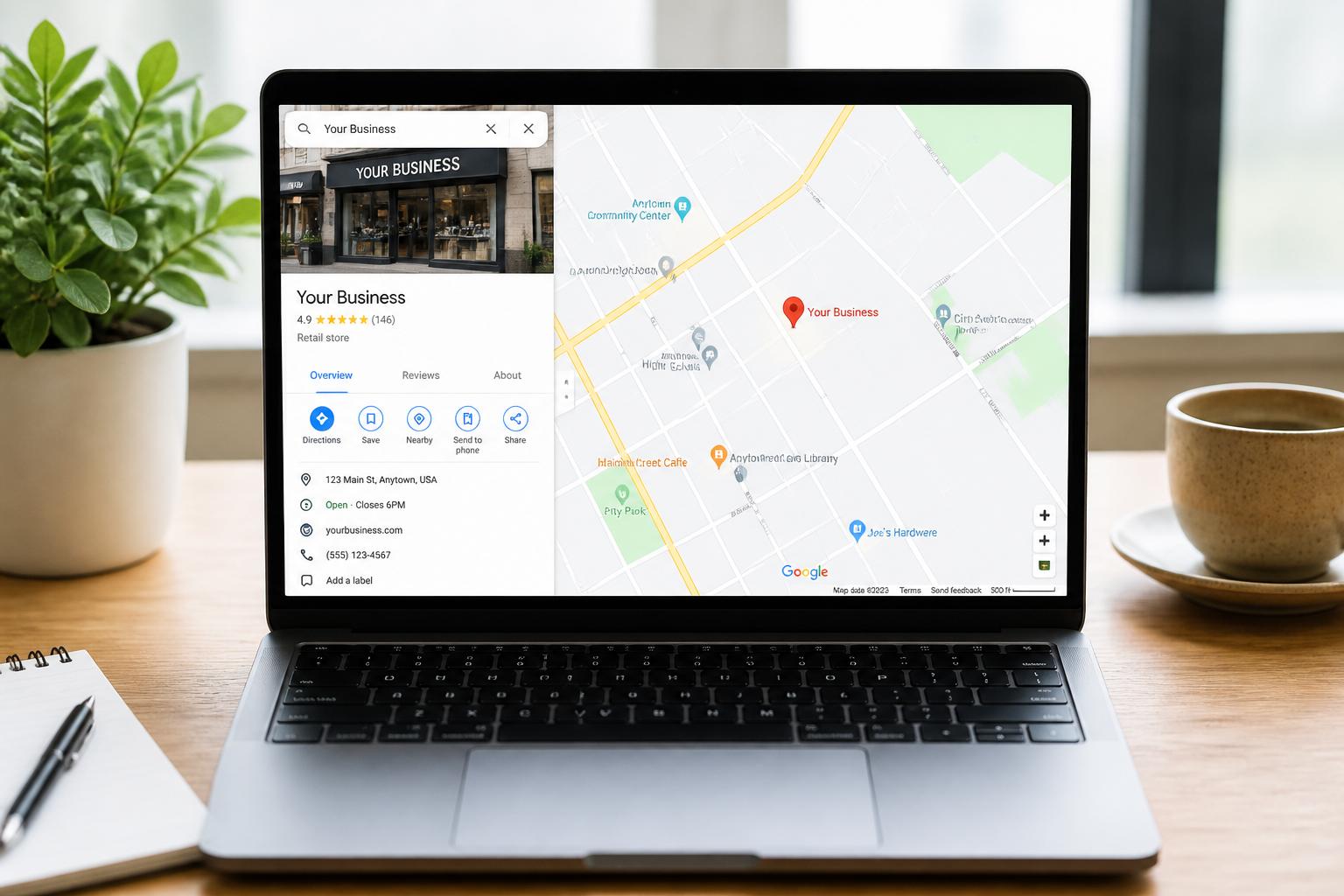
    How to Get Your Small Business to Show Up on Google Maps

    To get your small business to show up on Google Maps, claim and verify a free Google Business Profile, choose the exact primary category for your trade, and keep your physical address and operational hours completely consistent across the web. When local customers in South Africa search for nearby services, Google displays businesses that prove three core factors: proximity, relevance, and prominence.

    Claim and Verify Your Google Business Profile

    Your Google Business Profile serves as the direct link between your physical premises and Google Maps results. If you run a plumbing service in Durban or an auto workshop in Johannesburg, your profile tells search engines exactly where you operate and whom you serve. Setting up your profile properly requires completing specific verification steps:

    • Search for your business name on Google Maps or visit the Google Business Profile manager to claim an existing listing or create a new entry.
    • Select your exact business type, specifying whether you operate a storefront with walk-in customers or a service-area business where you travel to clients.
    • Complete the verification process, which Google typically handles through a video recording of your workspace, an SMS code, or an email check.
    • Add exact operating hours, including temporary adjustments for public holidays or load-shedding disruptions to prevent customer frustration.

    Optimise Core Profile Signals for Maximum Visibility

    Securing a map marker is only step one; competing for the top three spots on the map pack requires active optimisation. For businesses looking to scale organic search traffic alongside map rankings, investing in strategic local SEO services ensures your entire online presence supports your map ranking.

    Primary and Secondary Business Categories

    Your primary category carries the heaviest ranking weight on Google Maps. If you run a coffee shop that also roasts beans, selecting ‘Coffee Shop’ as the primary category connects you directly to immediate customer searches, while ‘Coffee Roasters’ works best as a secondary category.

    Accurate Name, Address, and Phone Data

    Search engines cross-reference your business information across local online directories, social platforms, and your official website. Discrepancies in your address format or phone number create confusion for search algorithms and reduce your ranking power. Standardise these key business details everywhere:

    • Format your business name identically on every platform without stuffing extra keywords into the title.
    • Display a local South African landline or mobile contact number that staff answer directly during trade hours.
    • List a precise physical street address rather than a post office box, which violates Google terms of service.
    • Ensure your physical location pins accurately on the satellite view within your management dashboard.

    Build Prominence Through Reviews and Local Authority

    Prominence reflects how well-known and trusted your enterprise is within your target city or suburb. Google calculates this authority by tracking customer sentiment, direct interactions, and citations from reputable regional directories.

    Consistent Customer Reviews and Responses

    A steady influx of genuine client reviews signals active, quality operations to Google. Responding quickly to both praise and complaints demonstrates high customer responsiveness, which directly strengthens your map profile authority.

    Local Website Links and Citations

    Map rankings do not operate in a vacuum separate from your main website. Earning mentions on regional chambers of commerce, neighbourhood blogs, and local industry associations proves your local footprint. Strong authority signals include:

    • Embedding your Google Map location directly onto your website contact page.
    • Creating suburb-specific landing pages if you service multiple areas across your province.
    • Listing your business in verified South African business directories with identical contact information.

    Precision Solutions With Shout Local

    Dominating local map results takes consistent technical maintenance, active profile management, and focused regional link acquisition. Shout Local works with South African enterprises to build authoritative local footprints, turn search visibility into phone calls, and capture prime map pack real estate. Partnering with dedicated local search specialists helps your business bypass trial and error and secure sustainable market share.

    Frequently Asked Questions

    How long does it take for a business to appear on Google Maps?

    Once your Google Business Profile is verified, your marker typically appears on Google Maps within 24 to 72 hours. However, ranking within the top three map results for competitive search terms usually takes between two to six months of consistent optimisation.

    Can I list my business on Google Maps if I work from home?

    Yes, you can register as a service-area business. During setup, simply check the option indicating you deliver goods and services to customers at their location, which allows you to set your service suburbs while keeping your home address hidden from the public map.

    Why is my business not showing up when I search for it?

    If your listing is verified but invisible, search results might be filtered by your current physical distance from the registered location. Other common causes include unverified profile status, recent changes triggering a suspension, or strong competition from nearby profiles with higher review volume.

    Is listing a business on Google Maps free?

    Creating and maintaining a standard Google Business Profile is completely free. Google does not charge subscription fees for map placement, though businesses often choose to invest in professional local search optimisation to improve their map ranking positions.

  • Why Isn’t Your Small Business Showing Up on Google Even Though You Have a Website?

    Why Isn’t Your Small Business Showing Up on Google Even Though You Have a Website?

    Having a live website does not guarantee search visibility because Google needs to index your pages, understand what you offer, and trust that your business provides the best answer for local searchers in South Africa. If search engines cannot crawl your code, your Google Business Profile is missing, or your site lacks local search authority, your business remains invisible in search results.

    Technical Roadblocks Stopping Google From Indexing Your Site

    Google relies on automated bots to discover, crawl, and store web pages. If something blocks those bots, your site will never appear in search results, no matter how good it looks.

    Several technical misconfigurations can silently hide your website from Google:

    • A ‘noindex’ meta tag accidentally left active in your website settings after launch.
    • A robots.txt file configured to block search crawlers from accessing important directories.
    • The absence of an XML sitemap submitted through Google Search Console.
    • Domain verification errors that prevent Google from recognising your site ownership.

    The Local Search Disconnect in South Africa

    When someone in Johannesburg, Cape Town, or Durban searches for a service, Google prioritises local relevance. Merely listing your business name on a homepage is rarely enough to beat established competitors.

    Missing Google Business Profile Optimisation

    The local map pack captures a massive share of high-intent search traffic. If you have not claimed, verified, and optimised your Google Business Profile with accurate trading hours, clear categories, and physical location data, competitors will take all those enquiries.

    Inconsistent Business Name, Address, and Phone Data

    Search engines cross-reference citations across directories like Brabys, Yalwa, and local business registers. If your contact details differ across these platforms, Google treats the inconsistency as a trust risk and drops your rank.

    Building local authority requires structured execution across your web assets. Investing in targeted South African SEO services helps align your technical foundation and local presence so nearby customers can find you first.

    Common local visibility oversights include the following issues:

    • Targeting broad terms instead of city-specific phrases like plumber in Centurion or electrician in Umhlanga.
    • Failing to collect regular, authentic customer reviews on your Google profile.
    • Leaving service areas undefined, confusing search engines about where you actually trade.

    Thin Content and Weak Keyword Targeting

    Search engines evaluate the substance of your written content to determine search intent match. If your pages contain only short paragraphs, stock images, and vague marketing speak, Google will rank richer resources ahead of you.

    Targeting Buyer Intent Instead of Buzzwords

    Potential customers rarely search for broad concepts. They search for specific fixes, pricing queries, and immediate solutions. Each primary service you offer deserves a dedicated page explaining what you do, who you serve, and how your process works.

    Focus on creating page content that answers direct customer concerns:

    • Pricing breakdowns and typical cost factors for your trade or service.
    • Detailed service explanations addressing common customer questions.
    • Clear geographical identifiers outlining your exact service radius across South African suburbs.
    • Fast-loading imagery of real local projects and client case studies.

    Precision Solutions With Shout Local

    Turning an invisible website into a steady source of inbound leads requires technical accuracy, proper local signals, and consistent maintenance. Shout Local identifies why your site is lagging behind and implements practical fixes to get your business in front of genuine local buyers.

    To inspect your current search positioning and get an actionable plan for ranking higher across South African search results, reach out directly to our team at Shout Local.

    Frequently Asked Questions

    How long does it take for a new website to show up on Google?

    A brand new website usually takes between a few days to four weeks to get indexed by Google, provided you submit an XML sitemap via Google Search Console. Ranking on the first page for competitive local terms typically requires three to six months of steady optimisation.

    How do I check if my website is already indexed?

    Type site:yourdomain.co.za into the Google search bar. If Google has indexed your website, a list of all your indexed pages will appear. If nothing shows up, your site has not been indexed yet or is blocked by technical errors.

    Can hosting server speed affect my rankings in South Africa?

    Yes. If your hosting server suffers frequent downtime or slow response times, Google crawlers may fail to access your pages, while visitors will bounce quickly, harming your search performance.

    Why does my competitor rank above me with an older website?

    Google values domain age, backlink authority, user reviews, and consistent local citations over visual design. An older, plainer site with years of accumulated trust signals will easily outrank a brand new, visually polished website that lacks search authority.

  • Can a Small Business Do SEO Themselves or Do They Need an Agency?

    Can a Small Business Do SEO Themselves or Do They Need an Agency?

    Yes, a small business can handle basic SEO independently, but competing in crowded markets or scaling revenue usually requires an agency. If you run a local operation with low competition, you can manage foundational tasks like claiming your Google Business Profile and optimising page titles yourself. However, once you compete against established brands across major South African metros or need technical site architecture fixes, hiring specialists delivers faster and more consistent returns on your time.

    When DIY SEO Makes Sense for Small Businesses

    Managing search visibility internally is practical when your budget is tight and your market is hyper-local. If you have the spare hours to learn search fundamentals, you can build early visibility without outside help. South African entrepreneurs often start by targeting neighbourhood-specific queries where corporate competitors rarely focus.

    You can achieve respectable early wins by focusing on these essential DIY tasks:

    • Claiming and verifying your Google Business Profile with accurate operating hours, address details, and service categories
    • Adding local area names to your website title tags, meta descriptions, and main headings
    • Writing straightforward product or service descriptions that answer specific buyer questions
    • Collecting genuine reviews from satisfied customers after completing a job or sale

    Where DIY SEO Hits a Hard Ceiling

    Search algorithms update frequently, and organic visibility involves far more than simply adding keywords to a page. Business owners already juggling supply chains, staff, and load-shedding disruptions often find that self-managed search marketing stalls after the initial basics are in place.

    Technical Debt and Platform Limitations

    A slow website, broken redirect chains, or poor mobile responsiveness will prevent your pages from ranking well, regardless of your written content. Fixing Core Web Vitals and resolving indexation issues requires developer-level knowledge that most business owners do not have time to master.

    The Reality of Time Constraints

    Effective organic growth demands consistent effort every single week. When client work piles up, marketing is usually the first task neglected.

    You have likely reached the limit of DIY optimisation if you notice the following signals:

    • Keyword rankings remain flat despite publishing new blog posts regularly
    • Competitors in your city dominate the top three spots in local map packs
    • Technical search console errors go unresolved due to a lack of technical web skills
    • Your available work hours are entirely consumed by daily business operations

    What an Agency Delivers That DIY Cannot

    Working with an external team shifts search performance from a part-time experiment to an active revenue channel. For growing companies looking to expand beyond their immediate neighbourhood, partnering with specialists for search engine optimisation services gives you access to advanced toolsets, continuous link-building pipelines, and experienced technical diagnostics.

    A dedicated search agency provides distinct strategic advantages over self-management:

    • In-depth competitive gap analysis to target high-intent search terms that competitors overlook
    • High-authority backlink acquisition that builds domain trust safely and sustainably
    • Structured data implementation to help search engines accurately interpret your services and locations
    • Continuous tracking, algorithm adjustment, and conversion rate optimisations to turn visits into leads

    Precision Solutions With Shout Local

    Managing search rankings on your own can only take your business so far before time constraints cap your growth. Shout Local builds search campaigns built for South African businesses aiming to dominate local and regional search results. Get in touch with our team to discover how targeted search strategies can scale your incoming enquiries and revenue.

    Frequently Asked Questions

    How long does it take to see results from DIY SEO?

    DIY efforts typically take four to six months to show noticeable movement in organic search results, assuming you implement best practices consistently. Highly competitive niches or brand-new websites may take significantly longer without professional link-building and technical fixes.

    Can I start with DIY SEO and hire an agency later?

    Yes, starting with basic self-managed optimisations is common. It helps you understand search fundamentals and cleans up simple on-page details before handing the work over to an agency for aggressive growth and technical scaling.

    What is the biggest mistake small businesses make when doing their own SEO?

    The most common mistake is keyword stuffing: cramming too many repetitive search phrases into page copy instead of writing clear, helpful information for actual customers. Neglecting technical performance and mobile speed is another major error.

    Is hiring an agency worth the cost for a local South African business?

    If your average customer lifetime value or profit margins can support customer acquisition costs, an agency is a high-return investment. The revenue gained from dominating local searches in your market usually outweighs the monthly retainer.

  • How Many Google Reviews Does a Small Business Need to Rank Higher?

    How Many Google Reviews Does a Small Business Need to Rank Higher?

    There is no fixed number of Google reviews that automatically places a small business at the top of local search results. Instead, Google evaluates your review profile based on your review count relative to local competitors, overall star rating, review velocity, and the presence of relevant keywords in customer feedback. A specialist in a quiet Karoo town might dominate the Map Pack with 15 reviews, while an emergency plumber in Sandton or Durban might need more than 100 reviews to compete effectively.

    The Core Review Factors That Influence Local Rankings

    Google algorithms look beyond raw totals to evaluate trust, relevance, and user engagement. To outrank nearby competitors, you need to manage several review signals at once:

    • Review volume compared to direct local competitors in your suburb or town
    • Review velocity, which measures the steady inflow of new feedback over time
    • Review sentiment, focusing on detailed commentary rather than empty star ratings
    • Owner response rates, showing active engagement with both positive and negative feedback

    How Competitor Benchmarking Sets Your Review Target

    To determine your target number, search for your primary service and suburb on Google Maps. Check the top three listings in the Map Pack and calculate their average review count; your initial objective is to match and eventually exceed that baseline. Combining review generation with targeted SEO services ensures your business profile gains authority across both organic search and local map packs.

    Analysing Map Pack Competitors

    Pay attention to the recency of competitor reviews. If the top-ranking business has 200 reviews but has not received a new one in six months, a competitor with 40 fresh reviews earned over the last quarter can often overtake them in local visibility.

    Practical Ways to Generate Consistent Google Reviews

    Acquiring reviews should be an ongoing, routine process integrated into everyday operations. You can build steady momentum by applying several straightforward collection habits:

    • Send direct review links via WhatsApp or SMS immediately after completing a job or delivering an order
    • Train staff and field technicians to request feedback in person when customer satisfaction is high
    • Place QR codes on printed invoices, receipts, and company vehicles for quick mobile access
    • Send friendly follow-up reminders to clients who agreed to leave feedback but forgot

    The Role of Keywords and Detail in Customer Reviews

    Google scans the text inside reviews to understand which services and areas your business covers. When happy clients mention specific services, such as backup power installation or commercial refrigeration repair, Google connects your profile directly to those search queries.

    Encourage clients to leave informative feedback by asking simple guiding questions during your request:

    • What specific problem did our team solve for you today?
    • Which suburb or neighbourhood did our technicians visit?
    • How did our response time and communication meet your expectations?

    Scaling Your Local Search Presence With Shout Local

    Review acquisition is one fundamental part of a successful local marketing strategy. Shout Local helps South African businesses optimise their online presence, build local search authority, and turn searchers into long-term clients. Connect with our team to strengthen your local footprint and capture more high-intent customer inquiries.

    Frequently Asked Questions

    Can negative reviews hurt my Google ranking?

    Occasional negative reviews will not destroy your rankings, provided your overall rating remains above 4.0 stars. A profile with an authentic 4.5 to 4.8 rating often generates more trust among consumers than a perfect 5.0 score with generic feedback. Address negative reviews promptly and professionally to show prospective clients that you value customer service.

    How often should a business get new reviews?

    Consistency is far more important than volume spikes. Earning two to five genuine reviews every week provides Google with a steady stream of fresh trust signals, whereas gaining fifty reviews in a single weekend followed by months of inactivity can trigger spam filters.

    Do keywords in reviews actually help local SEO?

    Yes. When customers naturally mention specific services, product names, or suburbs in their review text, Google uses those terms to determine your relevance for related search queries.

    Can I buy Google reviews to boost my profile faster?

    No. Purchasing fake reviews violates Google policies and can lead to severe penalties, including review removal or the suspension of your Google Business Profile. Focus on acquiring authentic reviews from real customers instead.

  • How to Get Your Small Business to Show Up on Google Maps

    How to Get Your Small Business to Show Up on Google Maps

    To get your small business to show up on Google Maps, you must create or claim a free Google Business Profile, verify your location, and fully optimise your listing details. Google relies on verified information, accurate categories, and consistent local data across the web to position your pin and show your profile in local search queries.

    Claim and Verify Your Google Business Profile

    Your Google Business Profile is the control panel for your presence on Google Maps. If your listing already exists because customers added it or Google aggregated data, you can claim ownership by clicking Claim this business directly on the map.

    To complete the initial setup and get verified properly, follow these primary steps:

    • Sign in to Google Business Profile Manager using your standard business Google account.
    • Enter your exact registered business name, primary street address, and business contact phone number.
    • Select the appropriate verification method, such as an automated phone code, email prompt, or video verification.

    Choosing the Right Business Category

    Your primary category is the single strongest relevance signal for Google Maps rankings. If you operate an auto repair shop in Durban, choosing Auto Repair Shop instead of a generic Mechanic category gives you an immediate relevance boost for targeted searches. You can also assign secondary categories to cover complementary services without diluting your primary focus.

    Optimise Your Profile for Local Search

    Setting up your profile is only the first step; ranking in the local map pack requires complete, active information. Pairing active profile management with structured South African SEO services ensures your business website and map listing reinforce each other to outrank nearby competitors.

    Keep your profile competitive by applying these routine optimisations:

    • Add high-resolution photos of your storefront, team, and actual completed work on a weekly basis.
    • Write a clear description highlighting your specific services, operational areas, and what sets your business apart.
    • Publish regular Google Posts to share product updates, special trading hours, or seasonal offers.

    Managing Reviews and Customer Feedback

    Google prioritises active businesses with genuine customer feedback. Ask satisfied clients to write detailed reviews that mention the specific services they purchased and the suburb where the work took place. Respond to every review promptly and professionally, as engagement signals trust directly to the ranking algorithm.

    Local Signals That Determine Maps Visibility

    Google determines your position on the map using three specific metrics that evaluate your authority and geographic proximity.

    Google calculates your ranking based on these three foundational factors:

    • Proximity: The physical distance between the person searching and your verified address or defined service area.
    • Prominence: How well-known your business is offline and online, reflected by citations, backlinks, and review volume.
    • Relevance: How closely your listed categories, services, and profile content match what the user typed into the search bar.

    Accounting for Local Operating Conditions

    South African businesses often face unique challenges such as load-shedding schedules or sudden municipal service interruptions. Update your trading hours immediately whenever outages affect your trading times. Keeping your operating hours accurate prevents frustrated customers from arriving at closed doors and leaving negative reviews.

    Precision Solutions With Shout Local

    Securing top placement on Google Maps requires ongoing maintenance, citation consistency, and technical search authority. Shout Local helps businesses across South Africa claim prominent local map pack positions, drive qualified walk-in traffic, and convert local searches into paying customers. Partner with our team to strengthen your digital presence and dominate your local service area.

    Frequently Asked Questions

    How long does it take for a business to appear on Google Maps?

    Once you complete verification, your listing usually appears on Google Maps within a few days. However, ranking in the top three map pack positions for competitive search terms typically takes several weeks of consistent profile optimisation, citation building, and review generation.

    Is it free to list my business on Google Maps?

    Yes, listing your business on Google Maps through Google Business Profile is completely free. Google does not charge any recurring fee to maintain your standard map placement.

    Can I show up on Google Maps without a physical storefront?

    Yes. If you operate as a mobile service provider, such as an electrician or mobile mechanic, you can set up a Service Area Business profile. This allows you to designate the suburbs or cities you serve while hiding your residential address from public view.

    Why is my verified business not ranking on Google Maps?

    A verified profile may fail to rank if it lacks complete service details, has inconsistent business name and address citations across local directories, or has fewer reviews than nearby competitors. Proximity also plays a massive role, meaning you will rank higher for searchers located closer to your listed area.

  • How Long Does SEO Take to Show Results for a Small Business?

    How Long Does SEO Take to Show Results for a Small Business?

    Most small businesses start seeing initial organic search improvements within 3 to 6 months, while significant growth in leads and revenue typically takes between 6 and 12 months. If your business focuses heavily on local search queries and Google Maps optimisation, you might notice an uptick in phone calls and quote requests in as little as 6 to 8 weeks. The exact timeline depends directly on your website history, local market competition, and technical site health.

    Google takes time to crawl new content, index technical updates, and verify that your business is a credible authority in your specific geographic area. Rushing this process with quick-fix tactics often backfires, making consistent execution the only reliable path to high rankings.

    Key Factors That Influence Your Ranking Speed

    Every small business starts from a different baseline. A plumbing contractor in Cape Town launching a brand-new domain faces a completely different climb than an established accounting firm in Johannesburg updating an aged site.

    Your specific timeline hinges on several core variables:

    • Domain age and authority: Fresh domains sit in a trust-building phase with Google for the first few months, whereas older domains with clean backlink profiles respond to changes much faster.
    • Local competition levels: Ranking for niche services in smaller towns requires far fewer resources and less time than competing for broad service terms in major metropolitan hubs.
    • Technical website health: Unresolved mobile errors, slow loading speeds during local internet disruptions, and broken internal links slow down Google indexation until properly repaired.
    • Content depth and consistency: Publishing regular, practical answers to local customer queries establishes topical authority faster than static five-page brochures.

    The Month-by-Month SEO Roadmap for Small Businesses

    Search engine optimisation is an ongoing asset build rather than a one-time setup. Knowing what to expect at each stage prevents premature panic and keeps your marketing budget focused on verifiable milestones.

    Months 1 to 2: Technical Fixes and Foundation

    The early phase focuses on finding and repairing crawl errors, optimising Google Business Profiles, mapping keywords, and cleaning up metadata. Traffic rarely spikes during this period, but search bots begin indexing cleaner site architecture.

    Months 3 to 4: Content Indexing and Movement

    New localised landing pages start moving into search impressions. You will generally see rankings rise from deep search results into pages two and three, accompanied by a slight rise in organic impressions in Google Search Console.

    Months 5 to 6: Traffic and Early Lead Influx

    Target keywords break onto page one of search results. Inquiries, local phone calls, and contact form submissions begin to show consistent growth as search volume turns into active local leads.

    Months 7 to 12: Compounding Authority and Market Dominance

    Domain strength solidifies, allowing new pages to rank faster. By this stage, organic search often becomes the primary customer acquisition channel for the business.

    How to Accelerate Your Search Engine Performance

    While you cannot force Google algorithms to move faster, you can eliminate the roadblocks that delay progress. Small businesses that follow structured implementation schedules reach profitability significantly sooner.

    Consider these proven strategies to speed up your organic return on investment:

    • Audit your local citations: Keep your business name, physical street address, and phone number completely identical across all regional directories and mapping tools.
    • Target low-competition local search terms: Prioritise specific suburb-level search phrases before trying to rank for broad national keywords.
    • Gather steady customer reviews: Encourage happy clients to leave reviews mentioning the specific services you provided and the area where the work was completed.
    • Invest in high-performance infrastructure: Fast web hosting ensures potential customers do not bounce off your site when connections are unstable.

    Partnering with experienced specialists who handle technical architecture, keyword strategy, and local citations helps avoid common missteps. Explore our dedicated SEO services to see how a structured campaign shortens the gap between launch and steady customer acquisition.

    Precision Solutions With Shout Local

    Growing a small business requires dependable customer acquisition that does not vanish the moment you stop paying for daily ads. At Shout Local, we build sustainable organic search strategies focused on driving measurable inquiries and phone calls from your exact service area. Reach out through our contact form today to review your current website performance and receive a clear plan for your search rankings.

    Frequently Asked Questions

    Why does SEO take so long compared to paid advertising?

    Paid ads buy temporary placement at the top of search results instantly, but traffic disappears the moment your daily ad budget runs out. Search optimisation requires Google to index, evaluate, and test your site authority over time, creating a permanent inbound marketing channel that generates free leads long after the initial work is done.

    Can a brand-new website rank within 30 days?

    A new website can rank quickly for very specific, low-competition terms or exact brand names within a month. However, ranking for competitive service keywords usually requires 3 to 6 months of steady content creation, citation building, and technical optimisation.

    How do I know if my SEO campaign is working before leads arrive?

    Early indicators of progress include increases in total search impressions, crawling frequency by search bots, keyword ranking improvements from page five to page two, and higher click-through rates in Google Search Console.

    Will search engine updates reset my progress?

    Algorithm updates reward websites that deliver clear, helpful content and clean user experiences. If your site follows honest optimisation practices and avoids automated spam shortcuts, algorithm updates generally improve your positions rather than hurt them.