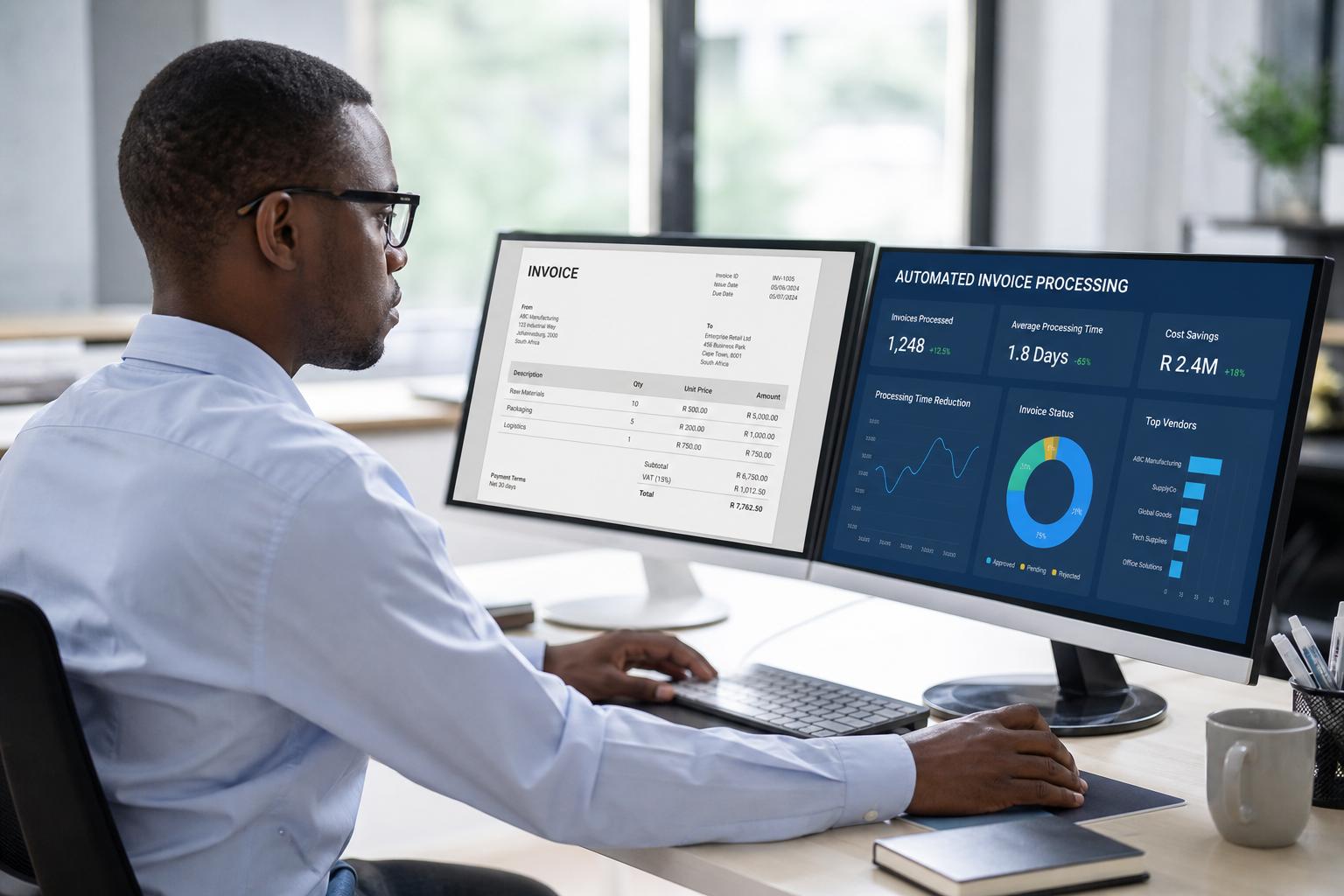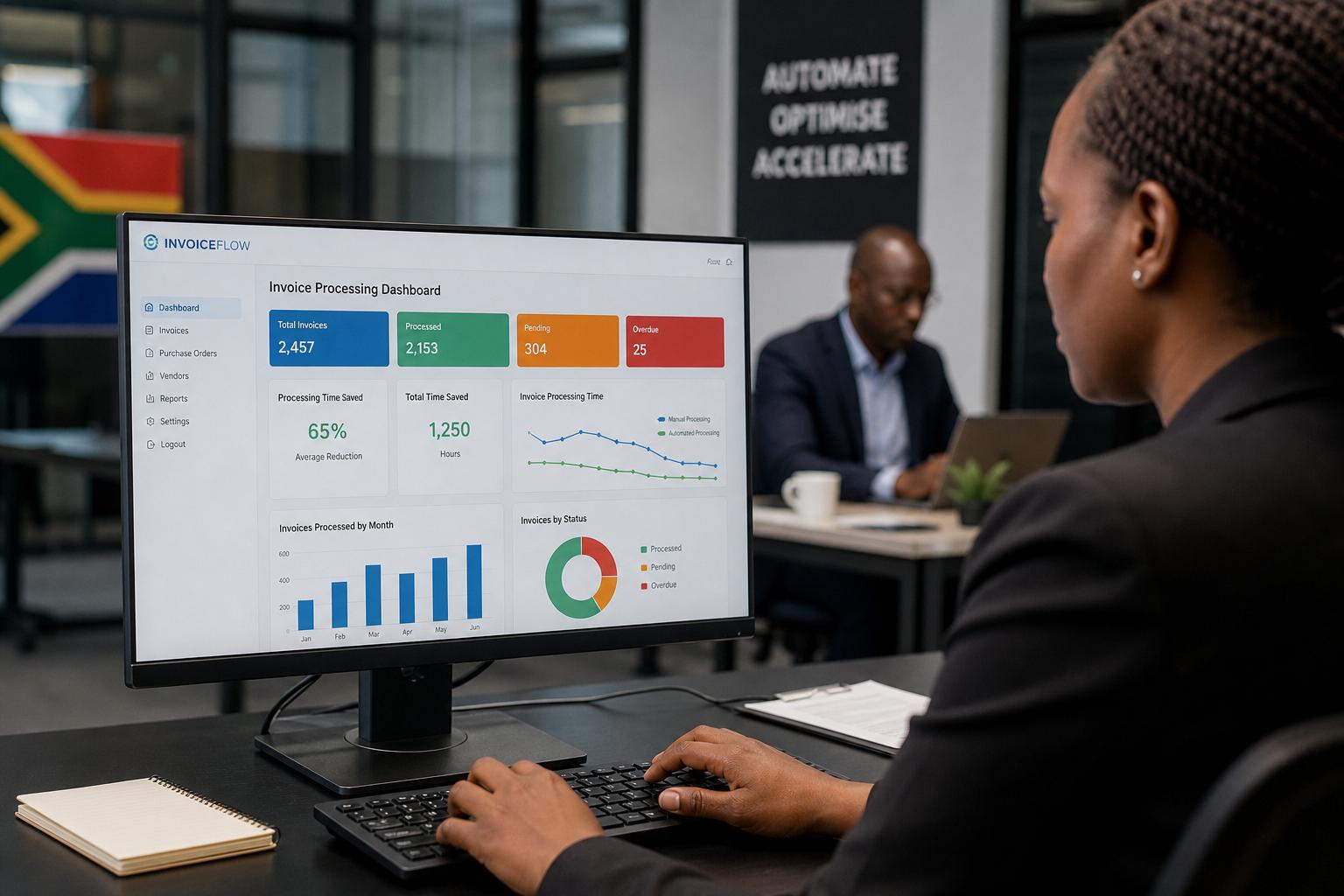
Automated invoice processing reduces accounts payable turnaround times for South African enterprise businesses from several weeks to mere minutes by replacing manual line-item entry with optical character recognition, automating three-way matching against purchase orders, and routing invoices through digital approval matrices instantly. By systematically eliminating data-entry backlogs and manual verification against South African Revenue Service tax guidelines, finance teams slash invoice cycle times by up to 80 percent while eliminating costly human error.
Eliminating Manual Data Capture Bottlenecks
In large South African enterprises, accounts payable departments handle thousands of supplier documents each month across diverse formats, including PDFs, scanned physical paper, and electronic data interchange files. Manual data capture creates severe operational friction, leading to delayed vendor settlements and lost early-settlement discounts. Deploying modern automated invoice processing in South Africa allows organisations to extract header, footer, and line-item details with high precision straight into core enterprise resource planning systems.
Automated capture tools accelerate document intake through specific core mechanisms:
- Extracting supplier tax numbers, bank account numbers, line quantities, and line totals instantly without manual keystrokes.
- Categorising multi-page documents and mixed-format batches automatically upon receipt in central email inboxes.
- Flagging duplicate submissions immediately to prevent double payments before invoices enter processing queues.
- Converting non-standard document structures from regional vendors into structured data ready for system ingestion.
Accelerating Enterprise Approval Workflows and Matching
Once invoice data enters the workflow, traditional finance teams lose valuable time chasing department heads across corporate offices in Johannesburg, Cape Town, and Durban for sign-off. Automated platforms use predefined approval hierarchies to send notifications directly to approvers via desktop and mobile interfaces, establishing clear audit trails at every step.
Automated Two-Way and Three-Way Matching
Enterprise platforms compare supplier invoices directly against purchase orders and goods receipt notes stored in systems like SAP, Oracle, or Microsoft Dynamics. When the system detects a perfect match across line items, unit prices, and quantities within configured tolerance thresholds, the invoice approves straight through to payment schedules without touching a finance clerk. Discrepancies route automatically to the original buyer with precise variance notes, cutting dispute resolution times dramatically.
Ensuring Instant SARS Tax Compliance
Managing South African Revenue Service requirements manually slows finance teams down significantly. Enterprise systems automatically validate that every submission meets strict local tax invoice criteria before routing it for approval. Exploring the broader AI-powered invoice processing benefits demonstrates how automated compliance checks prevent audit penalties while speeding up monthly VAT reconciliation cycles.
Automated systems verify mandatory local compliance fields instantly:
- Confirming valid 10-digit SARS VAT registration numbers for both the vendor and the purchasing entity.
- Checking for explicit tax invoice wording, unique invoice serial numbers, and correct issue dates.
- Calculating exact 15 percent standard VAT calculations against line subtotals and zero-rated items.
- Verifying registered legal entity names against master vendor databases to maintain audit readiness.
Overcoming Regional Operational Disruptions
South African enterprises must maintain uninterrupted financial operations despite external disruptions such as municipal load-shedding, intermittent network connections, or regional office closures. Cloud-based invoice automation ensures that the accounts payable engine runs continuously in secure data centres, capturing incoming invoices around the clock regardless of local on-site power status.
Modern finance teams gain operational resilience through automated cloud infrastructure:
- Capturing incoming electronic vendor invoices continuously during regional utility outages.
- Allowing managers to review and approve expenditure securely from any location or mobile network.
- Providing real-time visibility into working capital commitments and cash outflows across all operating subsidiaries.
Enterprise AP Automation With S2P
S2P provides enterprise organisations across Southern Africa with purpose-built accounts payable solutions that cut processing times, eliminate payment errors, and ensure end-to-end compliance. Learn how your organisation can modernise supplier payments by evaluating the S2P AI invoice automation platform today.
Frequently Asked Questions
How much time does automated invoice processing save per document?
Manual processing typically takes between 10 and 20 days from invoice arrival to final payment approval. Automated systems reduce this timeline to less than 24 to 48 hours, with straight-through matched invoices processing in under two minutes.
How does automation handle South African VAT requirements?
Automated platforms evaluate incoming documents against SARS Section 20 tax invoice requirements, checking for valid VAT numbers, correct 15 percent tax calculations, and full billing details before submitting data to your accounting ledger.
Can automated invoice systems integrate with existing ERP software?
Yes. Enterprise automation tools connect directly to major ERP platforms including SAP, Oracle NetSuite, Microsoft Dynamics 365, and Syspro via secure APIs to synchronise master vendor files, purchase orders, and general ledger codes.
How does the system prevent duplicate invoice payments?
The software checks incoming document numbers, supplier tax identities, line amounts, and dates against historical records in real time, immediately isolating and flagging duplicate submissions for review.