Category: RPA Waterproofing

  • How to Maintain an EPDM Roof and How Often to Inspect It

    How to Maintain an EPDM Roof and How Often to Inspect It

    To keep an EPDM rubber roof performing at its best, inspect it at least twice a year and clear off organic debris every few months. EPDM membrane is exceptionally durable, but George receives year-round rainfall and heavy moisture from the Outeniqua mountains, making routine checks vital before rainy weather sets in. Catching minor issues like blocked outlets or lifting edge lap sealant early prevents moisture ingress and ensures the membrane reaches its multi-decade potential.

    The Recommended EPDM Roof Inspection Schedule

    Inspecting your roof membrane twice a year gives you full visibility over its condition across shifting seasonal weather patterns. The best times to step onto the roof are during early autumn before heavy winter rains arrive, and again in spring after winter storms have passed. You should also conduct an immediate check following severe weather, such as high-velocity coastal gales or intense hailstorms. While understanding how long an EPDM waterproofed roof lasts in South Africa highlights the membrane’s toughness, neglected debris can shorten that lifespan.

    • Early autumn to prepare drainage outlets and gutters before prolonged rain cycles.
    • Mid-spring to evaluate any wind-driven seam movement or surface grit buildup.
    • Post-storm assessments following unusual hail or severe gale events along the Garden Route.

    Routine Maintenance Checklist for Rubber Membranes

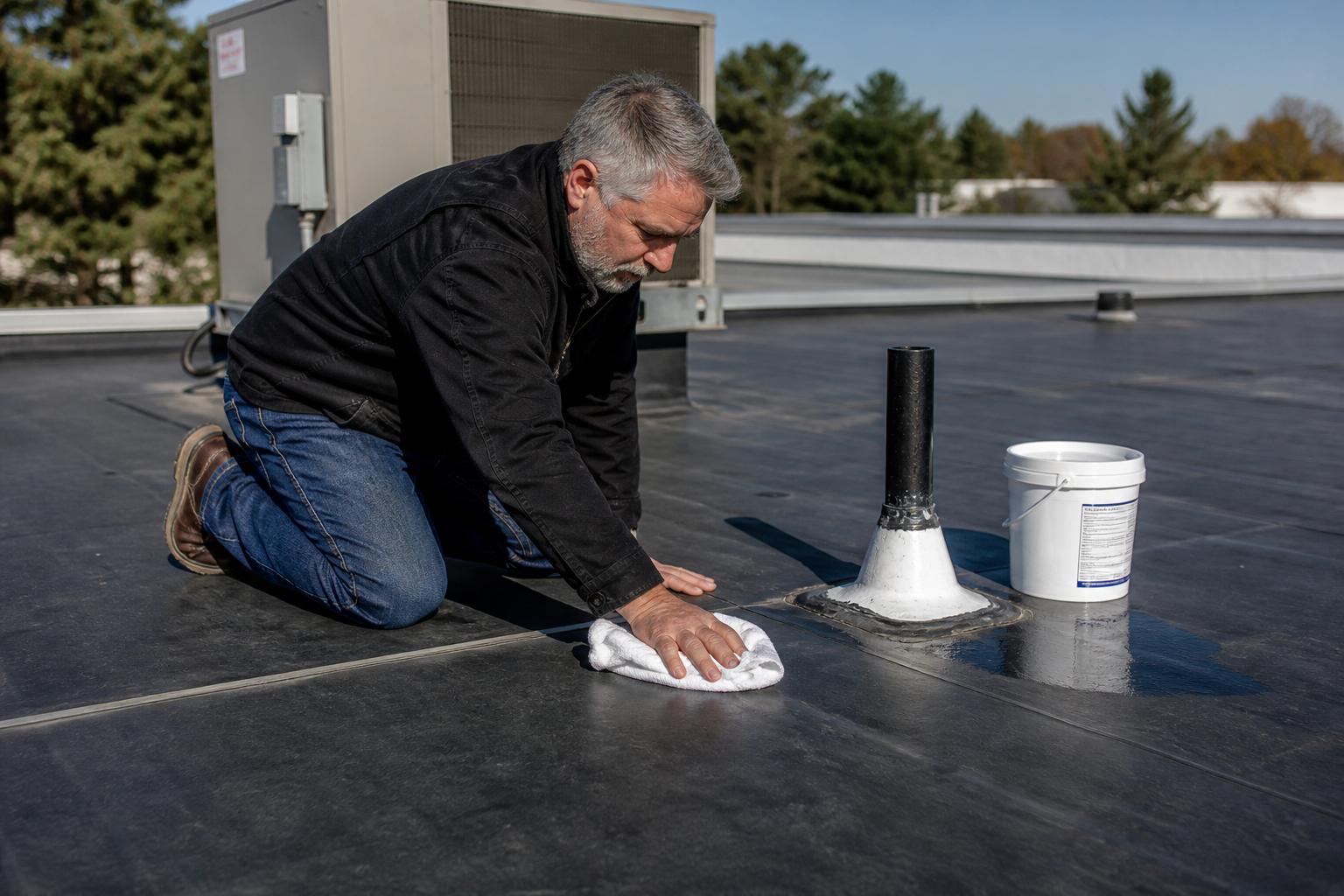
    Maintaining an EPDM roof does not require specialized chemicals or heavy machinery. In fact, aggressive cleaners can damage the synthetic rubber. Routine maintenance focuses primarily on hygiene, gentle cleaning, and visual integrity checks. If you are comparing systems or budgeting for an upgrade, reviewing how much EPDM waterproofing costs in George per square metre shows that preventative care delivers strong returns over recurring repairs.

    • Sweep away fallen leaves, pine needles, and twigs using a soft-bristled push broom.
    • Clear out internal scuppers, downpipes, and drainage sumps to stop standing water.
    • Wash down dirt or bird droppings with clear tap water and a mild dish soap.
    • Trim back overhanging tree branches that scrape the membrane during high winds.

    Managing Ponding Water

    EPDM is waterproof and unaffected by standing water, but persistent ponding indicates slow drainage or structural sagging. Clearing sediment around outlets prevents puddles from collecting dirt and degrading lap adhesives over many years.

    Key Warning Signs to Look for During Inspections

    Whenever you conduct an inspection, examine high-stress junctions rather than just the open flat surface. The main body of a single-ply membrane rarely fails on its own; failures almost always occur where the rubber meets metal, masonry, or another roll. Investing in quality installation like professional EPDM waterproofing eliminates installation errors, but ongoing wear still requires monitoring.

    • Separation or fish-mouthing along vulcanised or taped lap seams.
    • Cracked, dried out, or peeling perimeter termination sealants along parapet walls.
    • Cuts, punctures, or gouges caused by dropped tools, contractor foot traffic, or sharp windblown debris.
    • Loose counter-flashing around solar panel brackets, air-conditioning units, or skylights.

    Proper Cleaning Methods to Avoid Membrane Damage

    Using the wrong cleaning supplies on an EPDM roof will strip the protective oils from the rubber and break down the adhesives holding your seams together. Petroleum-based products, solvents, citrus cleaners, and harsh chemical acids will cause the rubber sheet to swell and delaminate.

    • Never apply solvent-based strippers, turpentine, or white spirits to remove marks.
    • Avoid petrol-powered pressure washers with pinpoint nozzles that can cut into seams.
    • Stick to household liquid dishwashing detergents mixed with lukewarm water.
    • Rinse the surface thoroughly with clean water to prevent soapy residue from attracting fresh dust.

    Precision Solutions With RPA Waterproofing

    While seasonal surface sweeping is simple for property owners, technical seam repairs and flashing replacements demand skilled hands. RPA Waterproofing delivers expert membrane assessment, seam reinforcement, and scheduled maintenance across George and the surrounding Garden Route. If your roof exhibits joint separation, blocked drainage, or post-storm damage, reach out to our team to book a professional inspection and safeguard your building envelope.

    Frequently Asked Questions

    Can you walk on an EPDM roof to clean it?

    Yes, you can safely walk on an EPDM rubber roof for routine maintenance and cleaning. Wear soft-soled shoes without deep tread that could trap sharp gravel or stones, and take extra caution when the wet rubber surface becomes slippery.

    How do I clean moss or algae off an EPDM membrane?

    Use a mixture of warm water and mild dish soap along with a soft-bristled broom to loosen algae and fungal growth. Avoid harsh bleach mixtures, aggressive biocides, or abrasive wire brushes, as these can strip protective compounds from the rubber surface.

    What should I do if I find a puncture or cut in the rubber?

    Clean the area around the cut immediately with clean water to remove dirt. Do not attempt a quick fix with standard silicone caulk or asphalt mastic, as asphalt degrades EPDM. Instead, have a trained waterproofing technician apply an EPDM uncured flashing patch using rubber primer and seam adhesive.

    Does ponding water damage an EPDM roof?

    Unlike traditional torch-on felt, EPDM rubber is synthetic and impervious to biological degradation caused by standing water. However, ponding water adds unnecessary structural weight and collects fine silt, so clearing the surrounding drainage outlets remains an essential maintenance priority.

  • Do You Need to Remove Your Old Roof Covering Before Installing EPDM?

    Do You Need to Remove Your Old Roof Covering Before Installing EPDM?

    You do not always need to remove your old roof covering before installing EPDM, but your decision depends entirely on the moisture levels, structural integrity, and weight of the existing deck. If the current roof is flat, dry, and firmly adhered, applying an EPDM membrane over a suitable timber or insulation recovery board is completely viable. Conversely, if your existing felt or asphalt has trapped water or rotten deck boards beneath it, leaving the old material in place will ruin the new installation. In the damp coastal climate of George, hiding soaked substrates beneath a synthetic rubber sheet causes fast timber rot and adhesive failure.

    When an Overlay Works Without Stripping the Old Roof

    Overlaying saves time and disposal fees when the underlying structure remains in prime condition. Installing professional EPDM waterproofing systems over an existing roof requires a clean, solid, and flat surface to ensure the contact adhesive or mechanical fasteners hold firm. Flat roofs with a single layer of aged mineral felt often qualify for an overlay, provided there are no active leaks soaking the deck boards beneath.

    An overlay installation makes sense when your property meets specific structural conditions:

    • The roof decking exhibits no signs of sagging, springiness, or fungal decay.
    • Only one existing layer of roofing material is present on the roof structure.
    • A core sampling test confirms that the insulation and timber substrate are bone dry.
    • The load capacity of the existing roof frame easily accommodates the added weight.

    When Stripping the Old Roof Is Mandatory

    Covering up an unsound roof is a false economy that creates expensive structural issues later. When moisture enters an old roof system, it stays trapped. Trapping wet screed, soggy insulation, or damp plywood beneath an impermeable EPDM sheet stops the roof from breathing. As the Garden Route sun heats the deck, that trapped water turns to steam, creating severe blisters that push the rubber sheet away from the substrate.

    The Hidden Risk of Trapped Moisture in George

    George receives consistent rainfall across all four seasons, paired with high coastal humidity rolling off the ocean against the Outeniqua mountains. A leaking roof in this region quickly saturates structural rafters. Stripping the old materials gives contractors immediate visibility to replace degraded battens, treat timber against fungal decay, and adjust falls so water drains toward the gutters properly.

    Complete removal of the old roof covering is necessary if you notice any of the following warning signs:

    • Spongy deck boards that bend or yield under normal foot traffic.
    • Multiple historic layers of felt, asphalt, or liquid coatings piled on top of each other.
    • Visible mould, damp smells, or staining inside the ceiling cavities below.
    • Extensive ridging, cracking, or surface blisters across the existing roof covering.

    How Substrate Preparation Affects Lifespan and Project Costs

    Surface preparation forms the foundation of roof longevity. Understanding how long an EPDM waterproofed roof lasts in South Africa demonstrates why pristine deck preparation matters so much. When installed on an uneven or degraded base, even commercial-grade rubber membranes can suffer from mechanical stress, poor seam adhesion, and premature failure.

    Stripping the old layers increases initial labour and waste removal charges, but it eliminates the risk of premature tear-offs later on. Reviewing how much EPDM waterproofing costs in George per square metre allows you to evaluate tear-off costs against the extended durability of a completely revitalised deck.

    Proper preparation before rolling out the membrane follows several defined stages:

    • Removing all loose chippings, debris, and sharp protrusions that could puncture the membrane.
    • Fitting dense wood-fibre or polyisocyanurate recovery boards over the old surface when choosing an overlay.
    • Replacing damaged structural boards with exterior-grade plywood or oriented strand board.
    • Applying solvent-based primers to porous surfaces to guarantee complete adhesive bonding.

    Precision Solutions With RPA Waterproofing

    RPA Waterproofing inspects residential and commercial roofs throughout George to identify whether an overlay or a full strip-down is the right mechanical choice for your building. We evaluate the moisture profile, load limits, and timber health of your structure before recommending an installation path. Contact our technical team today to arrange an on-site roof inspection and receive a detailed assessment for your property.

    Frequently Asked Questions

    Can EPDM be glued directly over old mineral felt?

    Direct gluing to rough mineral felt is not recommended because the mineral granules prevent uniform adhesive contact. Installing an approved 6 mm or 9 mm recovery board over the felt creates a clean, smooth base that EPDM adhesives bond to permanently.

    How can I tell if my existing roof decking has trapped moisture?

    A roofing contractor conducts thermal imaging scans or takes small core samples from the lowest points of the roof pitch. Sponginess underfoot or damp patches on internal ceilings are also immediate indicators of trapped water.

    Does adding an EPDM overlay increase structural load?

    Yes. While an unballasted EPDM sheet is relatively light at approximately 1.4 kilograms per square metre, adding recovery boards and bonding adhesives increases dead weight. A roof that already carries two previous roof coverings should never receive an overlay without a full tear-off.

    How long does stripping an old flat roof take?

    For an average residential flat roof, stripping the old covering and inspecting the timber decking takes less than a single working day. Contractors coordinate this work around dry weather windows to ensure your exposed building stays shielded from rain.

  • How EPDM Waterproofing Handles George’s Heavy Rain, Wind and Humidity

    How EPDM Waterproofing Handles George’s Heavy Rain, Wind and Humidity

    EPDM waterproofing handles George’s heavy rain, high humidity, and coastal wind through its synthetic rubber composition, which stays elastic across extreme temperature swings and remains impervious to standing water. Unlike traditional bitumen systems that crack under shifting Garden Route weather or acrylic coatings that wash away in prolonged damp conditions, EPDM rubber creates a continuous, vulcanised barrier that neither rots nor tears under severe mountain gusts.

    Managing George’s Year-Round Rainfall and Standing Water

    George receives rainfall in every season, often driven by intense cut-off low systems coming off the Indian Ocean and hitting the Outeniqua Mountains. Standard roofing membranes struggle because persistent moisture weakens glued seams and softens water-based liquid sealants. High-grade EPDM synthetic rubber resists long-term water contact without swelling or breaking down down at the molecular level. For property owners evaluating roof protection, installing proven EPDM waterproofing eliminates the common seam failures found in torch-on membranes.

    When intense precipitation causes temporary ponding around internal outlets or box gutters, EPDM remains completely stable. The material exhibits specific properties that handle extreme South African downpours:

    • Large sheet sizes that minimise seams across flat and low-pitch roof decks
    • Total resistance to stagnant ponding water, preventing substrate saturation during multi-day rain events
    • Seamless detailing around parapets, skylights, and drainage outlets where water naturally collects
    • Rapid drainage compatibility that prevents moss and sediment buildup along box gutters

    Withstanding Outeniqua Berg Winds and Coastal Gales

    Roofs along the Garden Route experience dramatic barometric shifts. Fierce berg winds channel dry heat down from the Karoo, followed closely by cold, gale-force southerly storms. These wind events generate massive negative pressure over roof edges, lifting poorly bonded membranes and stripping mechanical fixings.

    Engineered Wind Uplift Resistance

    When installed using contact adhesives directly onto concrete, timber, or insulation boards, EPDM forms a cohesive bond across the entire roof deck. This method distributes wind pressure evenly across the surface rather than concentrating stress on individual fasteners.

    EPDM holds up against severe wind loads because of several structural advantages:

    • Uniform substrate bonding that stops air from getting under the membrane edges during coastal squalls
    • Elasticity exceeding 300 percent, allowing the sheet to stretch and absorb movement when the building frame shifts in high winds
    • High tear and puncture resistance that withstands flying twigs, loose tiles, and coastal debris
    • Flexibility at sub-zero temperatures during winter mountain frosts without snapping or splitting

    Handling Persistent Humidity, Salt Mist and Temperature Swings

    Living close to Herolds Bay and Victoria Bay brings a steady stream of salt air and high relative humidity. Organic materials and untreated metals corrode rapidly in this coastal atmosphere. EPDM is an inorganic synthetic elastomer that does not degrade when exposed to salt-laden ocean mist, ozone, or persistent atmospheric moisture. Understanding how long an EPDM roof lasts in South Africa helps property owners plan long-term maintenance without worrying about premature material fatigue.

    Thermal Shock and Elastic Memory

    George can experience chilly mornings followed by scorching afternoon sun. This rapid thermal cycle causes roofing substrates to expand and contract repeatedly. Rigid membranes develop stress fractures along these movement joints. EPDM retains its elastic memory, stretching as the building expands in the midday heat and snapping back as coastal fog rolls in at dusk.

    The membrane resists Garden Route atmospheric factors through specific chemical traits:

    • Zero organic plasticisers, ensuring the rubber never dries out, shrinks, or goes brittle under coastal UV rays
    • Immunity to fungal attack, rot, and mould growth in humid, shaded roof valleys
    • Chemical inertness against airborne salt spray drifting inland from the coastline
    • Stable performance during sudden shifts from hot northerly winds to damp ocean fronts

    Precision Solutions With RPA Waterproofing

    Proper surface preparation and skilled adhesive application make the difference between a membrane that lasts decades and one that fails in the first heavy storm. RPA Waterproofing installs resilient EPDM rubber systems engineered specifically for the moisture demands of George and surrounding Garden Route communities. If you are planning a new build or replacing a leaking flat roof, review current EPDM waterproofing costs in George per square metre to understand your investment, then contact the team directly to arrange an on-site structural evaluation.

    Frequently Asked Questions

    Can EPDM be installed on flat roofs with zero pitch in George?

    Yes. EPDM does not break down or leach chemicals when submerged under standing water. Even if heavy rains create temporary ponding on dead-flat roofs before draining, the rubber membrane remains completely watertight.

    How does EPDM react to moss and algae growth in damp coastal climates?

    EPDM contains no organic food sources, so algae, moss, and lichen cannot feed on or penetrate the membrane. Any surface biological film that forms from falling leaves or damp mountain air can be rinsed away with light pressure washing without harming the rubber.

    Will strong coastal winds tear EPDM sheets off the roof deck?

    No, provided the system is installed correctly. Fully adhered EPDM uses specialised bonding adhesives that merge the sheet directly to the substrate, eliminating the air pockets and loose flaps that wind uses to rip membranes off decks.

    Does George humidity slow down the installation of EPDM?

    Adhesives require dry surfaces during initial application, so professional contractors monitor local weather windows closely. Once the adhesive cures and the seams cure, humidity has zero negative effect on the rubber material.