Category: Plastek

  • Can You Rent or Demo a Plastic Welding Machine in Johannesburg Before Buying?

    Can You Rent or Demo a Plastic Welding Machine in Johannesburg Before Buying?

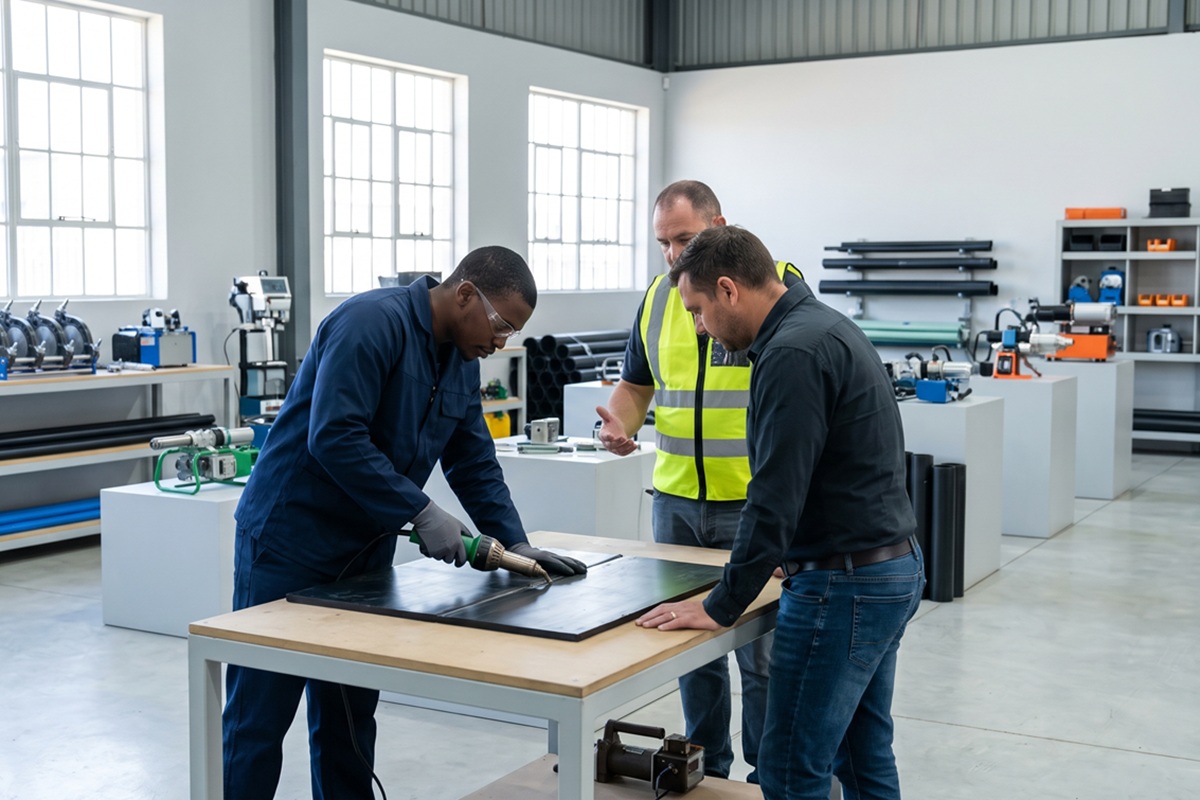
    Yes, you can rent and demo industrial plastic welding equipment in Johannesburg before committing capital to a purchase. Leading local suppliers and equipment specialists like Plastek allow contractors, geomembrane installers, and fabrication workshops to test extrusion welders, hot air guns, and wedge welders on site or in a dedicated showroom. Testing equipment beforehand confirms that heat profiles match your specific thermoplastic materials, validates generator compatibility during load-shedding, and verifies operator comfort before you invest.

    Why Arranging a Demonstration in Gauteng Protects Your Bottom Line

    Industrial thermoplastic fabrication demands extreme precision, whether you are lining water reservoirs on the East Rand or building chemical storage tanks in Chamdor. Evaluating equipment in person proves whether a tool can maintain precise digital temperature readouts under harsh South African field conditions. Understanding why Swiss-made plastic welding tools outperform standard heating tools gives your team a clear benchmark for thermal stability and build durability.

    A practical demo on your own job site or at a local supplier facility delivers several immediate operational advantages:

    • Direct confirmation of melt flow rates and preheat air volume on specific sheet gauges
    • Verification that heating elements remain stable when powered by site generators
    • Immediate assessment of ergonomic balance, weight distribution, and nozzle accessibility
    • Proof that weld seams pass field spark and peel testing without thermal degradation

    Renting Versus Buying Plastic Welding Tools for Short-Term Contracts

    Purchasing capital equipment does not always make financial sense for one-off civil jobs, maintenance shutdowns, or urgent tank repairs. Tool hire bridges the gap, giving you access to premium industrial systems without tying up working capital. Contractors frequently source heavy-duty BAK plastic welding tools Johannesburg contractors trust to handle demanding liner installations and structural polypropylene work.

    When Equipment Rental Makes Commercial Sense

    Hiring welding machinery fits distinct operational scenarios across Gauteng. Short civil subcontracts often require specialised extrusion output that existing workshop kits cannot supply. Renting also keeps production moving when your primary machines undergo annual calibration, service, or motor maintenance.

    Before signing an equipment rental agreement, check these vital operational factors:

    • Verification of recent electrical safety certification and ceramic element testing
    • Availability of matching Teflon welding shoes suited to your target joint geometry
    • Clear daily, weekly, or monthly rates with transparent deposit and return terms
    • Local availability of standby units should site conditions cause electrical damage

    Critical Features to Test During an Equipment Demonstration

    Never run a demonstration simply by turning the machine on in an air-conditioned office. Test the equipment on the actual polymers you weld daily, such as HDPE, PP-H, PVDF, or PVC. Knowing the essential features to look for in hot air plastic welding tools ensures that your operators inspect the components that matter most under heavy duty cycles.

    Highveld Environmental Factors and Power Demands

    Johannesburg sits at roughly 1,750 metres above sea level. Thinner Highveld air directly affects forced-air cooling, heating element recovery times, and blower motor efficiency. In addition, unconditioned power from portable diesel generators can produce voltage spikes that ruin budget control boards.

    Focus your practical demonstration checks on the following technical indicators:

    • Independent closed-loop temperature control for both extrudate and preheat air
    • Cold-start motor protection that prevents cold screw starts and drive motor burnouts
    • Air filter accessibility to stop dust and fine grit from clogging high-speed blowers
    • Stable thermal output during simulated voltage fluctuations from backup generators

    Plastic Welding With Plastek

    Plastek provides Johannesburg fabricators and lining specialists with high-performance BAK plastic welding machinery, backed by technical expertise, service support, and spare parts. Whether you require a hands-on equipment demo to evaluate extrusion output or need temporary rental machinery to complete an urgent industrial contract, our team provides practical guidance tailored to your materials. Reach out by clicking the button below to schedule your demonstration or request rental machine availability.

    FAQs

    Can I test my own scrap material during a machine demonstration?

    Yes. Bringing your own production offcuts, whether thick HDPE geomembrane or rigid polypropylene sheet, is recommended. Testing your exact polymer grade confirms optimal welding rod feed, preheat zone plasticising, and speed settings before purchasing.

    What power supply do I need to run a demo welding machine?

    Most hand-held hot air blowers run on a standard 230V single-phase electrical supply. Hand extruders and automatic wedge welders also run on 230V, but require adequate amperage and pure sine wave generator power if operating off-grid on site.Are rental plastic welding machines calibrated before dispatch?

    Reputable suppliers inspect, clean, and electrically test rental units prior to release. Heating elements, drive motors, and thermocouple readings are checked to verify that the machine welds within factory temperature tolerances.

    Does rental cost offset the purchase price if I decide to buy?

    Many suppliers offer rent-to-buy options or will credit a portion of your short-term hire fee toward the purchase price of a new unit. Inquire about demo-to-purchase credits before taking delivery of the hire machine.
  • What You Need to Start a Plastic Welding Workshop in Johannesburg

    What You Need to Start a Plastic Welding Workshop in Johannesburg

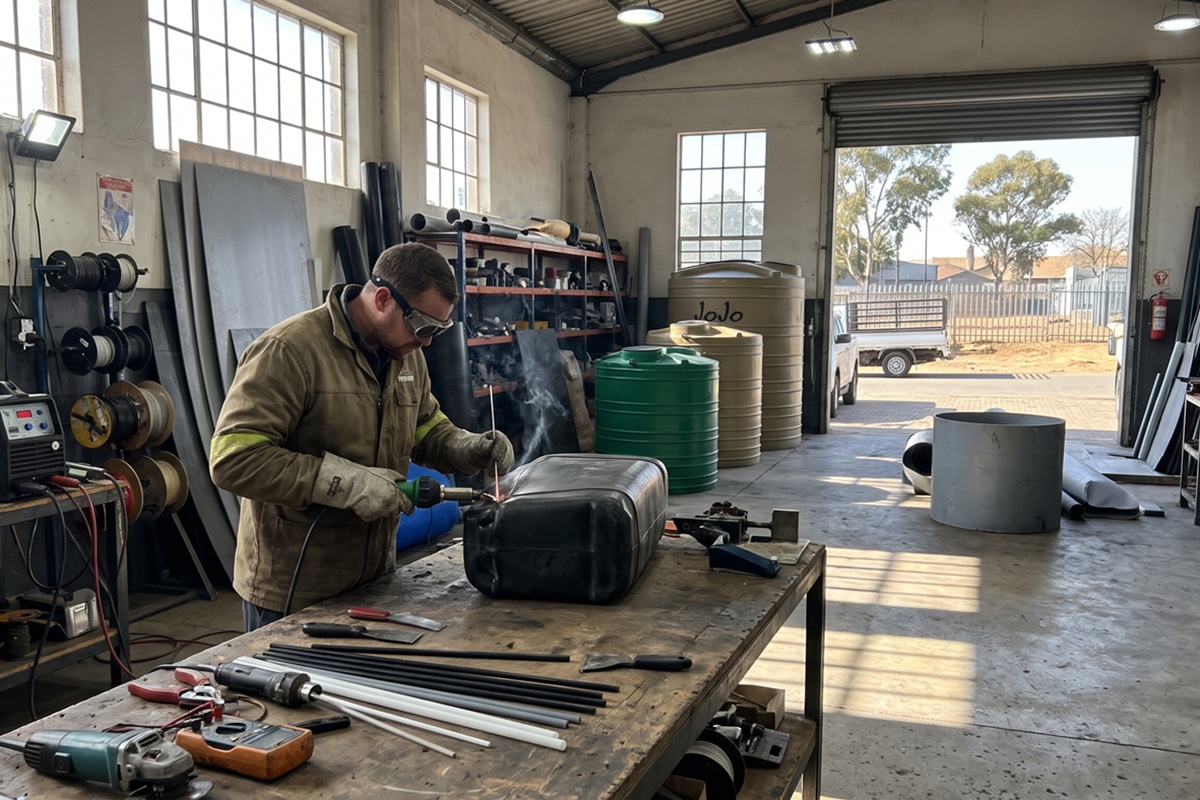
    Starting a plastic welding workshop in Johannesburg requires industrial-grade hot air equipment, a steady power supply with load-shedding backup, proper extraction ventilation, and a reliable inventory of thermoplastic materials. Local demand across Gauteng is substantial, spanning water tank repairs, automotive bumper restoration, geomembrane lining, and industrial acid tank fabrication. Setting up your operation correctly from day one protects your seams from failure under harsh Highveld UV conditions and keeps your business profitable.

    Core Tooling and Welding Equipment

    Your welding gear forms the backbone of daily operations. Cheap DIY heat guns cannot maintain the continuous operating temperatures required for structural welds on heavy polymers. Professional fabricators prioritize equipment with digital temperature displays and independent airflow controls. Before buying equipment, understand what features to look for in hot air plastic welding tools from Johannesburg suppliers to ensure your tools survive heavy workshop duty.

    Every standard plastic fabrication workshop relies on a core setup of welding machinery:

    • Handheld hot air welding guns fitted with speed welding nozzles and tacking tips
    • Extrusion welders capable of outputting two to four kilograms of material per hour for thick tank walls
    • Scrapers, deburring blades, and rotary burrs for mechanical oxide layer removal prior to welding
    • Digital contact pyrometers and air temperature gauges for precise thermal verification
    • Specialised clamping jigs, sheet benders, and pipe fusion clamps to hold workpieces steady during cooling

    Hand Tools Versus Extrusion Welders

    Handheld hot air guns handle thin sheet materials, automotive plastics, and tight corners where precision matters most. For tank construction and thick containment liners exceeding four millimetres, hand tools become too slow and cannot produce sufficient thermal mass. An extrusion welder melts both the parent material and a continuous feed rod inside an internal barrel, depositing a single, structural bead in one pass. Many local contractors discover that why Swiss made plastic welding tools outperform standard heating tools in Johannesburg comes down to ceramic heating element durability and the ability to maintain thermal stability when workshop temperatures shift.

    Workshop Infrastructure and Johannesburg Local Factors

    Setting up in industrial nodes like Alrode, Kya Sand, or Laser Park puts you close to major transport corridors and raw material suppliers. Operating on the Highveld also introduces environmental realities that direct your workshop layout. Johannesburg sits at roughly 1,750 metres above sea level, meaning thinner air alters thermal heat transfer and demands tools that compensate for air density changes.

    Equipping your physical premises requires careful attention to health, safety, and electrical stability:

    • Three-phase electrical connections paired with a generator or battery backup system to survive load-shedding during active weld cycles
    • Local exhaust ventilation hoods positioned directly above welding benches to extract hazardous thermal decomposition fumes
    • Dedicated, dust-free preparation zones to keep grease, swarf, and grit away from freshly scraped weld grooves
    • Fire-rated workstations equipped with heat-resistant composite surfaces or stainless steel tops

    Managing Power Interruptions

    Plastic welding relies on consistent thermal profiles. If the power drops midway through an extrusion weld on a polypropylene tank, the weld freezes, creates cold spots, and ruins the structural integrity of the joint. You must grind out the entire cold section and start again. Installing automatic voltage regulation protects sensitive circuit boards in modern digital welders from grid surges when municipal power returns.

    Raw Materials and Testing Essentials

    Working with plastics demands strict discipline around material compatibility. Polyethylene cannot fuse to polypropylene, and PVC requires distinct temperature curves and specialised venting because overheated vinyl releases corrosive fumes. Sourcing virgin welding rod that precisely matches your sheet stock ensures high weld factors and prevents stress cracking under Gauteng sunshine.

    Building client trust in your workshop depends on keeping critical quality verification tools on hand:

    • High-voltage spark testers to detect pinholes and void defects along long containment seams
    • Tensile test coupon cutters to evaluate lap and butt weld strength before handing over large projects
    • Ultrasonic thickness gauges to verify base material integrity on repair jobs
    • Dedicated rod storage cabinets with desiccant packs to prevent moisture absorption in hygroscopic polymers like nylon

    Securing reliable machinery with local support is simple once you know where to find heavy duty BAK plastic welding tools Johannesburg contractors trust for tough field and workshop duties.

    Plastic Welding With Plastek

    Equipping a profitable workshop requires more than just buying heat tools off a shelf. You need dependable equipment, rapid spare parts availability, and expert advice to tackle commercial jobs across Gauteng. Plastek supplies Swiss-engineered BAK plastic welding systems, hot air blowers, wedge welders, and extrusion tools built for continuous commercial production. Get in touch with our specialist team by clicking the button below to review your workshop tooling requirements and request a direct quote.

    FAQs

    Do I need specialised certification to open a plastic welding business in South Africa?

    While basic repairs do not legally mandate a trade licence, commercial and civil clients routinely demand compliance with SANS 10268 standards for welding thermoplastics. Achieving certification through recognized training bodies establishes credibility, qualifies your shop for municipal tenders, and enables you to sign off on certified tank fabrications.

    How does Johannesburg altitude affect plastic welding equipment?

    Johannesburg sits at high altitude, where lower atmospheric air density reduces the mass of air forced over heating elements. Basic heating tools can overheat their elements or fail to transfer enough heat into thick plastic substrates. Choosing tools with electronically controlled air volumes and closed-loop temperature sensors ensures your target temperatures remain rock steady.

    What plastics offer the highest repair and fabrication demand in Gauteng?

    High-density polyethylene (HDPE) leads the market for water storage, chemical transport, and mining pipes. Polypropylene (PP) is standard for chemical processing tanks and laboratory fittings. Automotive work focuses heavily on polypropylene blends, ABS, and polycarbonate, while PVC remains dominant in ducting and commercial drainage.

    Can I run hot air welding tools from a standard workshop generator?

    Yes, provided the generator provides clean power through an inverter or automatic voltage regulator. Digital plastic welding tools contain sensitive microprocessors that manage thermal heating elements. Power spikes or frequency fluctuations from cheap generators can destroy control boards, so always pair equipment with rated commercial power units.

  • Who Supplies Plastic Welding Machines in Johannesburg

    Who Supplies Plastic Welding Machines in Johannesburg

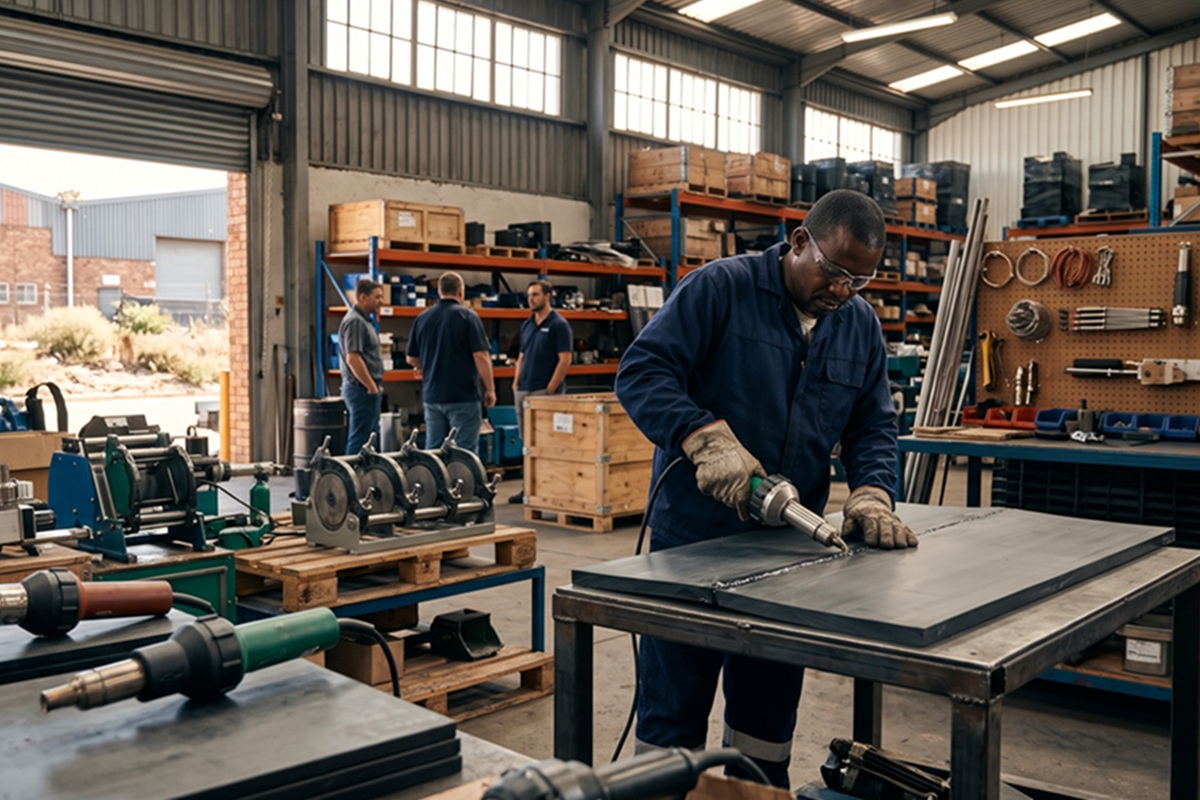
    Plastek is the leading industrial supplier of plastic welding machines in Johannesburg, supplying civil engineering firms, commercial fabricators, and mining contractors across Gauteng with professional extrusion welders, hot air hand tools, and automatic geomembrane wedge welders. Located near major Witwatersrand industrial transport routes, Plastek pairs European-manufactured machinery with local technical support, original replacement elements, and routine calibration services to prevent unscheduled operational downtime.

    Industrial Plastic Welding Equipment Available in Gauteng

    Plastic fabrication and containment projects require distinct technologies depending on joint design, site access, and sheet gauge. Local workshops and site teams evaluate what features to look for in hot air plastic welding tools from Johannesburg suppliers to ensure consistent temperature delivery and long motor lifespans under continuous use.

    Contractors across industrial nodes such as Jet Park, Alrode, and City Deep select their welding systems based on specific operational requirements:

    • Handheld hot air welders engineered for detail fabrication, tank fittings, vehicle plastic repairs, and overlap seam welding on thin liners.
    • Hand extrusion welders designed for heavy structural tank construction, thick HDPE plate joining, and large-diameter utility pipe fabrication.
    • Automatic hot wedge and hot air welders calibrated for civil lining projects, including tailings dams, leachate reservoirs, and municipal landfills.
    • Electrofusion and butt fusion machinery configured for high-integrity pressure piping networks in mining and water distribution.

    Selecting Machinery for Highveld Operating Conditions

    Operating hot air equipment on the Highveld presents technical challenges that standard hobbyist heat tools cannot endure. Johannesburg sits at approximately 1,700 metres above sea level, where thinner atmospheric density alters thermal convection and airflow efficiency. Combined with erratic grid power and frequent reliance on generator sets during load-shedding cycles, equipment must incorporate robust electronic controls to maintain stable temperatures.

    Thermal Regulation and Voltage Stability

    Sudden voltage drops and spikes from site generators can burn out unshielded heating elements. High-grade industrial welders utilize closed-loop digital controls that actively compensate for fluctuations in incoming voltage, ensuring that the plasticizing temperature remains locked to material specifications regardless of external electrical shifts.

    Demanding Highveld conditions demonstrate why Swiss-made plastic welding tools outperform standard heating tools in Johannesburg sites where dust, altitude, and unstable generator feeds are everyday realities.

    To avoid premature heating element burnout and ensure joint integrity under demanding field conditions, operators must adhere to standard site protocols:

    • Monitor generator output voltage with an in-line meter before connecting sensitive electronic welding systems.
    • Clean stainless steel air intake filters daily to stop fine mining dust and Highveld topsoil from degrading motor windings.
    • Initiate mandatory tool cool-down cycles before disconnecting mains or auxiliary generator supplies.

    Industrial Applications and Certified Hardware Supply

    Fabrication shops and containment contractors across Gauteng depend on robust tools capable of non-stop production cycles. Engineering teams consistently research where to find heavy-duty BAK plastic welding tools Johannesburg contractors trust for harsh lining and heavy structural fabrication work.

    Plastek supplies verified hardware configured to weld demanding thermoplastic polymers across multiple Gauteng sectors:

    • Chemical manufacturing infrastructure, including acid pickling tanks, chemical scrubbers, and industrial drainage sumps using high-density polyethylene and polypropylene.
    • Environmental and civil containment projects, including hazardous waste lining, farm dams, stormwater attenuation basins, and mining retention ponds.
    • Ventilation and extraction installations, joining rigid unplasticized PVC ducting for corrosive industrial fumes.
    • Logistics and bulk materials handling, rebuilding cracked transport bins, pallets, and bulk containers to restore logistics efficiency.

    Plastic Welding Machines From Plastek

    Plastek supplies genuine BAK technology, original spare parts, specialized welding nozzles, and complete technical services directly to industrial contractors across Johannesburg. Working with an authorized supplier ensures you receive equipment backed by local stockholding, eliminating the extended delays of international shipping when replacement ceramics, blowers, or heating elements are required. Reach out directly to discuss your fabrication or containment requirements, or submit project specifications by clicking the button below to request equipment pricing and technical assistance.

    FAQs

    Can I weld different plastic types together using a hot air tool?

    No; thermoplastics must be joined with a matching polymer base. Polyethylene welds only to polyethylene, and polypropylene welds only to polypropylene. Attempting to weld incompatible plastics produces weak, mechanical bonds that fail under physical stress or hydraulic pressure.

    How does altitude in Johannesburg affect plastic welding?

    At 1,700 metres above sea level, thinner air absorbs and transfers heat differently than at coastal elevations. Hot air welding machines must move air efficiently and utilize precise closed-loop sensors to maintain exact melt temperatures despite reduced atmospheric density.

    Are spare parts for plastic welding machines stocked locally in Johannesburg?

    Yes; Plastek carries inventory for heating elements, motor brushes, replacement ceramics, and extrusion shoes in Gauteng, allowing contractors to service equipment quickly without waiting weeks for overseas shipments.

    What power source is required to run industrial plastic welders on site?

    Handheld hot air welders typically operate on standard 230V single-phase power, requiring a steady 1.6 kW to 3.4 kW supply. Large extrusion welders and automatic wedge machines often need clean 3.5 kW to 6 kW generator capacity equipped with automatic voltage regulation to prevent electronics damage.