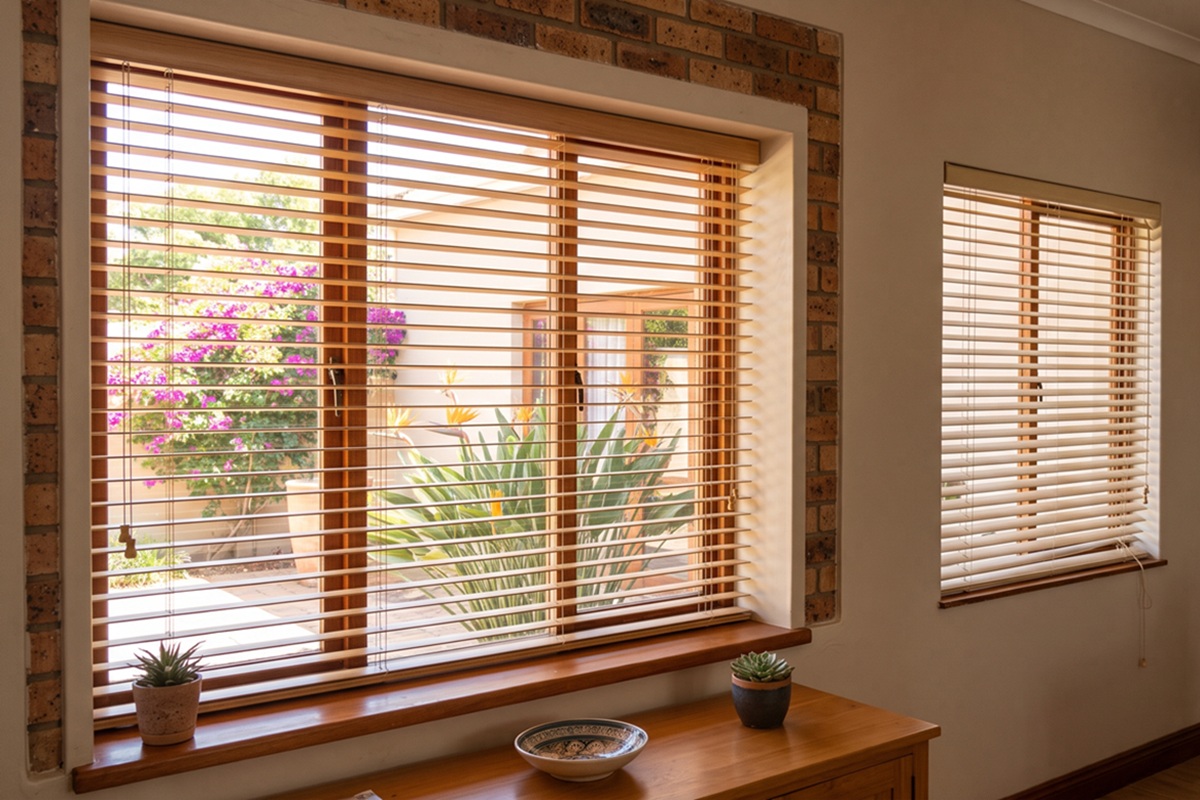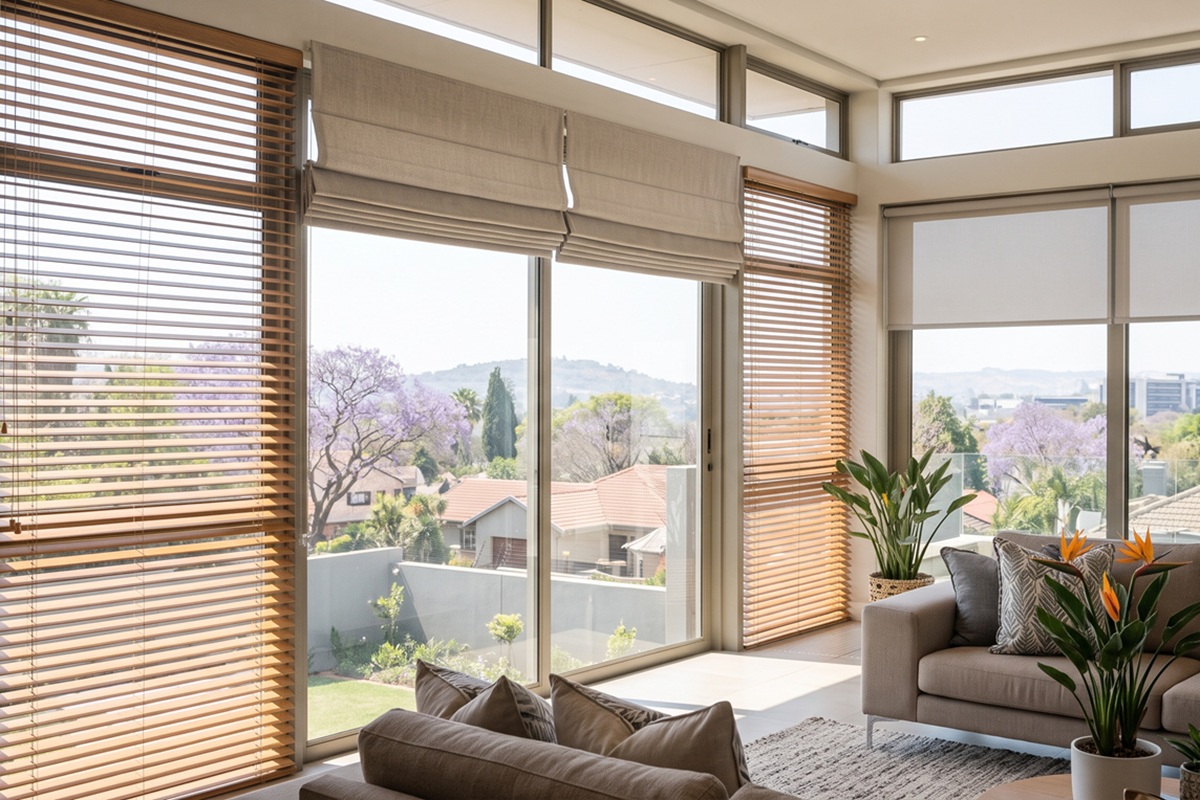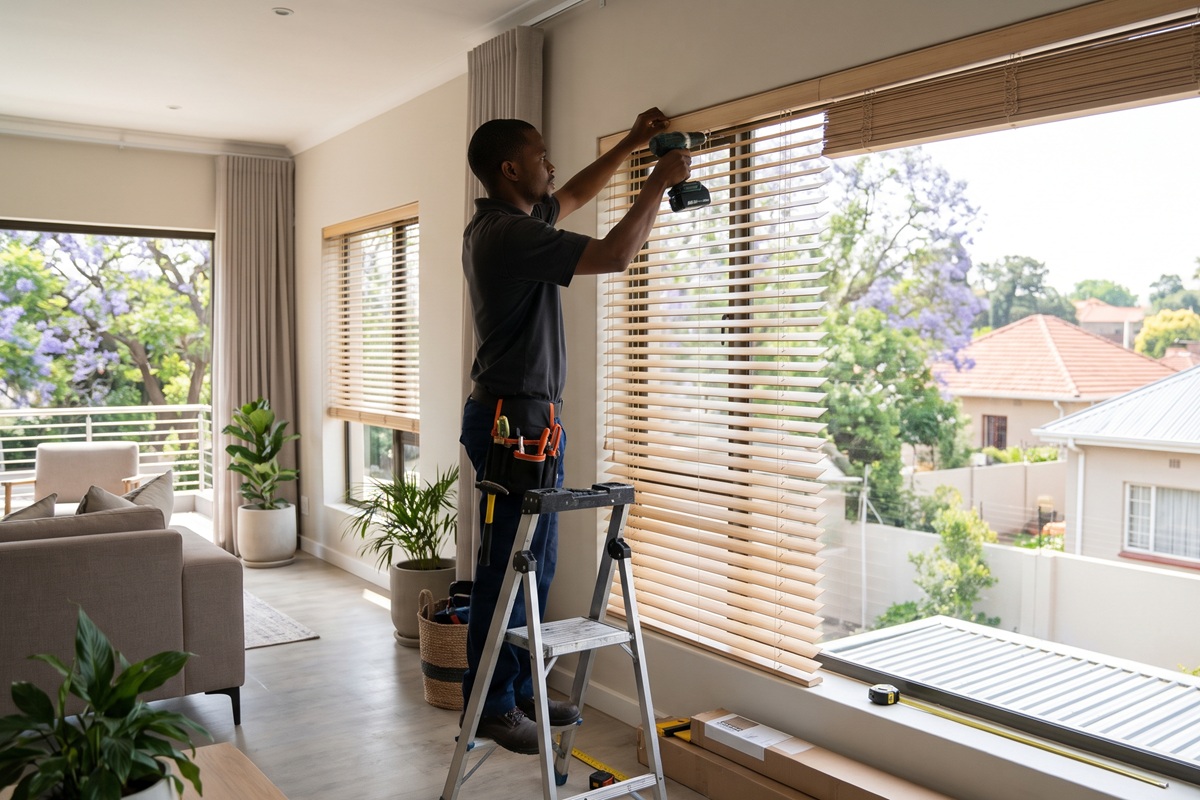
Custom blinds installed in Johannesburg typically cost between R650 and R3,200 per window, with standard installation rates ranging from R150 to R400 per fixture. Outfitting a standard three-bedroom home in suburbs like Bryanston, Midrand, or Northcliff generally totals between R8,500 and R28,000 depending on your selected materials, window dimensions, and whether you opt for automated controls.
Average Custom Blind Prices by Type in Johannesburg
Material choices drive the largest variance in pricing across Gauteng homes. Highveld weather brings intense midday ultraviolet rays followed by rapid evening cooling and sudden summer thunderstorms, making material durability a vital consideration for local properties. Selecting the right design for each room ensures long product life without unnecessary overspending.
Homeowners planning window upgrades can expect the following estimated pricing brackets per unit including professional installation:
- Aluminium Venetian Blinds: R550 to R1,450 per window, offering moisture resistance and simple maintenance for kitchens, sculleries, and bathrooms.
- Custom Roller Blinds: R650 to R2,200 per window, providing effective sun protection and blackout options for bedrooms and sunrooms.
- Basswood and Fauxwood Venetian Blinds: R1,150 to R3,400 per window, adding rich texture and insulating properties that manage temperature swings across chilly winter nights.
- Vertical Blinds: R700 to R1,850 per fixture, serving as a cost-effective choice for wider patio sliders and home study glass partitions.
Key Factors That Dictate Your Window Treatment Quote
Exact pricing depends on practical site conditions rather than simple room counts. When budgeting for your upgrade, exploring what is the best type of custom blind for Johannesburg homes helps align specific room exposures with functional fabric choices.
Window Dimensions and Structural Reveal Depths
Standard retail blinds rarely align with older Johannesburg facebrick builds or modern steel-framed architectural frames. Deep window reveals accommodate tidy inside mounts, whereas shallow reveals require face-fix installations with heavy-duty brackets. Taller floor-to-ceiling windows found in estates across Waterfall and Steyn City require wider drops and reinforced roller barrels to avoid sagging over time.
Fabric Performance and UV Stabilisation
Sun exposure on north-facing and west-facing windows rapidly degrades cheap plastic components and unlined fabrics. Choosing solar screen materials or UV-stabilised weaves prevents fabric curling, discoloration, and heat buildup inside your living areas.
Motorisation and Power Reliability
Automated blinds add roughly R1,800 to R4,500 per motor to your base cost. Battery-powered tubular motors with integrated solar charging eliminate reliance on grid electricity, keeping your shades fully operational through local load-shedding cycles without the need to chase wiring through plaster walls.
Why Precision Installation Outperforms DIY Approaches
Homeowners often weigh the option of self-installation against certified fitting services. In practice, understanding why custom premium blinds in Johannesburg are a better long-term investment comes down to fit accuracy and wall integrity.
Experienced installers prevent standard installation headaches through systematic fitting methods:
- Laser leveling compensates for uneven plaster reveals and skewed window frames common in older properties.
- Specialised heavy-duty masonry plugs secure mounting plates into brittle burnt clay bricks and soft mortar lines without splitting plaster.
- Clearance spacing prevents blind slats from catching on interior window handles, burglar bars, or security gate frames.
Steps to Estimate and Plan Your Window Budget
Proper preparation ensures you receive accurate quotations without unexpected variations during final measuring. Investing in durable custom window blinds begins with assessing each room by its daily sunlight exposure, privacy needs, and moisture levels.
You can streamline the quoting process by following this practical checklist:
- Record preliminary width and drop measurements from frame edge to frame edge to get accurate ballpark estimates.
- Identify high-humidity areas like showers and enclosed sculleries that demand synthetic polymers or treated aluminium.
- Note which rooms receive harsh afternoon sun to prioritise reflective backings or high-density blackout fabrics.
- Check the depth of your window reveal to see if you have at least 60 millimetres of clearance for inside mounting.
Install Custom Blinds With Blinds & Curtain Lane
Blinds & Curtain Lane provides homeowners throughout Johannesburg with transparent pricing, accurate laser measuring, and professional on-site installation. Whether you want to modernise an open-plan lounge or outfit an entire new home, our team delivers high-performing window coverings engineered to handle local conditions. Explore our full range of premium custom blinds online or click the button below to schedule an on-site consultation and quote.
FAQs
How long does it take from quote to blind installation in Johannesburg?
Manufacturing custom blinds typically requires five to ten working days after final measurements are confirmed. Installation itself takes between two and five hours for a full house depending on window counts and wall substrates.
Are custom blinds significantly more expensive than ready-made store blinds?
Custom blinds carry an initial premium of roughly 20 to 35 percent over mass-produced store blinds. However, custom units eliminate DIY trimming errors, fit your exact reveal dimensions seamlessly, and use commercial-grade operating mechanisms that outlast off-the-shelf alternatives by several years.
Can blinds be installed over existing burglar bars?
Yes. Depending on your burglar bar style and offset depth, blinds can be mounted inside the reveal between the window and the bars, or face-fixed onto the exterior wall surround using extension brackets to clear security fixtures.
What blind material works best for north-facing Johannesburg rooms?
Aluminium venetian blinds, solar screen roller fabrics, and treated fauxwood perform best on north-facing windows. These materials resist prolonged ultraviolet heat, reflect glare, and maintain structural rigidity throughout hot summer afternoons.